
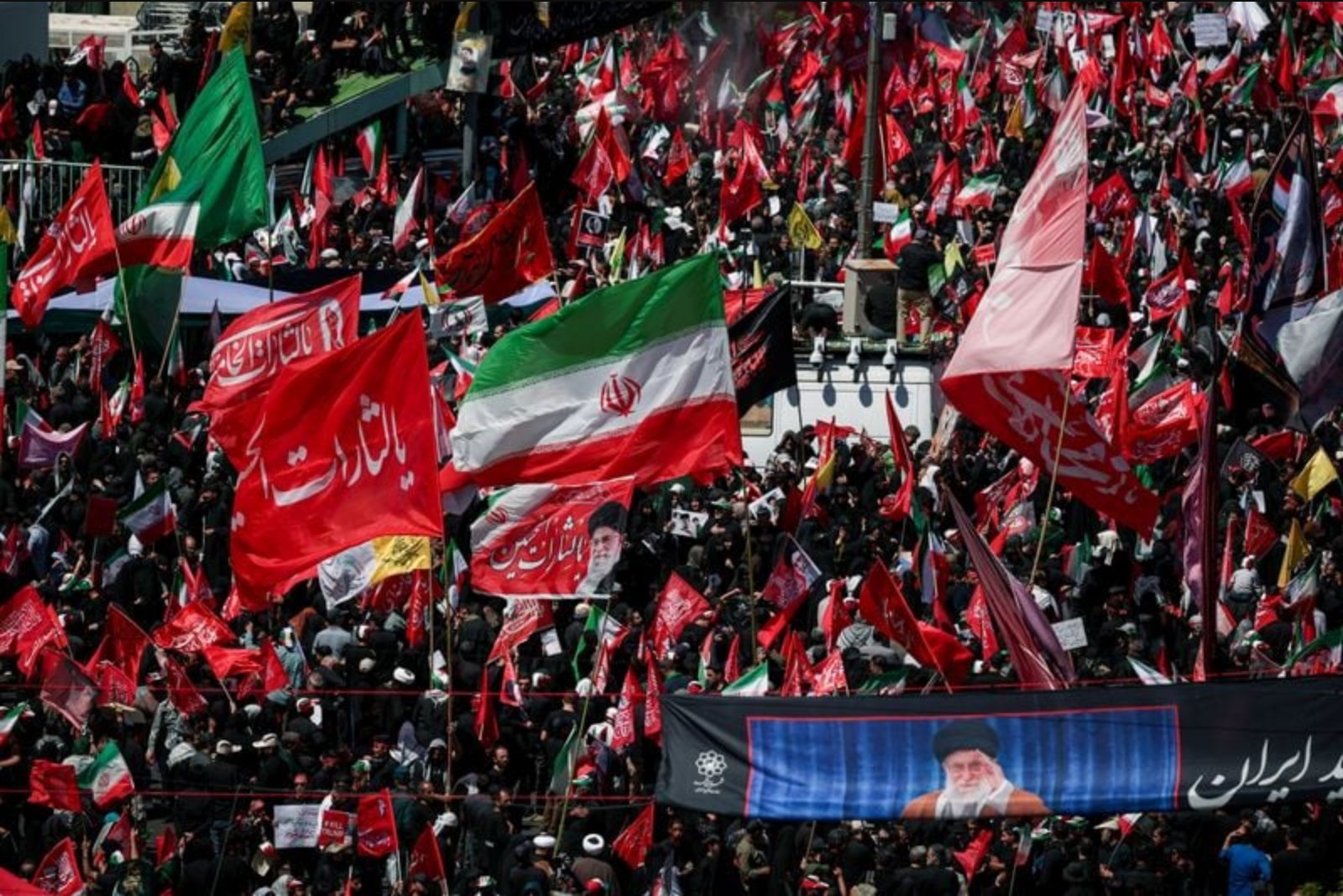
Iranian military units launched strikes on U.S. military infrastructure located in neighboring Gulf states on Thursday, in retaliation for recent U.S. attacks on Iran's southern coastal and eastern provinces, according to state media and official statements. The action came as Iran readied a burial for its slain Supreme Leader Ayatollah Ali Khamenei at Mashhad's holiest shrine, capping a week of mass processions and rallies.
Khamenei was killed in a U.S. airstrike on the first day of the war on February 28. The planned interment in Mashhad marks the culmination of public mourning that has unfolded across the country.
Military strikes and targets
State-run outlets relayed a statement from Iran's army saying its forces targeted a number of U.S. military systems and facilities in the Gulf. The army said the strikes hit U.S. Patriot air defence systems in Kuwait using drones, an early-warning site in Qatar described as a satellite antenna, and a U.S. army fuel storage site in Bahrain.
Kuwaiti authorities reported engaging a cruise missile, three ballistic missiles and 10 drones in Kuwaiti airspace, and said one person sustained injuries from falling shrapnel. Qatar, which hosts the region's largest U.S. military base, urged a return to diplomacy. In a call with Iranian Foreign Minister Abbas Araqchi, Qatar's Prime Minister Sheikh Mohammed bin Abdulrahman al-Thani also condemned recent attacks on commercial shipping in the Strait of Hormuz.
Separately, Iran's semi-official Mehr news agency reported several explosions in Bushehr province on Thursday morning. Bushehr is the site of a Russian-built nuclear power plant.
Casualties and infrastructure damage
Iranian officials reported that U.S. strikes on July 8 and 9 had killed 14 people and injured 78 across five provinces, according to state media. The Fars news agency said one strike had hit a rail bridge used for trade with Russia and China.
U.S. justification and scale of response
The U.S. military said its strikes were intended to keep the Strait of Hormuz open following attacks by Iran on three tankers in the area. U.S. Central Command (CENTCOM) reported on Wednesday that U.S. forces had struck approximately 90 Iranian military targets, naming air defence systems, coastal surveillance assets, missile and drone storage facilities, naval capabilities, and military logistics infrastructure along Iran's coastline.
In a statement, CENTCOM framed the strikes as holding Iran accountable for aggression against commercial shipping and civilian crews in a strategic international waterway. The command said the action was "in retribution for yesterday's bombing of ships by Iran."
Political statements and public messaging
Iran's top negotiator Mohammad Baqer Qalibaf wrote on X that: "The U.S. has yet to learn that bullying and breaking its commitments no longer come without a cost. Let me be clear: If you strike, you will be struck back." He added that: "The Strait of Hormuz will be reopened only under Iranian arrangements, not through U.S. threats."
On his social media platform, the U.S. leader said the strikes were retribution and warned that future attacks would be met with a harsher response: "If it happens again, it will get much worse!" He also stated while attending a NATO summit in Turkey that he did not believe the latest strikes would lead to full-scale war, saying: "Anything that happens is going to be over very quickly ... and will only make it safer, including for oil." Asked directly whether the interim memorandum with Iran was over, he said: "To me, I think it's over. I don't want to deal with them." He later added: "If we make a deal with Iran I'm not sure that will stick."
Impact on energy markets and shipping
Oil prices, which rose on concerns about how the renewed hostilities could affect global supplies, eased on Thursday as market participants weighed whether the flare-up was tactical and temporary or a sign the ceasefire had collapsed. The Strait of Hormuz, a critical maritime chokepoint, handled about a fifth of global oil supplies before the war began on February 28 with U.S. and Israeli strikes on Iran, according to reporting on movements through the waterway. Tehran has since asserted effective control of the strait, a leverage point in its confrontation with the world's most powerful military.
While Iran has not accepted responsibility for attacks on commercial vessels, commentators cited in reports have noted that Tehran can use such incidents to gain bargaining power in negotiations.
One of the three vessels struck this week, the Qatari LNG tanker Al Rekayyat, remains stranded off Oman awaiting salvage operations after a projectile punctured its engine room and sparked a fire. Industry contacts reported that the ship's cargo appeared secure and that the immediate risk of explosion was low.
Regional reactions and diplomatic positioning
Qatar, given its hosting of a major U.S. base and its role as a mediator in past disputes, publicly called for a renewal of diplomatic channels. Kuwait reported direct engagement with incoming missiles and drones and noted a minor injury from falling debris. The combination of strikes, counter-strikes and public rhetoric has placed heightened pressure on a ceasefire that had been in effect for three weeks.
What remains uncertain
At this stage, market participants and regional actors face uncertainty about whether the recent exchanges represent a short-term tactical escalation or a turning point toward a wider breakdown of the fragile ceasefire. That ambiguity is reflected in the movements of oil prices and in official statements that mix warnings, retaliatory framing and calls for diplomacy.
As events unfold, energy, shipping and defence sectors will monitor developments closely, particularly activity in and around the Strait of Hormuz, the status of commercial vessels in the Gulf and the condition of critical infrastructure reported as damaged.