
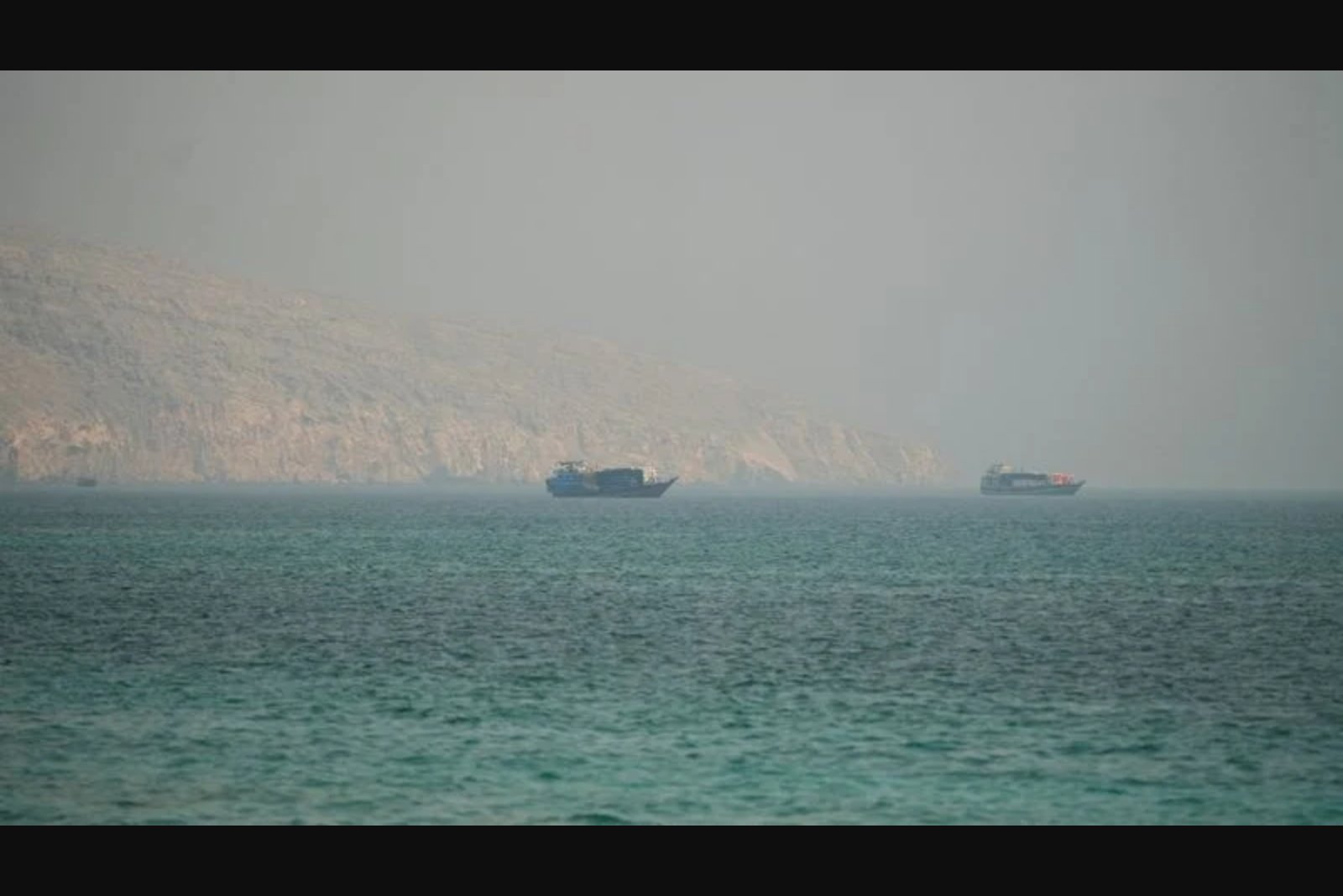
Iran's Islamic Revolutionary Guard Corps (IRGC) said on Sunday that it had closed the Strait of Hormuz after a vessel that had switched off its systems and deviated onto a route it described as unauthorised was struck and brought to a halt. The IRGC Navy's public statement gave no additional specifics about the identity or flag of the ship involved.
According to the IRGC, multiple vessels attempted to transit the waterway on what the statement called an unauthorised route and ignored repeated warnings to alter course. The statement said the strait would remain closed "until further notice" and would only be reopened when, in Iran's words, there is an end to U.S. interference in the region. It also warned that acts of aggression against Iran would be met with a severe response and that any new enemy bases in the region would be targeted.
The U.S. has publicly demanded that Iran declare it will stop attacks on ships transiting the strait, and that all lanes remain open with no tolls imposed, according to senior U.S. officials who spoke to reporters on Friday. Those comments came as U.S. and Iranian representatives, alongside mediators, were reported to be attempting to organise negotiations.
U.S. President Donald Trump said on Friday that the United States and Iran had agreed to continue talks despite a surge in hostile actions earlier in the week, while also stating that the ceasefire was over. A senior Iranian source told Reuters that Iran, the United States, Qatar and Pakistan had agreed to pursue negotiations in a call that mediators were trying to arrange for Saturday while Iran's Foreign Minister Abbas Araqchi was in Oman. It was not immediately clear from the reports whether those arrangements succeeded.
While in Oman, Araqchi and Omani Foreign Minister Sayyid Badr Albusaidi met to exchange views on "appropriate mechanisms for the safe passage of ships through the Strait of Hormuz," according to a statement issued by Iran's foreign minister. Oman’s state news agency later indicated that Omani and Iranian negotiators would continue discussions at both technical and political levels.
Oman is reported to be helping mediate an end to the war that has destabilised the Gulf since airstrikes were launched on Iran on February 28. Prior to the outbreak of conflict, about a fifth of the world’s oil supply transited the Strait of Hormuz. The IRGC said its effective blockade of the waterway has driven energy prices higher and contributed to global inflation.
Media reports indicated that Oman drafted a proposal that would allow free navigation through a southern corridor within Omani territorial waters and would require prior approval from Iran for vessels transiting a northern corridor through Iranian territorial waters, while imposing no tolls. The White House and the State Department did not immediately respond to requests for comment about that draft.
Diplomatic engagement has occurred on several fronts. Qatari mediators reportedly held talks in Tehran on Friday. The flare-up followed attacks on three Qatari and Saudi commercial tankers earlier in the week that prompted the United States to strike Iranian sites, and Iran in turn to launch strikes on U.S. military positions in Gulf states.
In an exchange on social media, Iran’s Araqchi accused the United States of violating the ceasefire agreement. U.S. authorities revoked a licence authorising the sale of Iranian crude on Tuesday after the vessels were hit. Araqchi wrote on X on Friday that "there can only be mutual compliance." The IRGC and Iranian officials have not claimed direct responsibility for the earlier ship attacks; analysts cited in reporting said Tehran sometimes uses maritime incidents to gain leverage in negotiations.
Market reactions have mirrored the diplomatic and military tensions. The escalation cast doubt on the viability of an interim agreement intended to end the conflict and contributed to higher oil prices, a development described as politically sensitive given upcoming U.S. congressional elections.
Meanwhile, Tehran's rhetoric has grown more strident. A written statement from Iran's new supreme leader, Ayatollah Mojtaba Khamenei, issued on Saturday and released to coincide with funeral ceremonies for former leader Ayatollah Ali Khamenei, threatened vengeance for the death of the predecessor and father, who was killed on February 28. The new supreme leader did not attend the funeral ceremonies, but his statement pledged to avenge the blood of the martyred leader and other martyrs regardless of circumstances.
U.S. President Trump posted on social media that he had ordered U.S. forces to be prepared to launch thousands of missiles against Iran if Tehran attempted to assassinate him. U.S. news outlets have reported that Israel shared intelligence with Washington suggesting Iran had recently developed a plan to assassinate the former U.S. president; those media reports were carried in U.S. outlets and contributed to the charged atmosphere surrounding the funeral where some mourners carried banners reading "We Will Kill Trump."
The immediate picture remains fluid. Iran has closed one of the world's most important chokepoints for oil and shipping, diplomatic channels are being explored, and both sides have issued warnings pointing to the potential for further military action. The combination of disrupted maritime traffic, threats of retaliation and unresolved diplomatic talks leaves regional stability and global energy markets in a state of heightened uncertainty.
Summary
Iran's IRGC announced the closure of the Strait of Hormuz after an unauthorised vessel that had switched off its systems was struck and stopped. Tehran warned of severe retaliation to further aggression and said the strait would remain closed until further notice and until U.S. interference in the region ends. Diplomatic efforts involving Oman, Qatar, Pakistan and the United States were reported to be under way, even as the ceasefire was declared over and energy markets reacted to renewed tensions.
Key points
- Iran closed the Strait of Hormuz after a vessel on an unauthorised route was struck and halted; the IRGC gave no further details on the ship.
- Tehran said the strait will remain closed until further notice and until the end of U.S. interference; it warned of severe responses to acts of aggression and of targeting new enemy bases.
- Diplomatic engagement involving Oman, Qatar, Pakistan and the United States has been reported, but the ceasefire was publicly declared over and energy markets have reacted with higher prices.
Risks and uncertainties
- Continued closure or blockade of the Strait of Hormuz could further disrupt oil flows and keep energy prices elevated - impacting the oil and broader commodities markets.
- Escalation in military strikes or reprisals risks wider regional conflict, which would affect shipping, insurance costs, and trade through the Gulf.
- Diplomatic talks remain uncertain; failure to reach durable agreements could prolong instability and sustain pressure on global inflation and energy-sensitive sectors.