
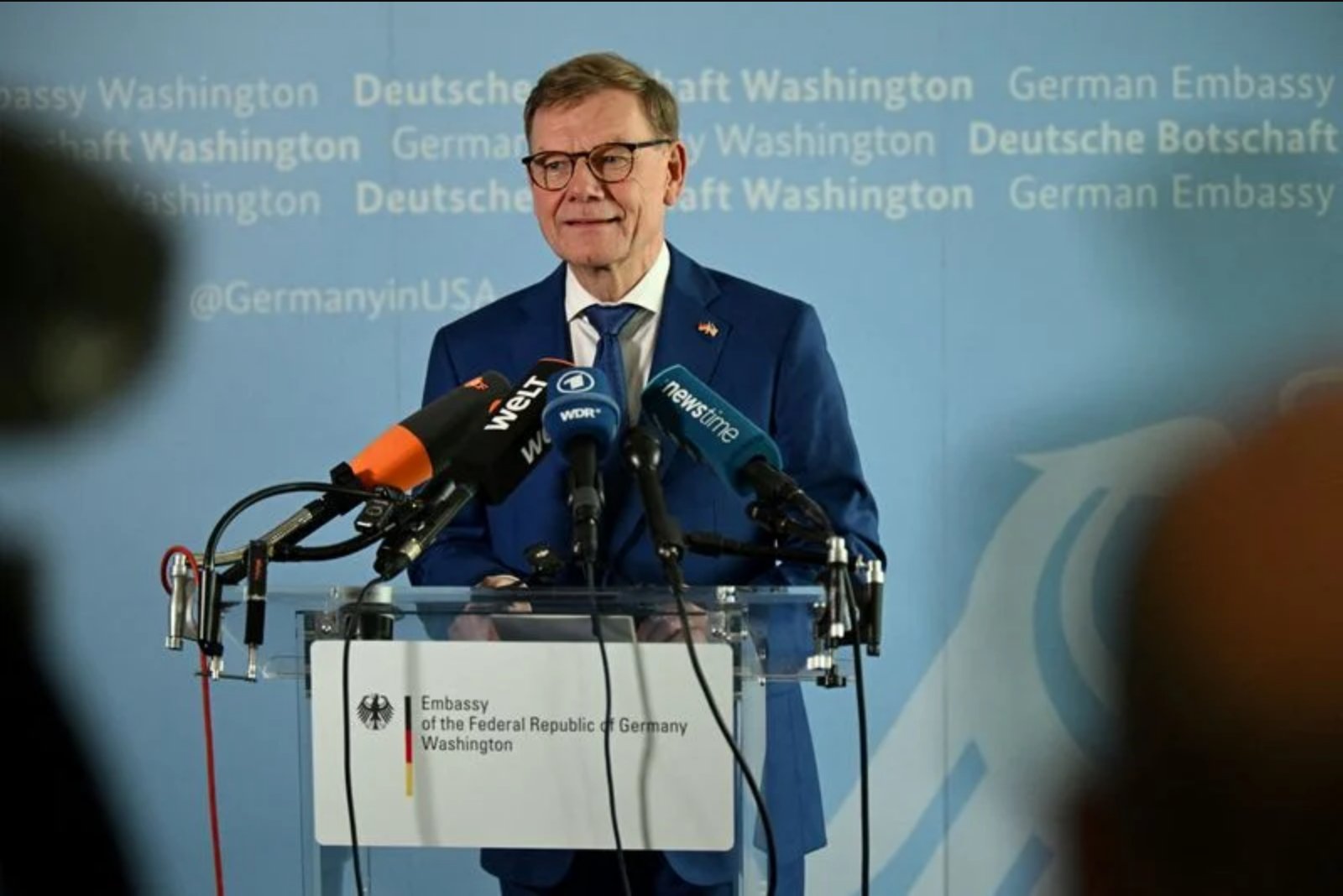
Germany's foreign minister, Johann Wadephul, said on Wednesday that a number of outstanding "issues" still need to be addressed before the European Union's trade agreement with the Mercosur bloc can move to ratification, while also expressing confidence those issues can be overcome.
Wadephul made the comments at a press conference in Buenos Aires, where he was speaking as part of a multi-day tour of South America. The statement came a day after leaders and officials from Mercosur gathered in Paraguay to discuss the allocation of export quotas that form part of the recently agreed trade deal with the EU.
Mercosur - the South American customs union comprising Argentina, Brazil, Paraguay and Uruguay - concluded the long-running negotiations with the EU in January and placed the resulting agreement into provisional force four months later. Wadephul said the agreement's implementation will take time and that some problems are likely to surface during that period.
"Implementation will still take some time. There will surely be some problems, but they are problems that can be resolved," Wadephul said, adding: "The decisive steps have already been taken. We want this agreement, and we will be able to resolve the problems that arise." He did not provide further detail on the specific obstacles that remain.
Public debate around the accord has highlighted several areas of contention. Among the matters explicitly raised are protections for EU farmers, objections from some EU member states, legal questions related to ratification and the provisional application of the deal, environmental issues including deforestation, and the outstanding question of how Mercosur will distribute export quotas among its members.
The EU-Mercosur agreement establishes a free trade area characterized by reduced and gradually eliminated tariffs. Some products stand to gain immediate tariff relief, while others will experience phased reductions over time. The two trading blocs together cover a market of roughly 700 million people, and trade between them reached 111 billion euros in 2024.
During meetings in Buenos Aires, Wadephul and Argentina's foreign minister, Pablo Quirno, announced a memorandum of understanding on critical minerals. The stated goal of the memorandum is to expand supply chains for minerals such as lithium and copper, which are in higher demand as the energy transition progresses.
As officials move from provisional application toward full ratification, the sequence and timing of resolving the identified legal, environmental and quota-related issues will determine how quickly the agreement can be fully implemented. For now, Wadephul framed the remaining problems as surmountable while acknowledging that implementation will not be instantaneous.