
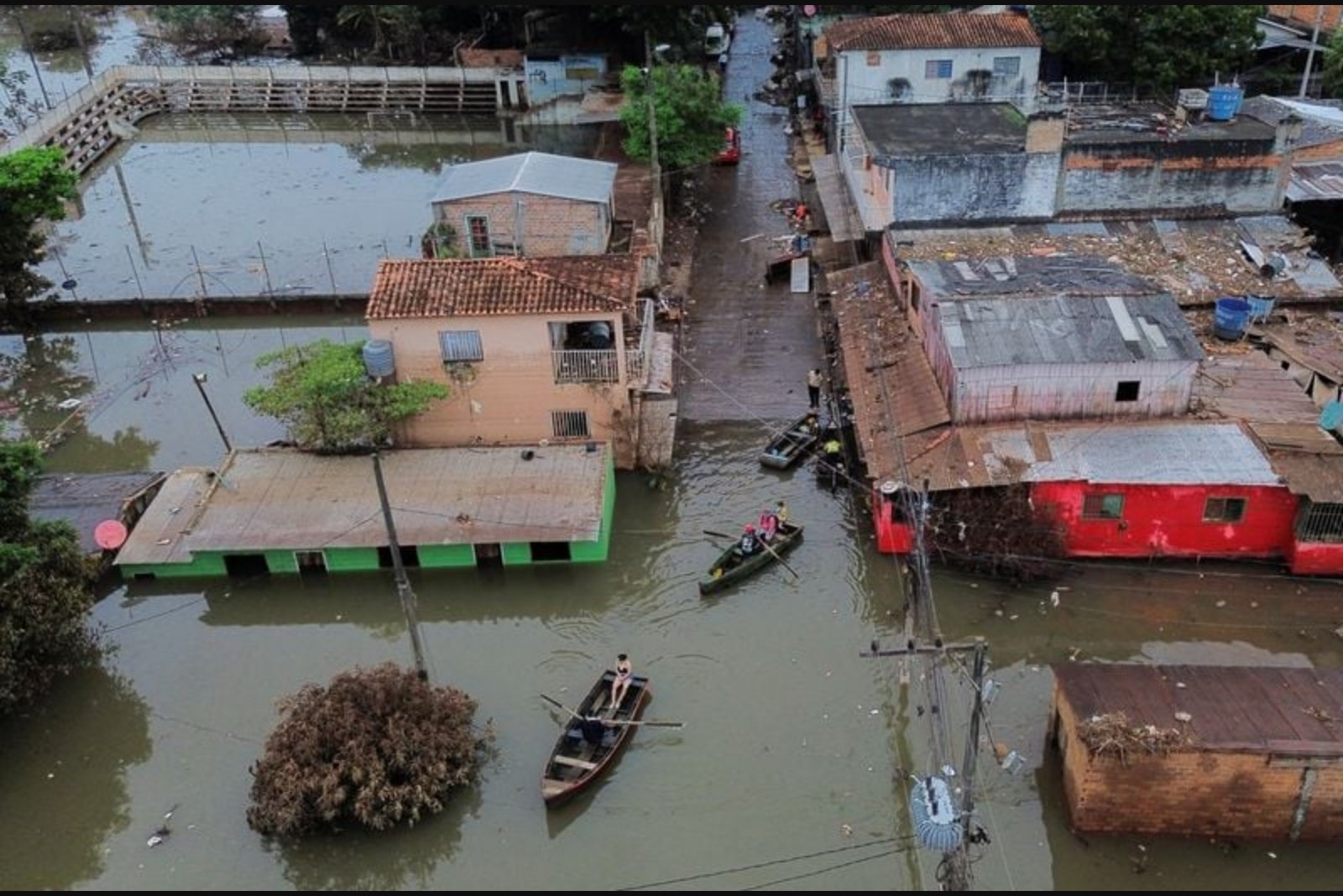
An accelerating El Niño pattern has produced a wave of extreme weather across Latin America this week, bringing coastal destruction in Mexico, extensive river flooding in Paraguay, the deaths of farm workers in Argentina and widespread disruption along Peru and Chile’s Pacific coasts.
On Mexico’s Pacific shore in the tourist town of San Pancho, in Nayarit State, pounding surf removed the sand beneath the foundation of part of a luxury condominium complex. The erosion exposed the building’s base and left a portion of the structure dramatically tilted toward the sea after it collapsed on Wednesday.
In Paraguay, the rising Parana River - a major commercial waterway - and heavy rains forced dozens to seek shelter. Late on Wednesday, about two dozen families took refuge at a church near Paraguay’s border with Brazil after their homes flooded. The country’s national emergency agency reported that roughly 4,200 families have been affected by the swelling Parana.
A 58-year-old woman died when her home collapsed in the rains. At the church-turned-shelter in Ciudad del Este, dozens of residents pitched tents on a soccer field, while others set up communal kitchens with assistance from the parish and local businesses.
In the riverside town of San Rafael, 65-year-old Antonina Snchez described hurriedly fleeing rising waters. "I was surprised because the water came very quickly. My house, my entire kitchen collapsed; it’s caving in," she said.
Regional consequences were recorded elsewhere in Latin America this week. In Argentina’s Corrientes province, near Bella Vista, two farm workers died while moving cattle away from flooded areas adjacent to the Parana, according to local media reports. Hundreds of residents have been evacuated across the province. The article noted that above-average rainfall in parts of the Pampas agricultural belt could benefit crops, even as flooding disrupts communities.
In Chile’s capital, Santiago, a flooded stream caused a mudslide onto city streets on October 8; days later a separate storm deposited hail and led to additional street flooding.
Peruvian authorities on Thursday announced a package of financial aid and tax relief aimed at businesses affected by the extreme weather battering the country’s Pacific coast. The government plans to allocate 18 billion soles in 2027 to mitigate the economic effects.
International agencies have cautioned that the current El Niño event may drive unusually strong warming in the central Pacific. United Nations and meteorological officials warned this week that the El Niño pattern could cause a record rise in Pacific Ocean temperatures as it moves around the globe like a "wrecking ball," producing floods in some regions and droughts in others.
The World Meteorological Organization (WMO) has forecast that temperatures in the central Pacific could climb about 3.8 degrees Celsius above average between November and January, with a peak around December. The WMO characterized the period as likely to produce one of the most turbulent storm seasons on record.
The events this week illustrate a range of hazards tied to the evolving weather pattern - coastal erosion and structural collapse where surf is severe, river flooding that inundates towns and forces evacuations, muddy and icy hazards in urban areas from mudslides and hail, and clear economic impacts prompting government relief measures.
Local shelters, community-organized kitchens and business support networks have been activated in affected locations, while authorities continue to track river levels and issue evacuations or assistance where needed. The extent of longer-term damage to infrastructure, property and commerce will depend on how the El Niño pattern evolves in the coming months.