
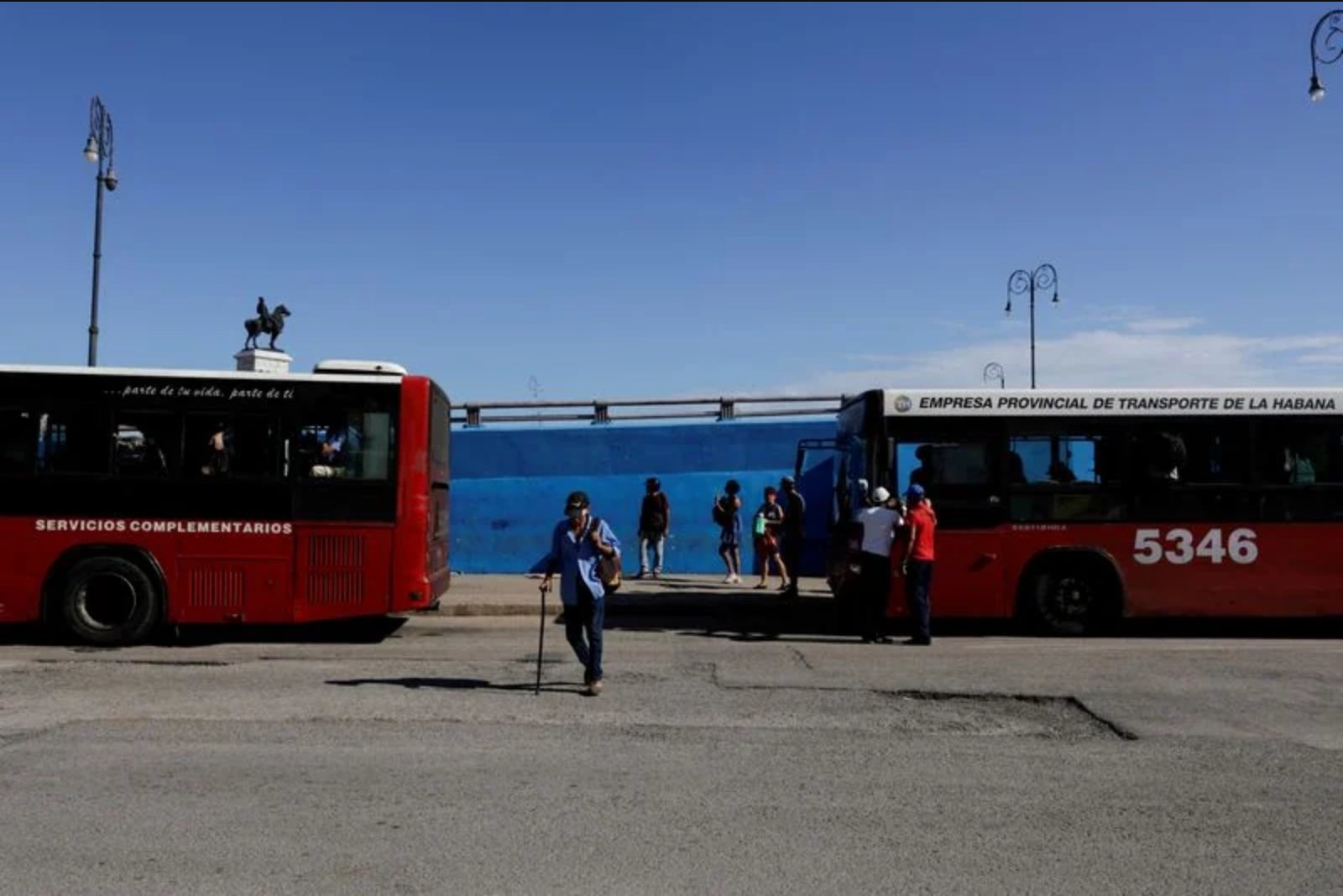
Facing what he described as an almost impossible task, Cuba's Transportation Minister, Eduardo Rodriguez Davila, is overseeing the movement of people and goods across the 780-mile (1,250 km) island with effectively no conventional fuel to spare. Rodriguez Davila, a mechanical engineer who now runs the transport ministry, told reporters that the country's traditional public transport services are operating at levels he called "one of its lowest points of all time."
The minister provided a series of striking indicators that chart the depth of the disruption. He said passenger trips on public transportation are expected to decline by 75% this year compared with the prior year. Inter-provincial bus departures from Havana have fallen dramatically - from 419 daily services in 2025 to just 11 this year - while the number of bus routes across the island has been pared back from more than 100 to 21. Rodriguez Davila also estimated that inter-urban transportation - a vital lifeline for many Cuban workers - would contract by 90%.
People, services and supply chains under strain
The minister emphasised the human consequences of the transport shortfalls, citing families unable to visit sick relatives and individuals who cannot reach hospitals. He described the situation as a complex drama, with daily mobility severely curtailed for many residents.
Freight movements are also being heavily affected. Rodriguez Davila said domestic freight transport is expected to fall to roughly 20 million tonnes this year, compared with about 70 million tonnes moved across the country last year - a decline to less than a third of the previous volume. Reduced cargo flows implicate a broad swath of the economy and logistics chain, from retailers to pharmaceutical distribution.
Sanctions, responses and competing narratives
The transport ministry attributes the immediate cause of the shortage to a de facto ban on fuel imports imposed by the United States in late January. The U.S. rationale, according to public statements cited by the minister, is that the tighter measures and expanded sanctions are intended to disrupt the Cuban government's functioning. In turn, Cuban authorities and the United Nations have characterised the fuel blockade as illegal and as violating Cuban citizens' human rights.
Rapid uptake of electric mobility - and its limits
As liquid fuels have dwindled, Cubans have adopted a range of alternatives. Informal coping measures such as hitchhiking and ad hoc carpooling have become more common, and the private transport market has shifted to higher-cost options. At the same time, electric mobility has grown rapidly.
Rodriguez Davila said Cuba now counts 150,000 electric cars, bikes and tricycles - roughly double the number recorded in 2025 and approximately 15% of the island's one million vehicles. He cautioned, however, that the real share of plug-in vehicles may be higher because many electric cars and bikes operate unregistered and because the cost of fuelling gasoline- or diesel-powered cars has become prohibitively high.
Import trends reflect this change: by August, 40% of vehicle imports were electric, up from 3.5% in January 2025. That shift was encouraged by import incentives that reduce or waive taxes for electric-powered vehicles. Rodriguez Davila noted, though, that electric vehicle adoption has outstripped the growth of renewable energy and charging infrastructure - an imbalance that poses practical limits on the transition.
To address charging constraints, the transport ministry has purchased 60 solar charging stations for nationwide distribution, and state enterprises are piloting electric logistics solutions. One example cited by the minister is Transmed, which plans to introduce a fleet of cargo vans and associated charging stations to deliver medicines to pharmacies in Havana without consuming scarce liquid fuels.
Infrastructure shortfalls and visible bottlenecks
Despite these initiatives, infrastructure problems are evident. Rodriguez Davila recounted a government tour where numerous state-owned yellow electric tricycles sat idle in a garage because there was no electricity available to charge them. Taxi drivers voiced frustration at similar operational interruptions. The minister summarised these operational failures succinctly: "These are the problems we face."
Overall, the transport minister's account portrays an island grappling with an acute and broad-based contraction of mobility and logistics networks, with a fast-growing electric fleet that still depends on limited charging capacity and grid reliability.