
Commodities October 25, 2026 07:54 AM

Conservatives Capture British Columbia Government, Pledge Major LNG Expansion

Provisional results show the right-leaning party ending nine years of New Democrat rule with commitments to boost natural gas output and overhaul emissions and carbon tax policies

By Hana Yamamoto
Share
Twitter Reddit Facebook LinkedIn

Provisional results on Sunday showed the Conservative Party winning British Columbia’s provincial election, taking 64 of 93 seats and ending nine years of New Democrat government. The victorious Conservatives pledged to dramatically expand liquefied natural gas (LNG) production - targeting a doubling by 2032 and more than tripling by 2035 - and to remove emissions limits and replace the province’s carbon tax framework while courting major energy firms that left the sector since 2018.

Conservatives Capture British Columbia Government, Pledge Major LNG Expansion
Summarize with
ChatGPT Perplexity Claude Grok Gemini

Key Points

  • Conservatives won 64 of 93 seats in British Columbia, ending nine years of New Democrat rule - political sector and provincial governance impacted.
  • Party pledged to double LNG production by 2032 and to more than triple it by 2035 - energy and natural gas sectors affected.
  • Conservatives plan to remove emissions limits, replace the carbon tax framework, and court firms like ExxonMobil, Chevron and Woodside - regulatory and energy investment landscapes impacted.

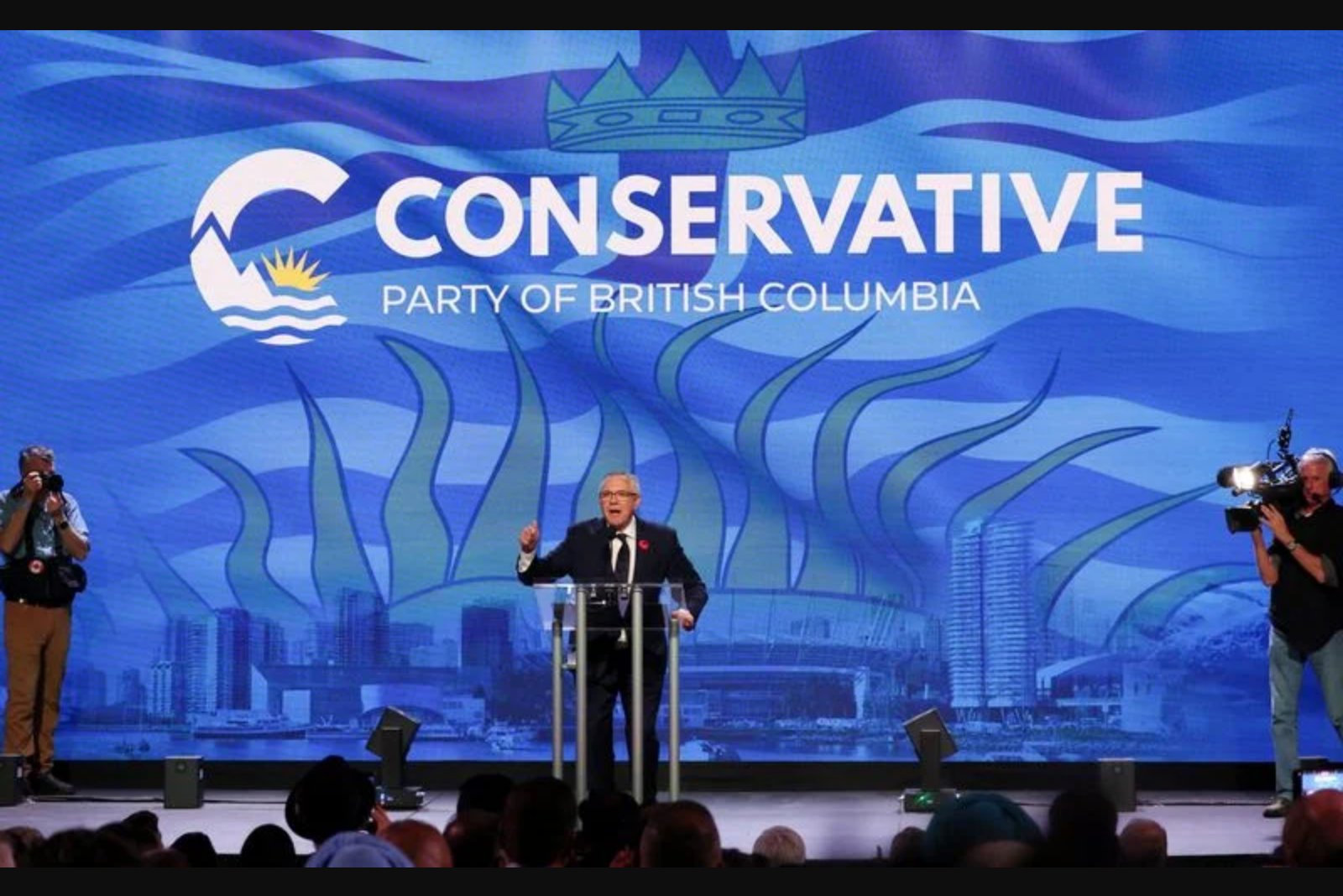
Provisional results released on Sunday indicate the opposition Conservative Party has won the provincial election in British Columbia, securing 64 of the 93 legislative seats and delivering the party its first provincial victory since 1928. The outcome brings an end to nine years of New Democrat governance.

The New Democrats, a left-of-center party that opposed new oil pipelines and supported a ban on tankers along the province's northern coast, took 27 seats in the vote.


Energy policy was at the forefront of the Conservative platform. The new government has pledged an aggressive expansion of liquefied natural gas production, promising to double output by 2032 and to increase it by more than threefold by 2035. The party also said it would end emissions limits and replace the province's carbon tax framework.

Conservative leader Lorne Doerkson, who will become the next premier, framed the victory around an economic and regulatory reset. "I believe in energy... We will cut red tape like it’s never been cut before," he said in his victory speech, adding that his administration would "supercharge" British Columbia. The Conservatives also announced plans to host a business summit in Vancouver next year.

As part of their strategy to rebuild the LNG sector, the Conservatives said they would reach out to energy providers that had left the province's LNG industry since 2018, including ExxonMobil, Chevron and Woodside.


Voter priorities heading into the election included cost-of-living pressures, healthcare concerns, and the ongoing trade dispute with the United States under President Donald Trump, according to polling cited around the campaign. New Democrat Premier David Eby had called for a strong mandate to confront tariff threats from the United States.

Provisional results announced on Sunday set the stage for a significant policy shift in British Columbia, especially in energy and climate-related regulation. The incoming government's stated moves - lifting emissions limits, altering carbon taxation, and targeting rapid LNG production growth - point to material changes for the province's energy industry and associated economic activity.

Further confirmation of the final seat count and the Conservative government’s policy roll-out will clarify the near-term implications for businesses operating in the province and for markets watching Canadian natural gas developments.

Risks

  • Policy changes to emissions limits and the carbon tax framework create regulatory uncertainty for energy and clean-tech sectors.
  • Efforts to rapidly expand LNG production depend on re-engaging major energy companies that left the sector since 2018, presenting execution and investment risks for the natural gas industry.
  • Voter concern over cost-of-living, healthcare and the US trade dispute could translate into electoral or political pressure that affects the government's ability to pursue its full energy agenda.

More from Commodities

Gold Holds Above $4,000 Ahead of Fed Decision and PCE Data Oct 27, 2026 Gold Slides Under $4,000 as Downtrend Holds - Technical Playbook Oct 27, 2026 Diesel Refining Margins Slide 7% as Russian Processing Rises and France Readies Reserve Release Oct 27, 2026 Gold Nears $4,050 as Markets Await Fed Decision; Diplomacy Eases Iran Tensions Oct 27, 2026 UAE Commits Up to 30 Million Barrels of Oil to Indonesia Amid Regional Disruptions Oct 27, 2026