
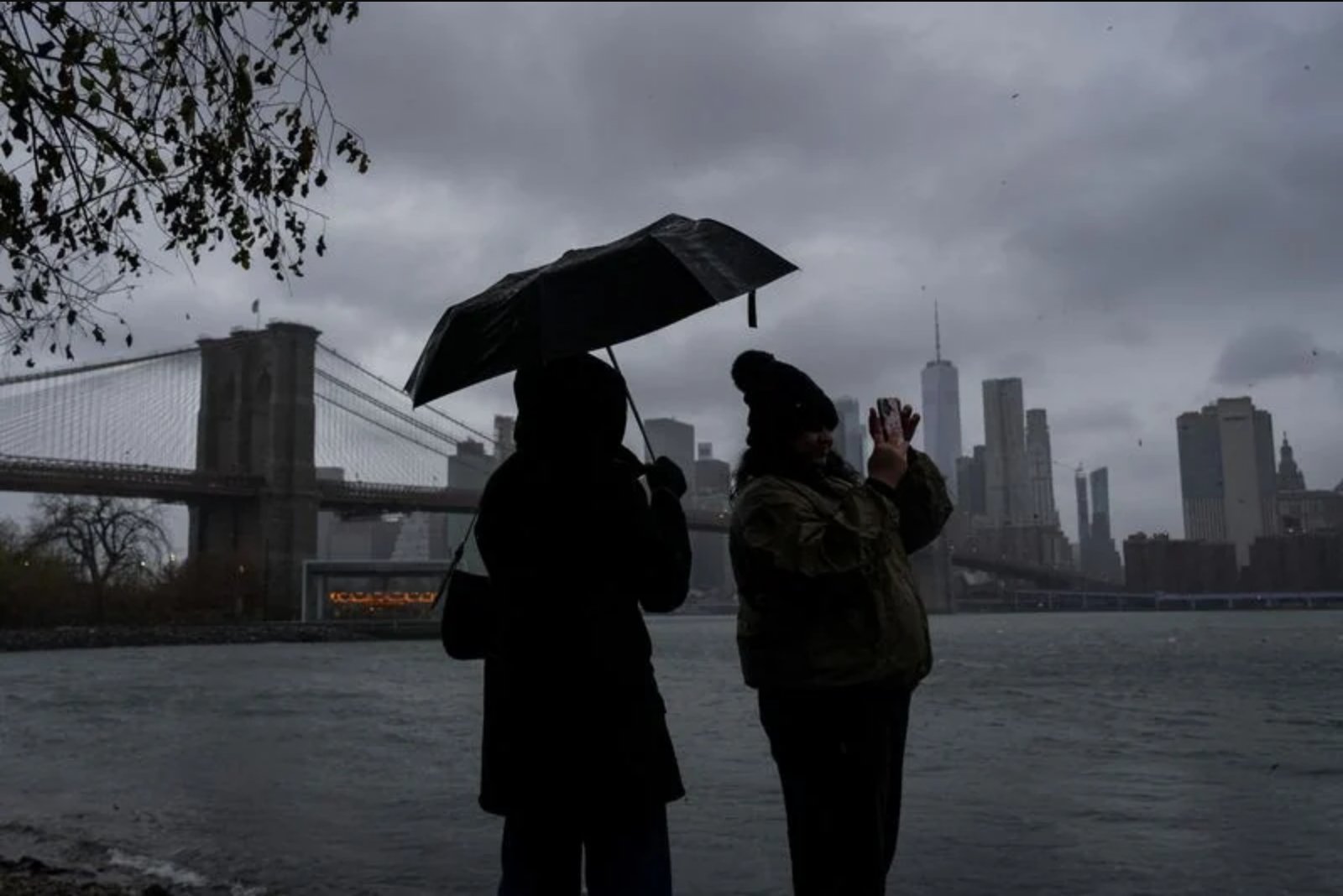
A potent coastal storm swept along much of the US East Coast on Thursday, disrupting Thanksgiving holiday plans as high winds and heavy rainfall toppled trees and power lines and inundated coastal communities.
Utilities reported significant outages across the region. According to poweroutage.us, nearly 200,000 homes and businesses in Virginia and 177,000 in Maryland were without electricity as of 2:26 p.m. ET (1926 GMT). The same source showed that Pennsylvania, New Jersey and North Carolina each had tens of thousands of utility customers experiencing power loss.
Officials and utility companies warned that saturated ground from heavy rain combined with strong winds increased the likelihood that trees could fall and bring down lines. Wind gusts reaching as high as 70 mph (112 kph) were reported or forecast in parts of Virginia, Maryland, Delaware, New Jersey, New York and coastal New England by the US National Weather Service.
New York City Emergency Management said winds strengthened Thursday afternoon, with a peak gust of 56 mph (90 kph) recorded at LaGuardia Airport. The National Weather Service also noted that strong onshore winds coinciding with king tides were producing coastal flooding in low-lying communities along portions of the East Coast.
"A powerful coastal storm will continue to bring severe impacts to the region through today into this evening due to damaging high winds accompanied by heavy rainfall," the NWS said. "The storm departs overnight into Friday."
The storm prompted officials to postpone the 100th edition of the annual Macy's Thanksgiving Day Parade in New York City, the first time the event has been rescheduled because of severe weather. The decision reflected concerns about public safety amid the combination of high winds, precipitation and potential localized flooding.
Holiday air travel was also affected. By early Thursday afternoon, FlightAware data showed more than 400 US flights cancelled and roughly 1,600 delayed. Major airports serving the Washington and New York City areas were among those hardest hit by the cancellations and delays.
Beyond the immediate impacts on power and travel, the storm created hazards for coastal communities and commuters. Heavy rains flooded shoreline areas and the combination of saturated soils and gusty winds raised the risk of additional tree falls and infrastructure damage as the system moved through.
State and local agencies, along with utility operators, continued to monitor conditions and respond to outages and flood reports as crews worked to restore service and clear affected roadways. The National Weather Service forecast the storm system would move away overnight into Friday, reducing but not immediately eliminating the risk of lingering impacts.