
Stock Markets November 26, 2026 12:12 PM

Mexico presses Pacific partners to tighten origin checks as U.S. seeks stronger rules

Economy minister urges improved traceability and joint investment to curb tariff evasion and address trade imbalances

By Maya Rios
Share
Twitter Reddit Facebook LinkedIn

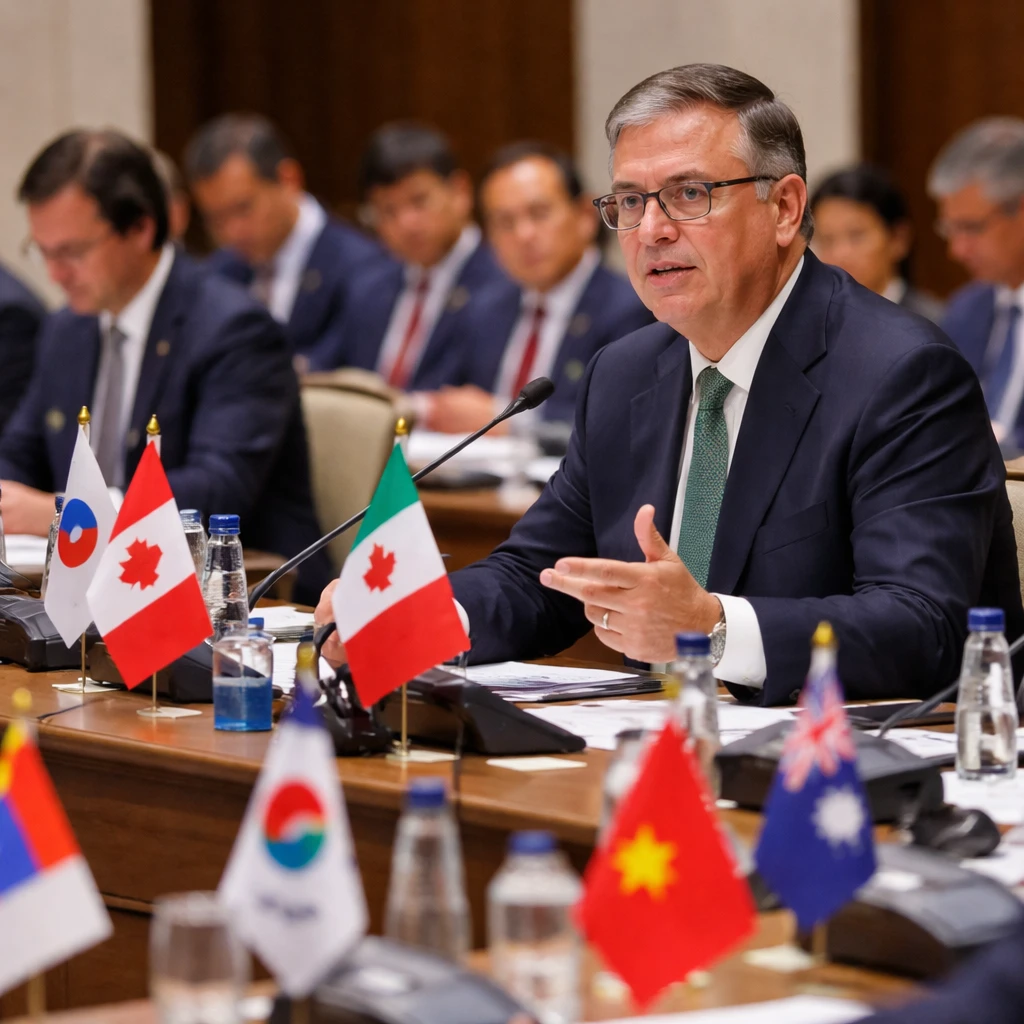
Mexico urged Asian and Pacific Rim trade partners to strengthen enforcement of rules that determine where goods are produced, aiming to prevent illegal transshipment and tariff evasion. Speaking at a meeting of Pacific Rim trade ministers in Vietnam, Economy Minister Marcelo Ebrard framed the push amid pressure from Washington to limit the flow of Chinese components through North American supply chains during USMCA negotiations. Mexico has already raised tariffs on many imports from countries without free-trade agreements and called for greater purchasing of Mexican goods and joint investments in manufacturing, especially electronics.

Mexico presses Pacific partners to tighten origin checks as U.S. seeks stronger rules
Summarize with
ChatGPT Perplexity Claude Grok Gemini

Key Points

  • Mexico urged Pacific Rim partners to strengthen enforcement of origin rules and traceability to prevent tariff evasion and illegal transshipment - impacts manufacturing and trade policy enforcement.
  • The appeal comes amid U.S. pressure during USMCA talks to require more regional content in vehicles and impose stricter rules for electronics and pharmaceuticals - affecting autos, electronics and pharma supply chains.
  • Mexico has already raised tariffs to as much as 50% on a wide range of imports from countries without free-trade agreements, including China, and proposed greater purchases of Mexican goods and joint manufacturing investments, particularly in electronics.

MEXICO CITY, Nov 26 - Mexico called on its Asian trade partners to increase enforcement of origin rules and tighten checks designed to stop tariff evasion, the country said on Thursday. The appeal came during a meeting of Pacific Rim trade ministers in Vietnam, where Economy Minister Marcelo Ebrard urged governments to bolster measures that determine whether products qualify for preferential tariffs.

Ebrard warned against weakening established treaty rules and criticized practices that obscure the true origin of goods. "We are not going to weaken our treaties or the rules that we ourselves established, for example, regarding transshipment or other practices," he said.

The request for stronger enforcement arrives as Mexico faces pressure from Washington in negotiations over the future of the United States-Mexico-Canada Agreement (USMCA). U.S. officials have sought tougher origin requirements, particularly for vehicles, electronics and pharmaceuticals, to reduce the share of Asian-made components in goods that claim North American origin.

In July, US Trade Representative Jamieson Greer said Washington wanted stricter rules requiring North American-made vehicles to contain more regional parts and fewer Asian components, as well as tighter standards for electronics and pharmaceuticals. Ebrard reiterated the need for improved traceability systems so authorities can establish where goods are actually produced and prevent illegal transshipment, where products are routed through third countries to improperly obtain trade benefits.

Mexico has already moved to protect local manufacturers by increasing tariffs on a wide range of imports from countries without free-trade agreements, including China, with rates raised to as much as 50% on some products. Ebrard used the meeting to also press Pacific trade partners to increase purchases of Mexican goods as a way to help correct a sizeable trade imbalance.

Beyond buying more Mexican-made products, Ebrard proposed that countries consider joint investments in manufacturing capacity, highlighting electronics as a priority area for collaboration. The minister framed these steps as complementary: tougher enforcement of origin rules to stop improper use of preferential tariffs, combined with demand-side measures and co-investment to boost regional production.

Details on any specific enforcement mechanisms, timelines or joint investment commitments were not provided in the remarks reported at the meeting.


Dateline: Mexico City

Risks

  • Ongoing negotiations over USMCA origin rules could create uncertainty for automotive, electronics and pharmaceutical manufacturers as requirements for regional content and sourcing may change.
  • Stronger enforcement and higher tariffs could disrupt existing supply chains that rely on Asian components, posing risks to producers and importers in manufacturing sectors dependent on cross-border inputs.
  • Measures aimed at preventing transshipment and increased tariff barriers may exacerbate trade imbalances in the short term without immediate offsetting increases in demand for Mexican-produced goods.

More from Stock Markets

U.K. equities advance as miners and industrials lead gains; UK 100 up 1.88% Nov 26, 2026 Spanish Stocks Rally as IBEX 35 Closes Up 2.35% Nov 26, 2026 Italian Stocks Climb as Industrials, Tech and Travel Names Drive Rally Nov 26, 2026 Belgian Equities Advance as Consumer Goods, Tech and Materials Lead Gains Nov 26, 2026 Paris Shares Finish Higher as Tech, Financials and Industrials Lead Gains Nov 26, 2026