
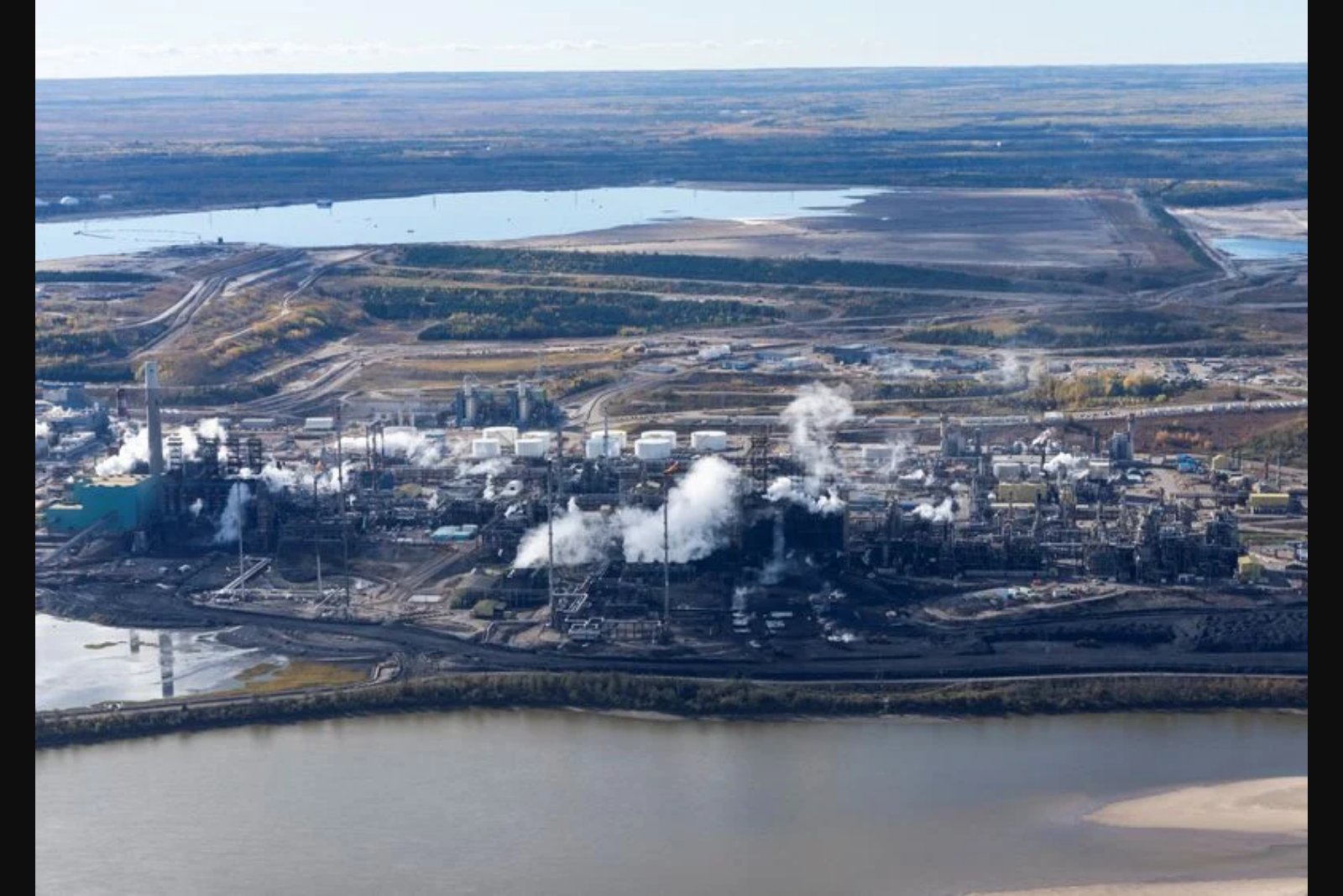
Prime Minister Mark Carney is advancing plans for a major pipeline to deliver Canadian crude to a Pacific coast port, aiming to expand export capacity to Asian markets, increase production and reduce reliance on the United States. Yet officials, company representatives, workers and independent forecasts suggest that a revival of the large, permanent oil-field workforce that characterized Fort McMurray more than a decade ago is unlikely, even if the pipeline wins approval.
In Fort McMurray - the Alberta community that earned the nickname Fort McMoney during the oil boom - the tens of thousands of jobs that once sustained local households and supported broad regional growth are not expected to return to their previous scale. Sources across the industry point to a structural shift in how oil sands output is produced: higher throughput achieved with a smaller permanent workforce because of automation and efficiency improvements.
The pipeline Carney is promoting would carry 1 million barrels of crude per day to the Pacific coast. Asked what the project could mean for the regional economy during a recent visit to Fort McMurray, Carney cautioned against framing the outcome as a return to boom conditions. "I wouldn’t use the term 'boom'," he said. "I would use 'sustained growth'."
That distinction matters politically. If the pipeline increases production but does not restore the large numbers of steady, well-paid oil-field jobs, Carney risks criticism from both sides of the political spectrum. Environmental advocates and some within his own party have warned that accelerating regulatory approvals could come at environmental cost. Conversely, conservatives who favour deregulation have argued the project should translate into brisker economic growth and a resurgence in wages and employment.
Within Alberta, labour and political dynamics could be affected. A projected slow employment trajectory in the oil sands sector has the potential to feed regional discontent - a factor that could weigh on separatist sentiment, although a referendum on whether to hold a vote to leave Canada is expected to fail on Monday.
Industry group Energy Safety Canada published an August labour forecast that highlights the divergence between output and employment. It projects oil sands employment falling by 920 jobs - roughly 4 percent - by 2035, even as production rises by 6 percent. A spokesperson for the group told Reuters that a West Coast pipeline could reverse the projected job decline, but cautioned that the longer-term structural trend is for more oil to be produced with fewer workers.
Local voices reflect that view. Dianna De Sousa, CEO of the Fort McMurray Chamber of Commerce, said that expectations of a repeat of the past are misplaced. "Nobody should expect that something that happened 15 years ago will happen the same way today," she said, underscoring how industry practices and labour models have evolved since the last expansionary period.
A spokesperson for Carney declined to address the bleak long-term employment projections, directing questions to the Department of Natural Resources, which did not respond to requests for comment.
The rise and fall of Fort McMurray’s boom was driven by a concentrated period of investment. From 2000 through 2014, Canadian and international oil companies committed billions to build mega-mines and processing facilities needed to extract bitumen from northern Alberta. Those investments created high-paying roles and a fly-in, fly-out workforce that filled on-site camps because local housing could not absorb the inflow.
But several shocks and longer-term shifts followed. A 2015 oil price crash reduced revenues and momentum. The region was hit by a major wildfire in 2016, which compounded economic strain. Investor focus on environmental, social and governance criteria and the previous federal government’s climate policies contributed to the exit of some international majors. As a result, annual capital investment in the oil sands fell from a 2014 peak of C$35 billion to C$14.2 billion in 2024, according to Statistics Canada.
Since that peak, the last large greenfield oil sands project to start up was Suncor’s Fort Hills, which began operations in 2018. Alberta’s oil and gas sector currently employs about 435,000 people when temporary and part-time workers are included - some 85,000 fewer than in 2014, based on data provided by Alberta’s Servus Credit Union. The province’s real disposable income remains approximately 10 percent below 2014 levels, and housing values have declined significantly.
Despite these indicators, some recovery signs are visible. Stronger oil prices and higher production have contributed to regional population growth for the first time in a decade. Yet day-to-day observations remain mixed: flights from Calgary and other major cities sometimes arrive nearly empty, and vacant commercial spaces are common downtown.
Long-time site contractor and truck driver Jenny Parsons captured that ambivalence. She has worked at oil sands sites for 15 years after moving from Newfoundland. "Things are not getting better," she said, noting that her current pay is only a little higher than what she earned in 2011.
Central to Carney’s pitch is the idea that pipeline access to Pacific ports will unlock new markets and prompt companies to commit to projects that together could require roughly C$100 billion in private investment - a figure Carney has set as a threshold that would also be linked to a carbon capture and storage project that he wants to see built as a condition of federal approval.
No oil sands company has yet pledged the C$100 billion needed to fully utilize the proposed pipeline and to build the required carbon capture and storage infrastructure. Industry representatives and regional advocates differ on how that investment would translate into jobs.
Kendall Dilling, head of the Oil Sands Alliance which represents the five largest producers, argued that the projects could generate thousands of jobs across Canada by the mid-2030s, including upstream investment, supply-chain activity and pipeline construction. However, he and other industry observers note that many of these would be temporary construction positions in British Columbia and Alberta rather than new permanent oil-industry roles. Efficiency improvements, Dilling said, have reduced the time companies need for routine maintenance, which in turn has lowered the level of both staff and contract positions.
"The employment gains may be less than the absolute peaks that we’ve seen in the past," Dilling said, highlighting how the sector’s labour profile has changed since the last boom.
Jason Kenney, who served as Alberta’s conservative premier from 2019 to 2022, pointed to policy choices intended to spur capital spending. He cut corporate taxes to encourage oil sands companies to invest in large projects. Yet, he told Reuters, even after oil prices improved and fiscal stability returned, many companies prioritized returning cash to shareholders over expanding their workforces. "I was certainly frustrated with them," he said, adding that he urged firms to allocate some tax savings toward capital plans so local populations could see direct benefits beyond shareholder returns.
The industry association representing oil producers said the pipeline would offer an opportunity to boost production, create jobs and expand government revenue, but it did not directly engage with Kenney’s critique about corporate allocation of funds.
Carney’s stance has reshaped federal-provincial dynamics. Having grown up in Edmonton, he has negotiated a precarious compromise between Ottawa and Alberta’s conservative political establishment. That accommodation has, however, unsettled some within his own Liberal party, which had previously pushed environmental policies that restrained oil sector expansion. Carney has moved to reverse several of those earlier measures, cut the tax rate on new capital investment and actively promoted Canadian oil to global investors.
Public approval for Carney was measured at 62 percent in a September Angus Reid poll, but analysts warn that sentiment on energy and environmental policy can shift quickly. Lori Williams, a political science professor at Mount Royal University in Calgary, said that past federal environmental policies were popular at the time and that the relative attractiveness of pipelines could decline if new low-emission alternatives gain traction in the future.
Fort McMurray’s earlier boom left mixed legacies. Rapid expansion strained local infrastructure and heightened tensions between long-term residents and the influx of transient camp workers. In recent years, some oil sands operators have shifted hiring practices to employ more local workers and reduce dependence on fly-in workers, a change that reflects a smaller but more steady workforce model.
Even so, many long-term residents are hopeful that Carney’s plans will at least partially restore the region’s prosperity. Colin Hartigan, who owns a local Coldwell Banker United real estate office, said he expects another uptick at some point. "At some point, there’s going to be another boom," he said. He added that local families would prefer a more tempered version than the excesses of the past, but they still want improved economic prospects. "Do we all pray for it? Absolutely."
As the federal government explores regulatory pathways and conditions tied to emission-reduction infrastructure, regional economic expectations will likely be shaped by the degree to which private capital is committed, and whether much of that spending translates into long-term local jobs or short-term construction and supply-chain roles. For Fort McMurray, the practical outcome appears to be more production and exports - with fewer permanent oil-field jobs than during the region’s earlier boom.