
Overview
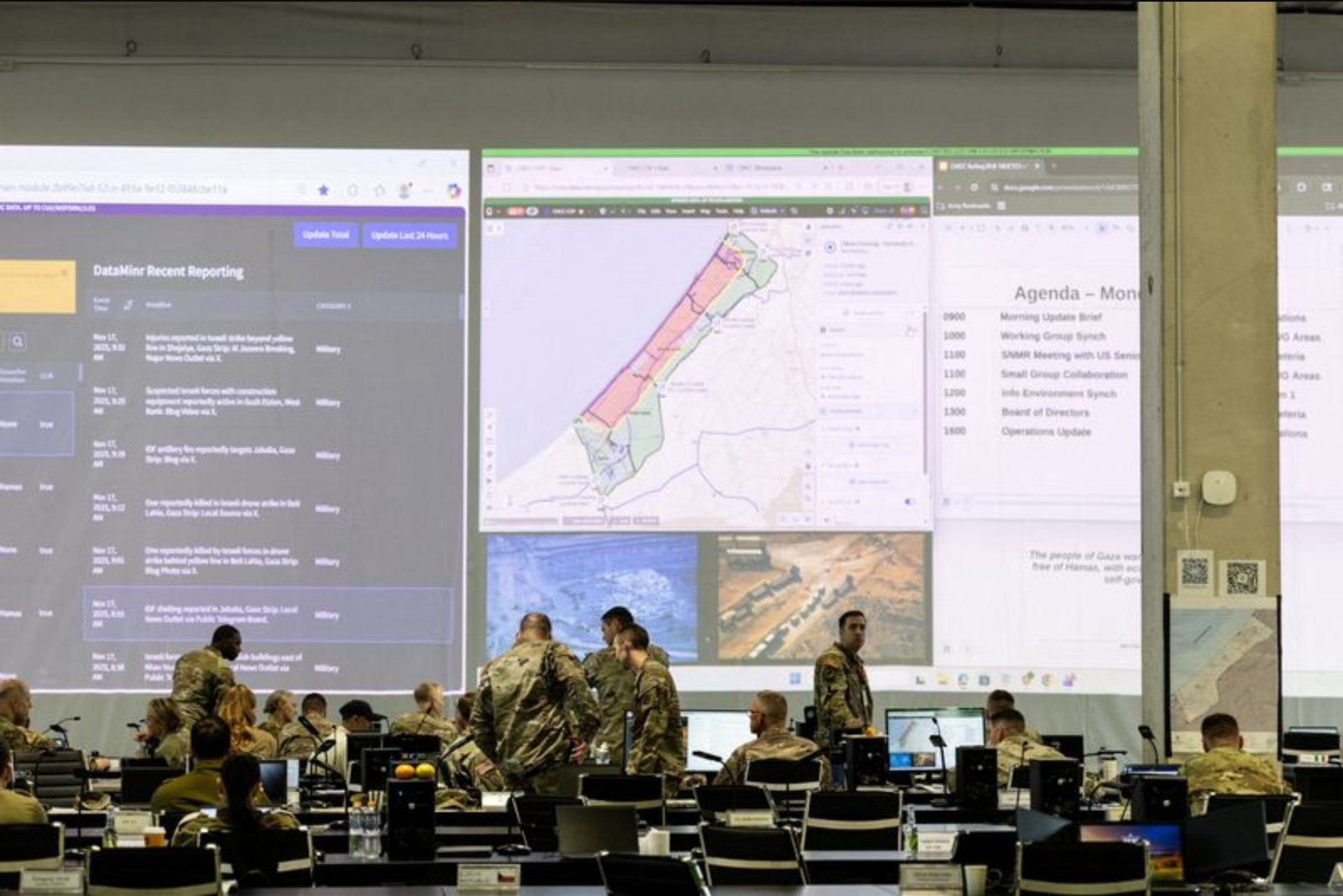
U.S. authorities are preparing to close the Civil-Military Coordination Centre (CMCC) located near Gaza and transfer its monitoring and humanitarian coordination duties to an international security mission that will operate under U.S. command, sources familiar with the matter said. The move is being presented internally by some U.S. officials as a restructuring, but diplomats and other officials characterize it as an effective shutdown of the CMCC once the International Stabilization Force (ISF) takes over.
What the transition entails
According to multiple diplomats with knowledge of CMCC operations, the planned handover will significantly reduce the number of U.S. troops assigned to the mission. A diplomat briefed on the plan said U.S. troop levels would fall to about 40 from roughly 190. Those fewer U.S. personnel would be supplemented by civilian staff contributed by other countries, diplomats said.
Sources said the CMCC - which has been operating out of a warehouse in southern Israel - already contains a walled-off annex that the ISF has established inside the facility. Access to that annex is tightly controlled by U.S. troops who, several sources said, frequently deny entry to representatives from allied countries.
Two sources indicated that once folded into the ISF the CMCC would be renamed the International Gaza Support Centre and would likely be led by U.S. Major General Jasper Jeffers, the White House-appointed commander of the ISF. The ISF itself was conceived to deploy to Gaza to establish control and provide security, but that deployment has not yet occurred.
Operational and diplomatic background
The CMCC had been a central element of President Donald Trump’s 20-point plan for Gaza, envisioned after a ceasefire meant to halt fighting between Israel and Hamas and to enable reconstruction following extensive destruction over two years of war. Dozens of countries - including Germany, France, Britain, Egypt and the United Arab Emirates - placed military planners, intelligence officials and other personnel at the CMCC to participate in discussions about Gaza’s future.
Diplomats said the centre lacked the authority to enforce the ceasefire or to guarantee the flow of aid, and they expressed doubt over whether integrating the CMCC into the ISF will materially alter conditions on the ground. The Board of Peace - a U.S. administration body created to oversee Gaza policy - declined to comment on the future of the CMCC when asked, while describing the centre as playing a "critical role in ensuring aid deliveries and coordinating efforts" and in advancing the administration’s Gaza plan.
Challenges to the CMCC’s mission
Diplomats and officials described a steady loss of momentum at the CMCC as Israel continued offensive operations and extended the armistice line deeper into Gaza. Hamas has reasserted governance in a coastal area of Gaza under its control. As a result, participation by foreign delegations has dwindled, with some countries sending representatives only intermittently and only a few maintaining steady presence at the centre.
The ISF was intended to deploy rapidly to Gaza to assume duties for control and security, but the mission has yet to mobilize. Only a small number of countries have pledged troops and none have committed to specific security roles. Washington has stated that U.S. troops would not deploy into Gaza proper.
Humanitarian access and aid flows
One of the CMCC’s central tasks was to help ensure humanitarian assistance reached Palestinians inside Gaza. Diplomats said that despite an increase in commercial goods entering Gaza, overall aid levels have remained largely stagnant. Israeli authorities have banned a number of items they say have potential dual civilian and military use. Those items include poles used for tents in displaced person camps and heavy machinery needed to clear rubble.
COGAT, the Israeli military agency responsible for controlling access to Gaza, said that 80% of the trucks entering Gaza on a daily basis carried commercial goods purchased in Israel, and that these commercial shipments were intended to supplement humanitarian supplies.
The Board of Peace official argued that Gaza ultimately needs "a sustainable civilian administration to truly transform from the years of aid dependency and cycles of violence that have clouded its past."
Security toll since the ceasefire
Diplomats and officials note that Israel has continued to carry out attacks despite the ceasefire, and that clashes and operations have resulted in further casualties. The sources cited more than 800 Palestinians and four Israeli soldiers killed since the ceasefire took effect. The ceasefire had been meant to stop a war that began with the October 7, 2023, Hamas-led attack on Israel.
During the course of the fighting that preceded the ceasefire, Israeli operations reduced much of Gaza to rubble, displaced nearly the territory’s two million residents and destroyed infrastructure vital for water distribution, sanitation and electricity. The CMCC was intended in part to help coordinate the delivery of aid to address those humanitarian needs.
Uncertainty about near-term impact
Diplomats stressed that it is unclear whether folding the CMCC into the ISF structure will change operational realities. The ISF has created a controlled annex within the existing CMCC space, but access to that area remains restricted. Several diplomats questioned whether the ISF, as currently constituted and with limited pledges of troops and few security commitments from partner countries, will be able to enforce a truce or markedly improve aid flows.
The planned reduction in U.S. troop numbers and the proposal to backfill roles with civilian staff from other countries reflect a shift in how the U.S. administration intends to manage its involvement. Whether that shift will translate into more effective coordination or simply formalize a retreat from an underperforming centre remains to be seen by participants on the ground and by international partners.
Conclusion
The planned closure and rebranding of the CMCC as part of a U.S.-commanded ISF points to a retooling of Washington’s approach to managing the ceasefire monitoring and aid coordination near Gaza. The move underscores persistent challenges in translating diplomatic initiatives into stable on-the-ground arrangements when military activity continues, partner commitments are limited and questions remain over authority and access.