
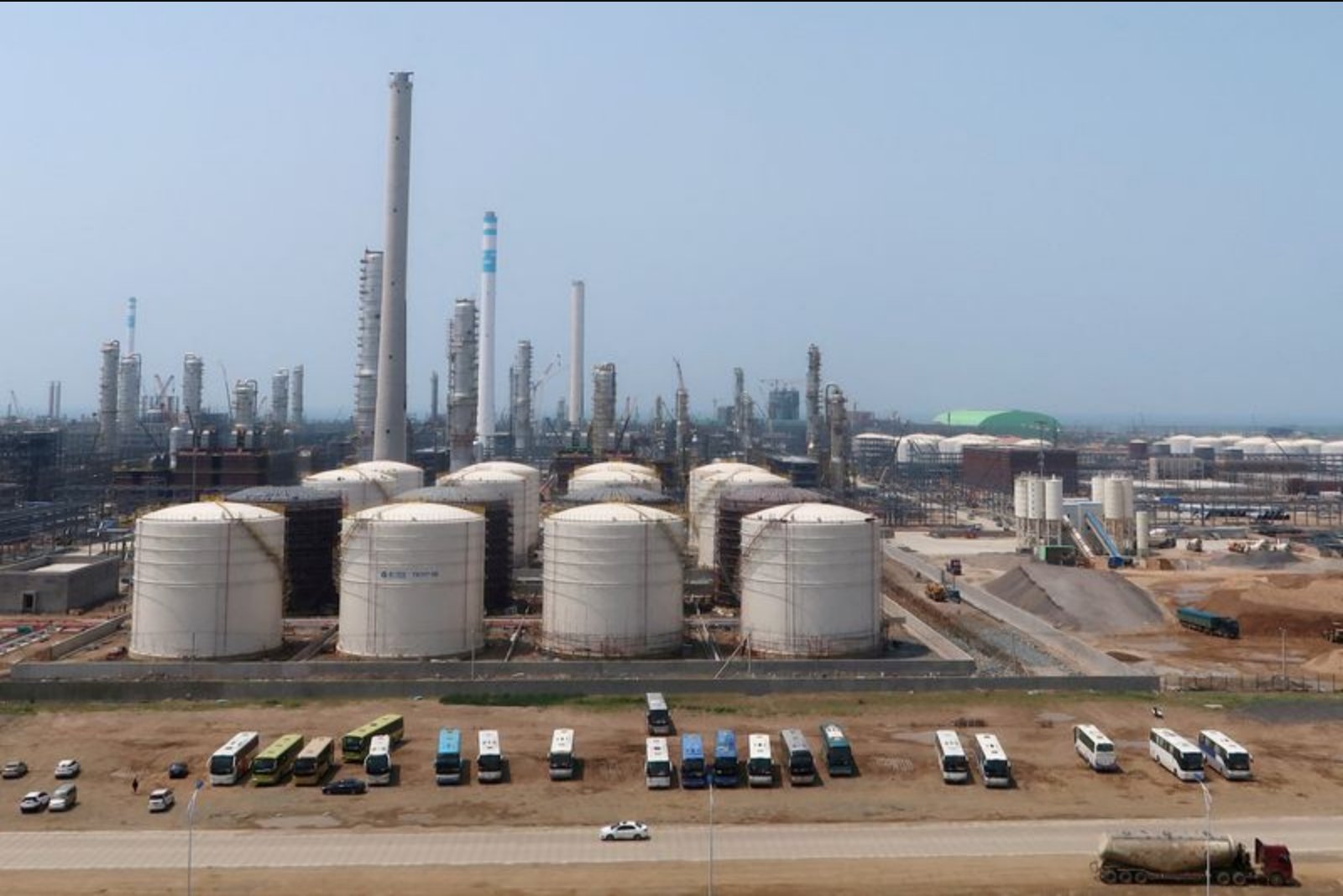
The U.S. Treasury on Friday imposed sanctions on Hengli Petrochemical (Dalian) Refinery, accusing the refinery of purchasing Iranian crude valued at billions of dollars. The sanctioning move represents a notable intensification in Washington's efforts to limit Tehran's oil revenue streams. Hengli Petrochemical's Shanghai-listed parent company immediately rejected the accusation, saying it did not do business with Iran, describing the sanctions as lacking both factual and legal basis, and stating it would seek to have the measures lifted.
At the center of the action is a large refining complex in the northeastern Chinese city of Dalian. Hengli operates a facility with a processing capacity of 400,000 barrels per day, making it the largest Chinese refiner to be designated by the United States since Washington renewed its clampdown on Iranian oil exports in 2019. The U.S. designation comes after a 30-day waiver permitting imports of already-loaded Iranian crude expired, and follows public warnings from U.S. Treasury officials earlier in the month. On April 15, the U.S. Treasury Secretary warned of sanctions on buyers of Iranian oil and disclosed that written warning letters had been sent to two Chinese banks.
The timing of the action is notable, coming in the run-up to a planned visit to Beijing by U.S. President Donald Trump in May. Until now, U.S. sanctions connected to Iran and China had largely focused on smaller, peripheral participants within the supply chain. Those earlier designations had targeted a handful of independent refiners and several import terminal operators rather than major state-linked refining capacity.
The immediate market reaction was visible. Shares of Hengli Petrochemical fell sharply, dropping by 10% on Monday following the announcement. In response to the designation, the Hengli Group restructured the ownership of its Singapore-based trading arm, Hengli Petrochemical International. The restructuring reduced the sanctioned entity's stake in that trading arm from full ownership to a 5% interest, with the remainder of the company now held by a Chinese local government entity. Several trading executives contacted after the restructuring expressed scepticism that the change would fully shield the Singapore unit from counterparty caution, noting the firm’s prior ownership structure at the time the U.S. measures were made public.
Hengli Petrochemical said it has sufficient crude inventories to support its processing operations for more than three months and indicated it will continue to settle oil procurement transactions in Chinese yuan. Those comments speak to the company’s immediate operational posture but do not remove the broader market uncertainties tied to the designation.
There are precedents to draw on. In the previous year, Washington imposed sanctions on several Chinese entities, including three small refiners. Those earlier moves reportedly created challenges for the targeted companies in receiving crude supplies and led at least two refiners to sell product under alternative brand names. In October, the United States sanctioned an import terminal through which a major Chinese state refiner had received roughly one-fifth of its crude. The sanction on that terminal resulted in it being idled for months, disrupting crude flows and prompting cargo diversions as market participants steered clear of the facility to avoid potential secondary sanctions. In that instance, a logistics unit of the state refiner eventually sold its stake in the terminal to a local port operator.
Another sizable Chinese refinery with operations tied to Singapore, Shandong Yulong Petrochemical, experienced broad secondary effects last year after being sanctioned by Britain and the European Union for dealing in Russian oil. Following those measures, non-Russian suppliers, foreign customers, banks and vendors largely stopped transacting with Yulong, a dynamic that pushed the company to increase its reliance on Russian crude supplies.
The broader pattern of U.S. sanctions on Iranian oil has had particular implications for trading and refining patterns. China, as the world's largest crude importer, has been the dominant destination for Iranian exports in recent years, receiving a record 1.8 million barrels per day in March, according to Vortexa Analytics. Yet traders say China's large state-owned refining groups largely avoided buying Iranian crude after U.S. sanctions were reimposed in 2019; instead, independent refineries, colloquially referred to as "teapots," became the main buyers of discounted Iranian barrels that are avoided elsewhere.
Shipments of Iranian oil to China are frequently trans-shipped at sea and are often rebranded as Malaysian or Indonesian cargoes. Beijing has consistently defended its commercial engagement with Tehran as legitimate trade and has rejected what it describes as "illegal" unilateral sanctions.
Summary of key developments
- U.S. Treasury designated Hengli Petrochemical (Dalian) Refinery on allegations it bought billions in Iranian crude.
- Hengli denied the allegations and said it will seek removal of the sanctions; it also reported three months of crude inventory and plans to settle purchases in yuan.
- Market and logistical consequences surfaced immediately, including a 10% fall in Hengli shares and a restructuring of its Singapore trading arm.