
World February 23, 2026 03:57 AM

U.N. Chief Warns Global Human Rights Protections Are Under Strain

Antonio Guterres says conflicts and funding shortfalls have left the U.N. human rights system in 'survival mode'

By Ajmal Hussain

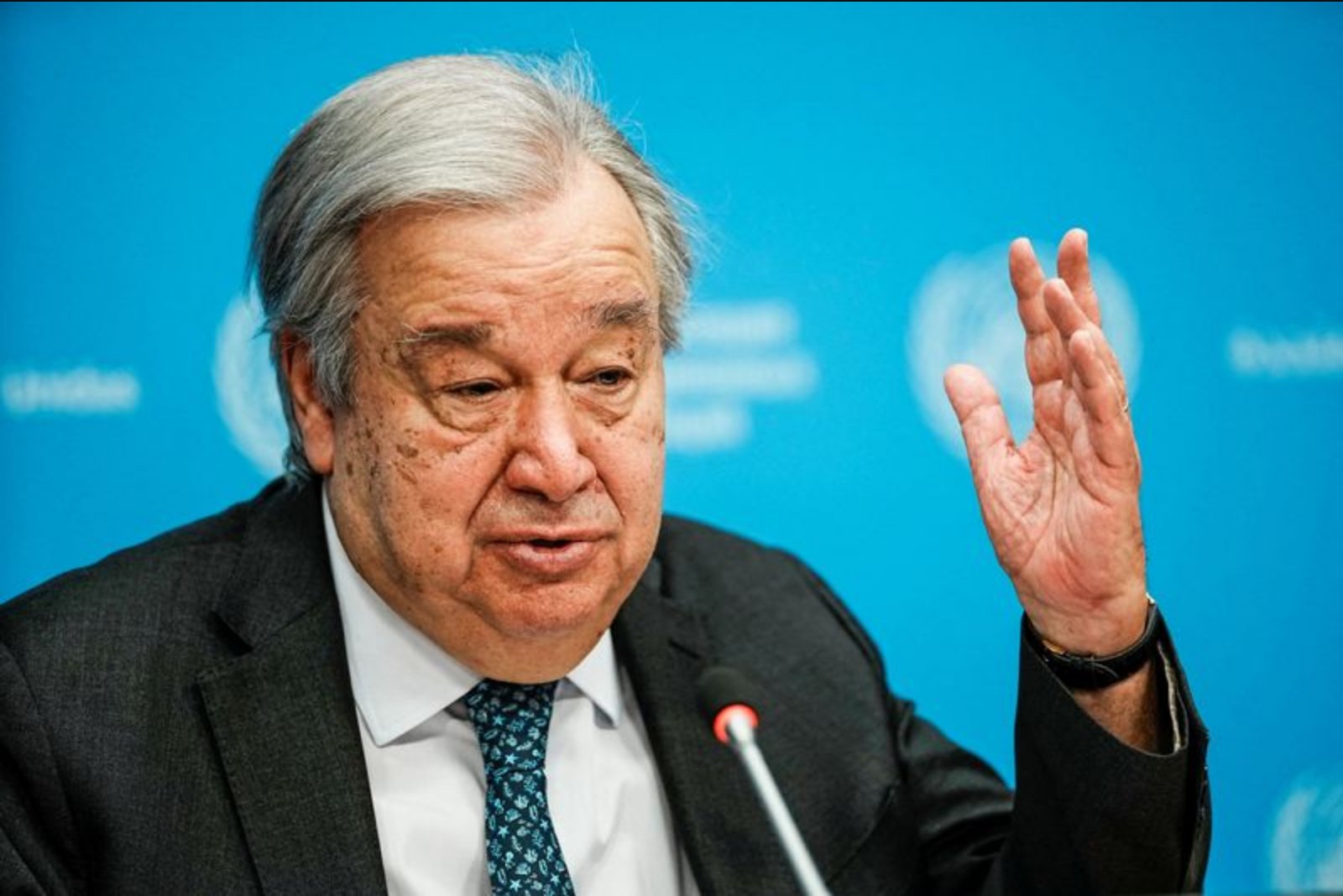
United Nations Secretary-General Antonio Guterres told the Human Rights Council in Geneva that international human rights protections are being eroded amid widespread abuses in conflicts including Sudan, Gaza, and Ukraine. He warned that the rule of law is being overtaken by force and said the U.N. human rights system faces severe strains from funding cuts, attacks on experts, and the U.S. withdrawal from a major accountability mechanism. The U.N. is also confronting a budget shortfall after reduced payments from top donors, including a partial payment from the United States toward a multi-billion dollar arrears total.

U.N. Chief Warns Global Human Rights Protections Are Under Strain

Key Points

  • U.N. Secretary-General Antonio Guterres told the Human Rights Council that human rights are under assault globally, citing severe civilian harm and breaches of international law in Sudan, Gaza, and Ukraine.
  • The U.N. human rights system is described as being in "survival mode" due to funding cuts, attacks on experts, and the United States' withdrawal from a principal universal accountability mechanism - pressures that affect the international system's capacity to respond.
  • Budgetary shortfalls are material: the United States, the U.N.'s top donor, paid about $160 million in February toward more than $4 billion it owes, contributing to a wider funding crunch that has implications for humanitarian assistance, international organisations, and sectors involved in conflict response and recovery.

United Nations Secretary-General Antonio Guterres opened the Human Rights Council in Geneva by issuing a stark assessment of the global state of human rights, saying protections are being actively undermined and civilians are suffering in multiple conflict zones.

Guterres identified widespread breaches of international law and pointed to devastating civilian harm in Sudan, Gaza, and Ukraine as examples of the pressure on established norms. He framed the situation in blunt terms, declaring that the rule of law is being overtaken by the rule of force.

"The rule of law is being outmuscled by the rule of force," Guterres said as he addressed the council.

He warned that human rights are not a buffet from which states can choose selectively, saying efforts are underway to push back hard against international protections. The secretary-general urged member states to resist treating universal rights as optional.

Guterres also mounted a vigorous defence of the United Nations human rights system, which he described as being in "survival mode." He attributed that precarious state to several pressures, notably cuts to funding, targeted attacks on some human rights experts, and a high-profile withdrawal by the United States from one of the U.N.'s principal universal rights accountability mechanisms.

"Humanitarian needs are exploding while funding collapses," he said, linking the rise in needs to the simultaneous shrinkage of available resources for response.

The U.N. human rights office, alongside other components of the organisation, is facing budgetary strain after decisions by the United States - the U.N.'s largest donor - and other governments to reduce funding. A United Nations spokesperson said Washington in February transferred roughly $160 million toward a debt exceeding $4 billion that it owes to the organisation.

The secretary-general's remarks at the Human Rights Council highlighted both the human cost of ongoing conflicts and the institutional stress affecting the international mechanisms intended to monitor and defend rights. He urged collective action from member states to prevent further erosion of universal human rights protections.

Risks

  • Reduced funding for the U.N. human rights office could limit monitoring and aid delivery, increasing humanitarian risk in conflict-affected regions and affecting non-governmental organisations, aid agencies, and markets tied to humanitarian logistics.
  • Attacks on human rights experts and the U.S. withdrawal from a key accountability mechanism may weaken international oversight, creating uncertainty for diplomatic processes and organisations that rely on multilateral frameworks to operate.
  • Escalating conflicts and shrinking resources heighten the risk of worsening civilian suffering, which could increase demand for humanitarian services and strain public and private sector actors involved in relief operations and reconstruction.

More from World

Journalists Killed or Abducted in Mexico Nearly Double in 2025, Report Finds May 6, 2026 Cuban leaders condemn U.S. statements on possible military intervention amid crippling fuel shortages May 6, 2026 Macron Presses Iran on Keeping Strait of Hormuz Open for Shipping May 6, 2026 Sheinbaum Faces Internal Morena Rift After U.S. Indictment of Mexican Officials May 6, 2026 France Sends Carrier Strike Group to Red Sea as Plan for Hormuz Security Advances May 6, 2026