
Arm Holdings on Wednesday projected first-quarter revenue that would top analysts' expectations, attributing the uplift to accelerating adoption of its chip designs as technology firms expand spending on artificial intelligence compute.
The company said it expects quarterly revenue of $1.26 billion, compared with the $1.25 billion estimate compiled by LSEG. Arm's business model centers on licensing its chip architectures to customers such as Nvidia and Apple and collecting royalties on products built using those designs.
Those Arm-developed architectures are prized for low power consumption, a feature that has become especially valuable for data center operators grappling with rising energy use and heat output from large-scale AI models. Arm's technology also underpins the overwhelming majority of smartphones, reinforcing the company's reach across both mobile and server markets.
At the same time, the broader semiconductor ecosystem faces headwinds from a shortage of memory chips. The supply constraint has increased prices for consumer electronics and slowed device sales, a dynamic that can translate into reduced royalty streams for Arm when fewer finished products reach the market. Qualcomm last week flagged a weak quarterly revenue outlook because of these memory issues, though its stock later rose following comments suggesting demand could rebound.
Arm reported fourth-quarter revenue of $1.49 billion, ahead of the $1.47 billion consensus. Within that result, royalty revenue was $671 million, below the $697.1 million analysts had expected, while licensing and other revenue totaled $819 million versus expectations of $774 million. For the coming quarter, the company forecast adjusted earnings per share of $0.40 compared with a $0.36 estimate.
Executives see a growing opportunity in general-purpose CPU chips as AI agents increase demand for substantial compute beyond specialized accelerators. "We are very bullish about this data center demand," Arm CEO Rene Haas said in an interview, adding that the current quarter includes a "pretty healthy uptick in terms of royalties associated with the data center."
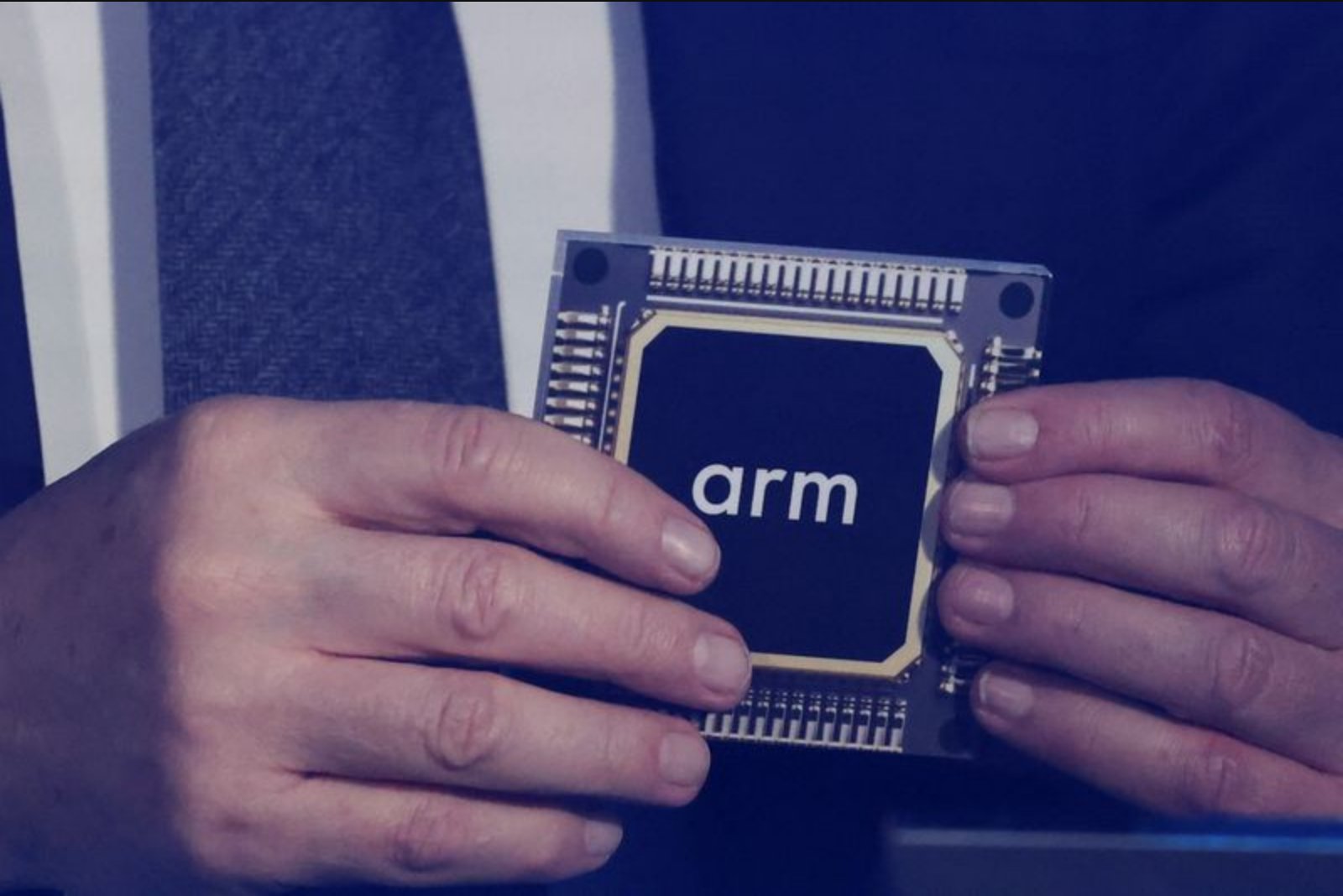
Competitors and partners are also responding to the expanding server CPU market. AMD on Tuesday guided quarterly revenue above estimates and raised its view of the server CPU addressable market, projecting faster growth than it had forecast in November. Arm itself has introduced a new data center processor, the AGI CPU, which the company says will target compute needs for a specific type of AI that acts autonomously on behalf of users rather than merely responding to query-based interactions.
Arm has stated the AGI CPU will add billions of dollars of revenue. On Wednesday, the company said it has secured $2 billion of customer demand for the processor across fiscal years 2027 and 2028. Of that demand, Arm currently has capacity assured to fulfill $1 billion worth of orders tied to the AGI CPU; the remaining $1 billion is not yet underpinned by secured capacity.
"For this extra demand, we’re working really hard with the supply chain to fulfill that demand," Haas said, signaling active efforts to scale production partners and manufacturing capability to match customer commitments.
Arm's stock performance has reflected investor enthusiasm: shares have climbed more than 91% year-to-date through Tuesday's close, outperforming several major chip companies including Nvidia, Advanced Micro Devices and Broadcom.
For investors and supply-chain stakeholders, Arm's update highlights two concurrent forces: stronger revenue upside tied to data center AI deployments and ongoing operational risks driven by component shortages and capacity constraints. How rapidly the company and its partners can convert signed demand into delivered product and royalties will shape the near-term revenue trajectory.