
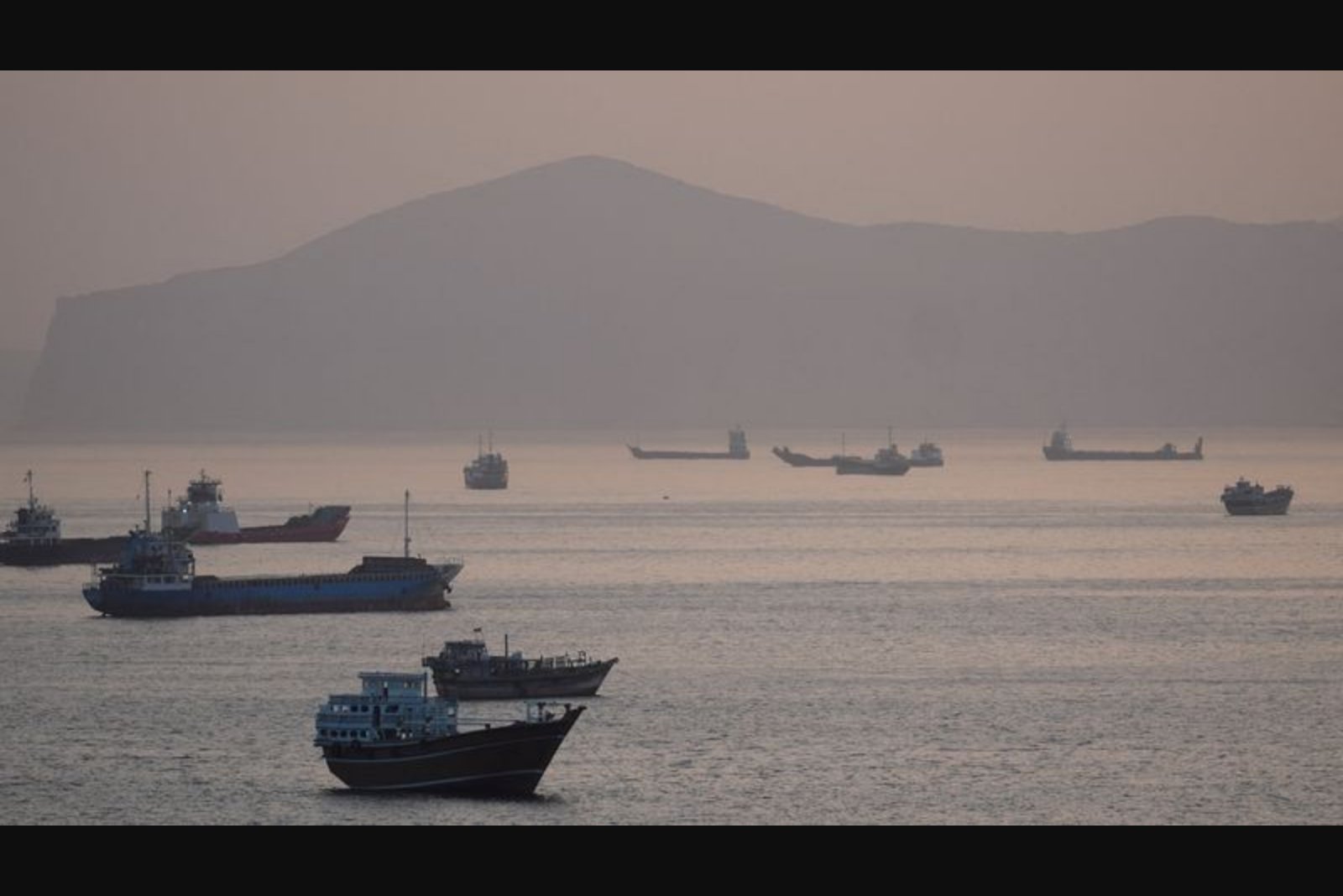
Senior officials in the United Arab Emirates have publicly rejected any unilateral arrangement put forward by Iran to regulate traffic through the Strait of Hormuz, saying such proposals cannot be relied upon after what they described as Iran's recent aggressive actions. The comment reflects deep distrust across the region at a moment when diplomatic efforts to end the Iran war have produced little forward movement.
Two months into the conflict, the strategic waterway remains effectively closed to regular commercial traffic as Tehran enforces a blockade and the U.S. Navy continues to block exports of Iranian crude oil. The disruption has removed roughly 20% of the world's oil and gas supplies from the market, a contraction that has pushed global energy prices higher and heightened fears of a potential economic downturn.
A ceasefire has been in effect since April 8, but fresh reports that U.S. President Donald Trump would be briefed on options for new military strikes to compel Iran back to negotiations briefly sent global oil prices to the highest levels seen in four years during trading on Thursday. In response to the prospect of renewed strikes, Iranian authorities have activated air defences and signalled intentions to mount a broad response if attacked, having assessed that a likely scenario would be a short, intensive U.S. strike possibly followed by an Israeli attack, two senior Iranian sources told Reuters on condition of anonymity.
UAE stance and international law
Speaking to the broader international community, UAE presidential adviser Anwar Gargash emphasized that freedom of navigation through the strait must rely on "the collective international will and provisions of international law." He added: "And, of course, no unilateral Iranian arrangements can be trusted or relied upon following its treacherous aggression against all its neighbors." Gargash's remarks underline the Gulf states' concern that individual initiatives by Iran would not provide a stable or enforceable guarantee for maritime traffic.
U.S. political and legal context
President Trump was facing a formal U.S. deadline on Friday under the 1973 War Powers Resolution to either end the war or make a case to Congress for extending it. Officials signalled that the deadline was expected to pass without changing the course of the conflict after a senior administration official stated that, for the purposes of the resolution, hostilities had terminated because of the April ceasefire between Tehran and Washington.
Washington has not specified its next military steps. Trump said he was unhappy with the latest Iranian proposal and that he would not allow Iran to obtain a nuclear weapon. He also suggested that gasoline prices would "drop like a rock" once the war ended. Iran, for its part, maintains its nuclear programme is solely for civilian purposes.
Market reactions
Financial and energy markets have remained on edge amid concerns over stalled negotiations and the potential for an extended closure of the Strait of Hormuz. Global benchmark Brent crude futures rose again on Friday, trading slightly above $111 a barrel and poised for a weekly gain of 5.7% after reaching $126 a barrel on Thursday, its highest level since March 2022.
Iranian statements and readiness
Iranian Foreign Ministry spokesman Esmaeil Baghaei cautioned against expecting quick results from talks. A senior official of Iran's Islamic Revolutionary Guard Corps warned that any new U.S. attack on Iran, even if limited in scope, would trigger "long and painful strikes" on U.S. regional positions. Aerospace Force Commander Majid Mousavi was quoted by Iranian media as saying: "We've seen what happened to your regional bases, we will see the same thing happen to your warships." These comments reflect Tehran's posture of deterrence and its stated readiness to respond to military action.
Analysts noted that while Iran's economy has been severely strained by the conflict and the U.S. blockade that has cut off its energy exports, it appears able to endure the immediate standoff in the Gulf for the time being. President Trump described Iran's economy as "a disaster," but observers cautioned that expecting Tehran to quickly capitulate under economic pressure could be optimistic.
Possible military options and coalition planning
Officials have discussed a range of potential options. One plan reported to be presented to the President during military briefings involved using ground forces to seize part of the strait in order to reopen it to commercial shipping. Separately, officials said Trump was considering either extending the U.S. blockade or declaring a unilateral victory, though no operational details were announced by Washington.
At the same time, diplomatic and cooperative security measures were being floated. A State Department cable scheduled to be delivered orally to partner nations by May 1 invited allies to join a new coalition, the Maritime Freedom Construct, intended to enable safe navigation through the strait. France, Britain and other partners have held talks about contributing to such a coalition but have stated they would assist in reopening the Strait only after the conflict has ended.
Conflict trajectory and uncertainty
The fighting that has unfolded since late February has involved a sequence of strikes and counterstrikes. After U.S. and Israeli airstrikes on February 28, Iran launched attacks on U.S. bases, infrastructure and companies linked to the United States in Gulf states. The Iran-backed Lebanese group Hezbollah fired missiles at Israel, which then conducted strikes in Lebanon. These exchanges have fed into heightened regional tensions and reinforced Gulf states' concerns about the security of maritime routes.
For now, the combination of a de facto blockade of the Strait of Hormuz by Iran and a U.S. maritime interdiction of exports has materially tightened global energy supplies and left markets sensitive to any signals of renewed hostilities or diplomatic breakthrough. How long this standoff will persist and whether it will thaw through renewed talks or further military action remains unclear.
Key sectors affected: Energy markets, shipping and logistics, regional defence spending, and global financial markets.