
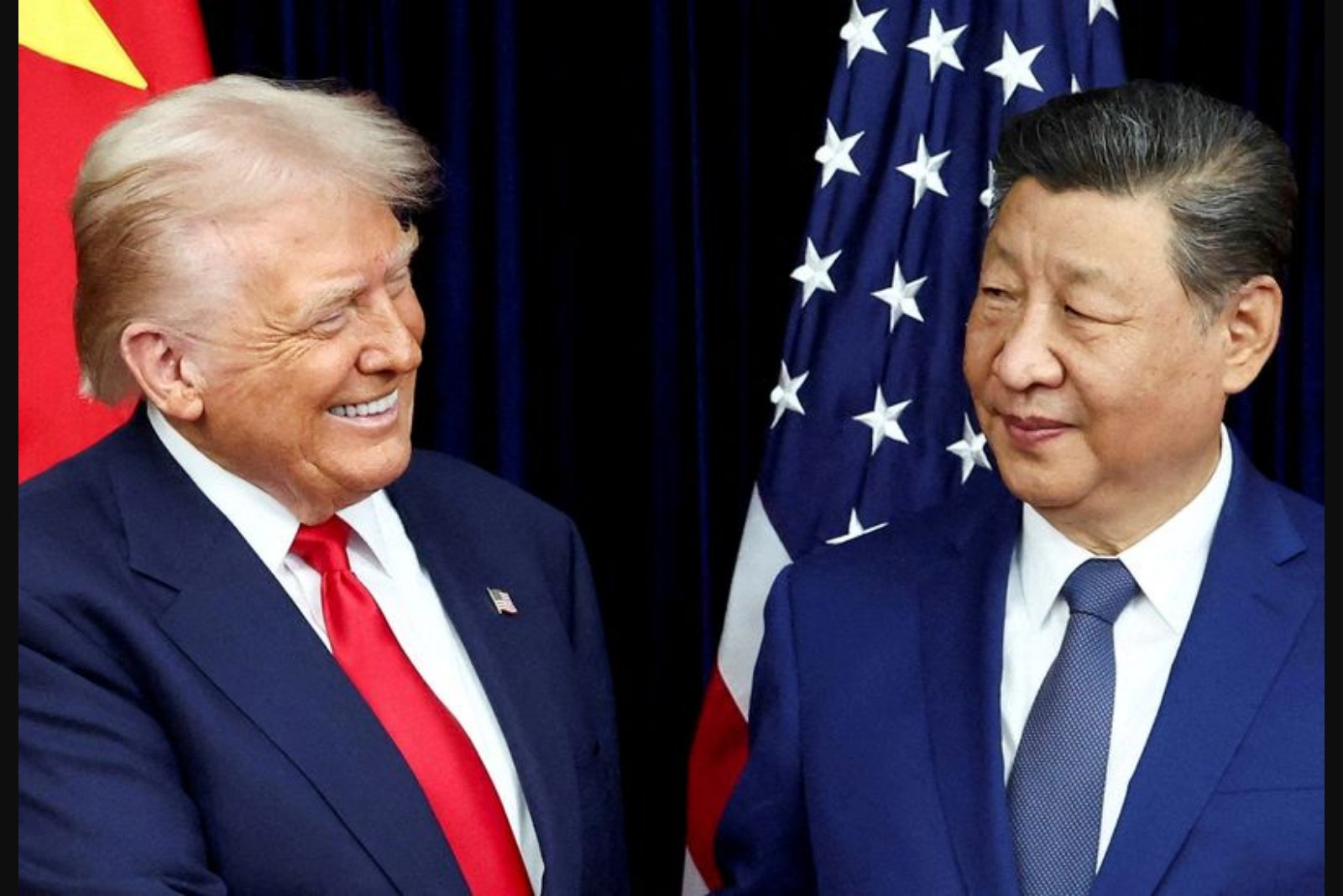
For the 23 million people who live on Taiwan, the upcoming meeting between U.S. President Donald Trump and Chinese leader Xi Jinping may prove to be one of the most consequential diplomatic encounters of 2026, even though Taiwan's representatives will not be at the negotiating table. Officials in Beijing have signaled that the island will be placed at the top of Xi's agenda, a marked contrast to last year's summit in South Korea where the issue was deliberately put to one side.
Seated at the centre of the talks are questions about whether Trump might soften or reframe long-standing U.S. policy on Taiwan in exchange for economic concessions - such as increased Chinese purchases of U.S. aircraft or agricultural goods - or for Beijing to ease other economic pressures. Such an outcome would unsettle Taipei and could raise new doubts about Washington's security commitments across Asia.
Wu Xinbo, dean of the Institute of International Studies at Fudan University and a member of China’s foreign ministry policy advisory board, described the logic Beijing sees as straightforward: "Regarding Taiwan, the logic is simple: if the U.S. does not want to fight a major war with China over Taiwan, it should not support Taiwan independence." He added, "Trump has no interest in going to war with China. To avoid a major conflict that involves the U.S., he should make it clear that he won’t support independence or take actions that encourage a separatist political agenda."
The U.S. State Department and China’s foreign ministry did not provide comments in response to requests.
Under its "one China policy," the U.S. takes no formal position on Taiwan's sovereignty and acknowledges, without endorsing, China's claim over the island. The United States states it "does not support" Taiwan independence and says it will help Taipei maintain its self-defence capabilities.
Given Taiwan's central role in the military balance across the western Pacific, even subtle shifts in American phrasing or policy could affect Beijing's assessment of U.S. resolve and thereby alter strategic calculations. Experts warn that language alone, if perceived as a softening, could be enough to change regional perceptions of U.S. commitment to Taiwan's defence.
Administration officials have publicly insisted there has been no change to U.S. policy on Taiwan and have continued to criticize Beijing for pressuring the island. Privately, those officials point to an acceleration in arms approvals, noting that Mr. Trump has authorised substantially more weapons sales to Taiwan in just over a year of his second term than were approved during the previous U.S. presidency.
Diplomatic sources say China has repeatedly, at working levels, signalled its desire for adjustments to U.S. wording. A summit-level request from Xi to President Joe Biden in 2024 asked Washington to shift its formulation to "we oppose Taiwan independence" from the current language. The U.S. did not accede to that change. People involved in preparing for Trump's forthcoming trip said China has continued to send similar messages in advance of the summit, while declining to disclose specifics because negotiations are confidential.
Taiwan's government, which rejects Beijing's claim of sovereignty over the island, has been placed on heightened alert. The Mainland Affairs Council's deputy minister, Shen Yu-chung, said Taipei will be closely monitoring whether the U.S. modifies its stance on issues concerning the Taiwan Strait as a result of the meeting, and promised to intensify policy communications with Washington in the meantime.
A Foreign Ministry spokesperson in Taipei, Hsiao Kuang-wei, reiterated that since President Trump returned to office, his administration "has continuously reaffirmed its support for Taiwan."
Beijing has not renounced the use of force to bring Taiwan under its control. In late December, it held military exercises around the island following Washington's announcement of an $11 billion arms sales package for Taiwan, which was the largest ever at the time. Observers note that China has combined offers of economic "benefits" for Taiwan - including trade and tourism incentives - with coercive measures.
Most recently, Taipei accused China of pressuring three African nations to withhold overflight rights for a planned trip by Taiwan's President Lai Ching-te to Eswatini, forcing the cancellation of the visit. The United States strongly condemned these actions.
President Lai asserts that Taiwan already functions as an independent country under its official name, the Republic of China. Beijing, however, brands Lai a "separatist" and an illegitimate leader whose policies risk driving the two sides of the Taiwan Strait toward confrontation.
In the run-up to the summit, the top U.S. diplomat in Taipei, Raymond Greene, has made public assurances that Washington's commitments remain "rock solid," including those arising from the Taiwan Relations Act which obliges the United States to provide arms for Taiwan's self-defence.
Robert O'Brien, a former adviser to President Trump, said he did not expect the president to allow Taiwan to be lost. "I would not become the first American president to lose Taiwan. That would not be a Donald Trump goal to have in mind. That's not the legacy he wants," he said.
U.S. strategic interests in Taiwan extend beyond formal defence commitments. Security sources report that Taiwan hosts advanced radar stations and listening posts located high in its mountains that the United States uses discreetly to gather intelligence directed at China. A Western security source, speaking on condition of anonymity because of the sensitivity of the subject, asked rhetorically: "Does the United States really want to lose one of its best locations for gathering intelligence on China?"
As the summit approaches, Taipei's officials continue to coordinate closely with Washington, while Beijing balances diplomatic incentives against coercive pressure. The meeting between Trump and Xi will be watched not only for any explicit policy changes but for shifts in rhetoric that could reverberate across defence, semiconductor, aviation and agricultural sectors that are closely tied to Taiwan's strategic and economic position.