
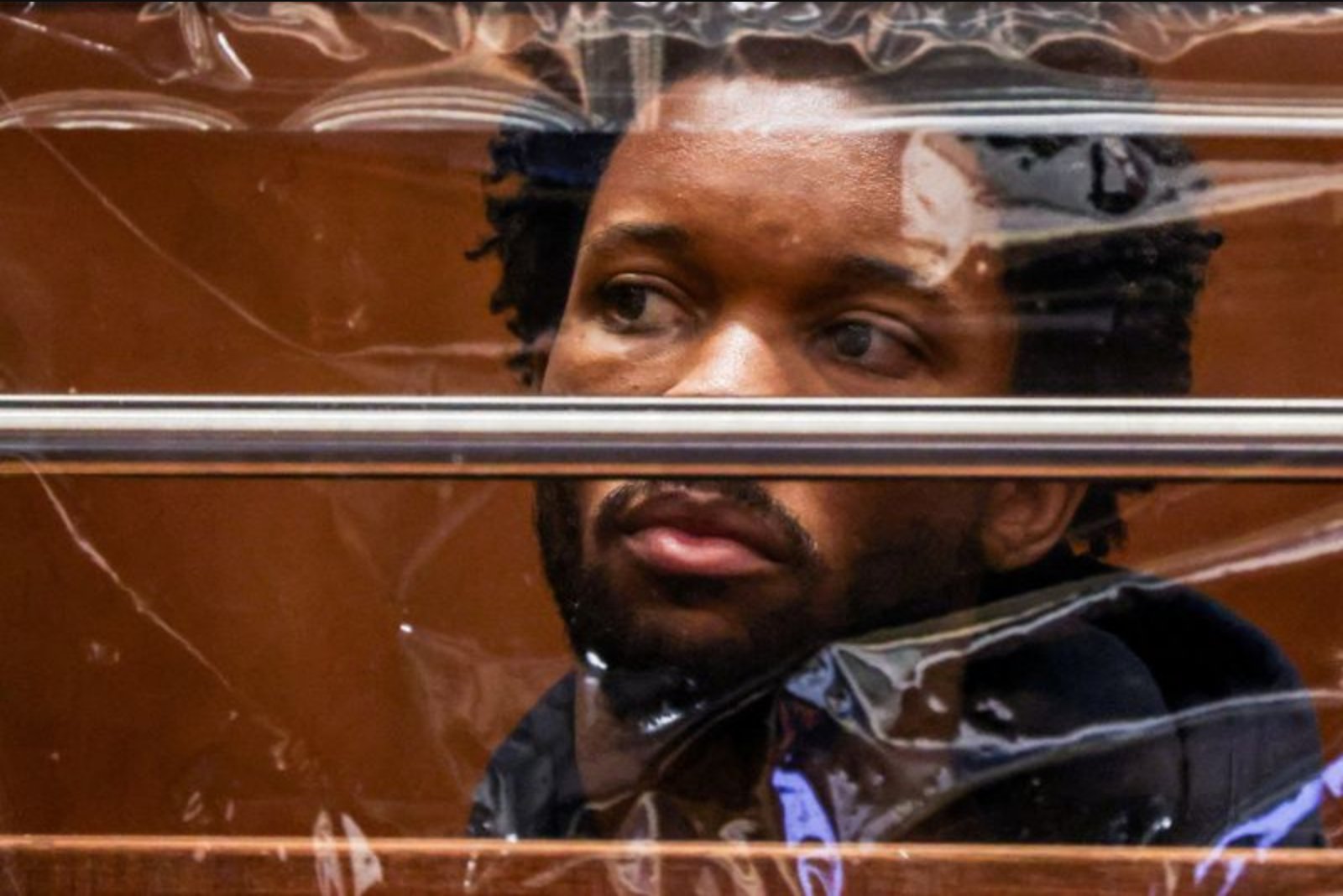
Los Angeles County prosecutors on Wednesday submitted an eight-page court brief that lays out what they describe as "horrifying" acts taken by indie pop artist D4vd in the alleged killing and disposal of a teenage girlfriend last April.
The filing says the singer-songwriter placed the victim's body in a blue inflatable pool inside his garage "to prevent blood from spilling onto his garage floor," then dismembered the body using a chain saw and possibly other tools. Prosecutors allege the pool, two chain saws, a shovel, a cadaver bag and additional materials were purchased online under a fictitious name and delivered to the artist's Hollywood Hills residence after the killing.
Authorities identified the victim as 14-year-old Celeste Rivas Hernandez. Prosecutors, police and medical examiners say the badly decomposed torso and head were found in September inside a cadaver bag that had been stuffed into the trunk of a Tesla registered to the defendant, David Burke. Underneath the cadaver bag, they say, was a plastic garbage bag containing the victim's limbs.
The filing reports that two fingers on the girl's left hand had been amputated and were not recovered. One of those fingers reportedly bore a tattoo of Burke's name.
According to the court document, Burke - who performs under the name D4vd - last drove the vehicle on July 29, 2025, then abandoned it near his home before leaving on a concert tour. Weeks after it was abandoned, impound lot workers noted an odor of decay from the vehicle and alerted authorities, the brief states.
Prosecutors also included the first formal allegation of a motive in the court filing. They contend Burke moved to silence the victim because she had become jealous and threatened to disclose damaging information about their relationship, which prosecutors say could have harmed his rising music career. The brief notes that Burke's first studio album was scheduled for release that month and that he had secured lucrative product endorsements at the time.
The document alleges the pair had a sexual relationship when the victim was as young as 11. Prosecutors say investigators recovered text messages that included references to sex, pregnancy, abortion and emergency contraception, as well as sexually explicit photographs.
Prosecutors state that on April 23, 2025 - the day after an argument in which the girl allegedly threatened to go public with damaging information - Burke summoned her by arranging an Uber ride. The brief says that when she arrived, he "stabbed the victim to death," then took steps the filing describes as "horrifying measures" to destroy and discard her body.
Searches of Burke's garage in September reportedly produced evidence consistent with the alleged dismemberment, including blood samples and remnants of an inflatable pool showing "multiple linear cuts," the brief says.
Burke gained mainstream attention in 2022 when songs he recorded on his phone for gaming videos went viral on social media platforms, and his single "Romantic Homicide" helped him secure a record deal. Prosecutors note he performed at the Coachella music festival in 2025.
At his April 20 arraignment Burke pleaded not guilty to charges including first-degree murder. Defense attorney Blair Berk is quoted as telling the court: "We believe the actual evidence will show David Burke did not murder Celeste Rivas Hernandez, nor was he the cause of her death."
Summary
Los Angeles County prosecutors have filed detailed allegations that indie musician D4vd killed and dismembered his 14-year-old girlfriend in April and attempted to conceal her remains using purchased materials delivered to his home. Evidence outlined in the filing includes items found in Burke's garage and trunk of his vehicle, messages and photos recovered by investigators, and prosecutors' theory that Burke acted to silence the victim to protect his music career. Burke has pleaded not guilty.
Key points
- Prosecutors allege that the defendant used a blue inflatable pool and a chain saw to prevent visible blood evidence in his garage and to dismember the victim - actions supported in the brief by items purchased online and recovered at the scene. - Sectors impacted: Music industry, legal services, event promotion.
- The torso and head of 14-year-old Celeste Rivas Hernandez were discovered in September in a cadaver bag in the trunk of a Tesla registered to Burke, with limbs found separately beneath in a plastic garbage bag. - Sectors impacted: Automotive impound services, law enforcement investigation units, forensic pathology.
- Prosecutors assert a motive tied to the protection of the artist's rising career, citing an imminent album release and endorsement deals; the defense maintains Burke did not commit the crime. - Sectors impacted: Entertainment, advertising and endorsements, music distribution.
Risks and uncertainties
- Legal uncertainty - The case remains in the pretrial stage and the defendant has pleaded not guilty; outcomes will depend on evidence presented at trial and legal proceedings. - Sector affected: Legal services.
- Evidence gaps and recovery issues - Two amputated fingers reported missing and other elements of the alleged dismemberment were not recovered or are incompletely documented in the filing, creating evidentiary uncertainties. - Sector affected: Forensic investigation and criminal justice.
- Motive contested - Prosecutors allege the killing was intended to prevent disclosure of damaging information about the relationship, but that motive is an allegation in the brief and not a judicial finding. - Sector affected: Entertainment and public relations for artists and sponsors.
Tags: music, crime, legal, entertainment, forensics