
Ukraine is expanding its response to nightly drone attacks by bringing private companies into the country’s air defence effort to protect commercial sites and critical infrastructure. Under a pilot programme launched last year, industrial firms can form or hire private air defence groups to guard their facilities, with 20 companies registered so far and two already conducting operations, according to the Defence Ministry.
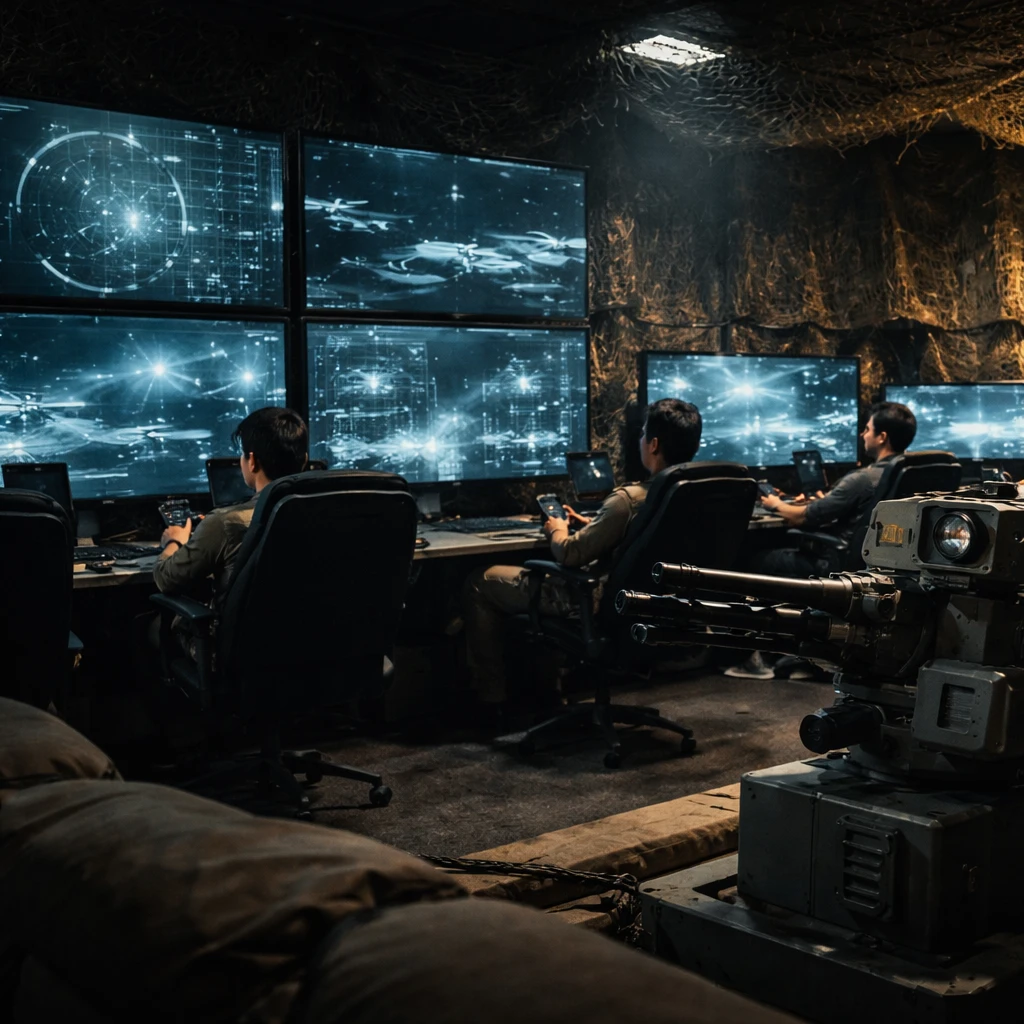
One such firm, Carmine Sky, says it offers multiple tiers of protection tailored to a client’s needs. Those layers - described by a company representative only as Ruslan for security reasons - range from interceptor drones to automated turrets equipped with M2 Browning heavy machine guns.
"It’s like an onion, made of layers," Ruslan said, describing the company’s approach. He spoke while standing in a control room where Carmine Sky staff monitor the skies for incoming Russian drones. The room was dim, the walls draped with masking nets, and operators reclined in padded chairs, their fingers resting on gamepads as they scanned displays for targets.
Russia launches thousands of low-cost, long-range attack drones at Ukraine every month, the companies and officials say. While most are intercepted, those that penetrate defences have caused significant destruction to military infrastructure, factories and energy facilities, contributing to widespread power and heating outages last winter.
Carmine Sky operates in Ukraine’s northeastern Kharkiv region and in other regions, Ruslan said, without specifying additional locations or identifying any of the firm’s clients. He emphasized the private firms are intended to supplement, not replace, state air defences.
"We are only complementing the traditional state air defence model," Ruslan said. "State air defence has a more strategic role, while we are local." That local role comes with rules: companies must receive authorisation from the Ministry of Defence before beginning operations and are incorporated into the Ukrainian air force’s command-and-control system.
Under that arrangement, the national military retains authority over targeting and the decision to open fire. "Targets and the decision to open fire is made solely by them," Ruslan said. "We cannot do so on our own."
Defence Minister Mykhailo Fedorov has pointed to early operational successes. Last month he said an unnamed private firm had shot down Russian drones in the Kharkiv region, and on April 17 he reported that a private air defence unit had downed a jet-powered Shahed drone.
Recruitment into private air defence units involves stringent vetting. Civilian recruits must pass a comprehensive process that includes a polygraph test, which is then repeated quarterly, Ruslan said. Training windows vary by role: Roman Korzh of Gvardiia, another company providing air defence services, said training someone with no prior experience to serve as a drone interceptor pilot takes roughly three weeks. Those who do not qualify as pilots are assigned to roles such as spotters or technicians.
Gvardiia draws much of its workforce from existing volunteer air defence formations that already have combat experience. Korzh, who oversees training, described those volunteer units as "our backbone." He also noted that duty schedules can be flexible, enabling recruits to arrange shifts around civilian employment when necessary.
The programme places private units within the broader national air defence framework while preserving centralized control over lethal engagements. Companies supply localised, layered protections and personnel but operate under authorisation and oversight from the Ministry of Defence and the air force command-and-control system.
Summary
Ukraine’s pilot programme permits private air defence companies to protect businesses and critical infrastructure from frequent Russian drone attacks. Twenty companies are registered and two are active. Firms like Carmine Sky employ layered defences from interceptor drones to heavy-machine-gun turrets, operate in regions including Kharkiv, and are integrated into the air force command-and-control system. Final firing decisions remain the responsibility of state military authorities. Recruitment involves rigorous vetting and training, with some units recruiting from experienced volunteer formations.