
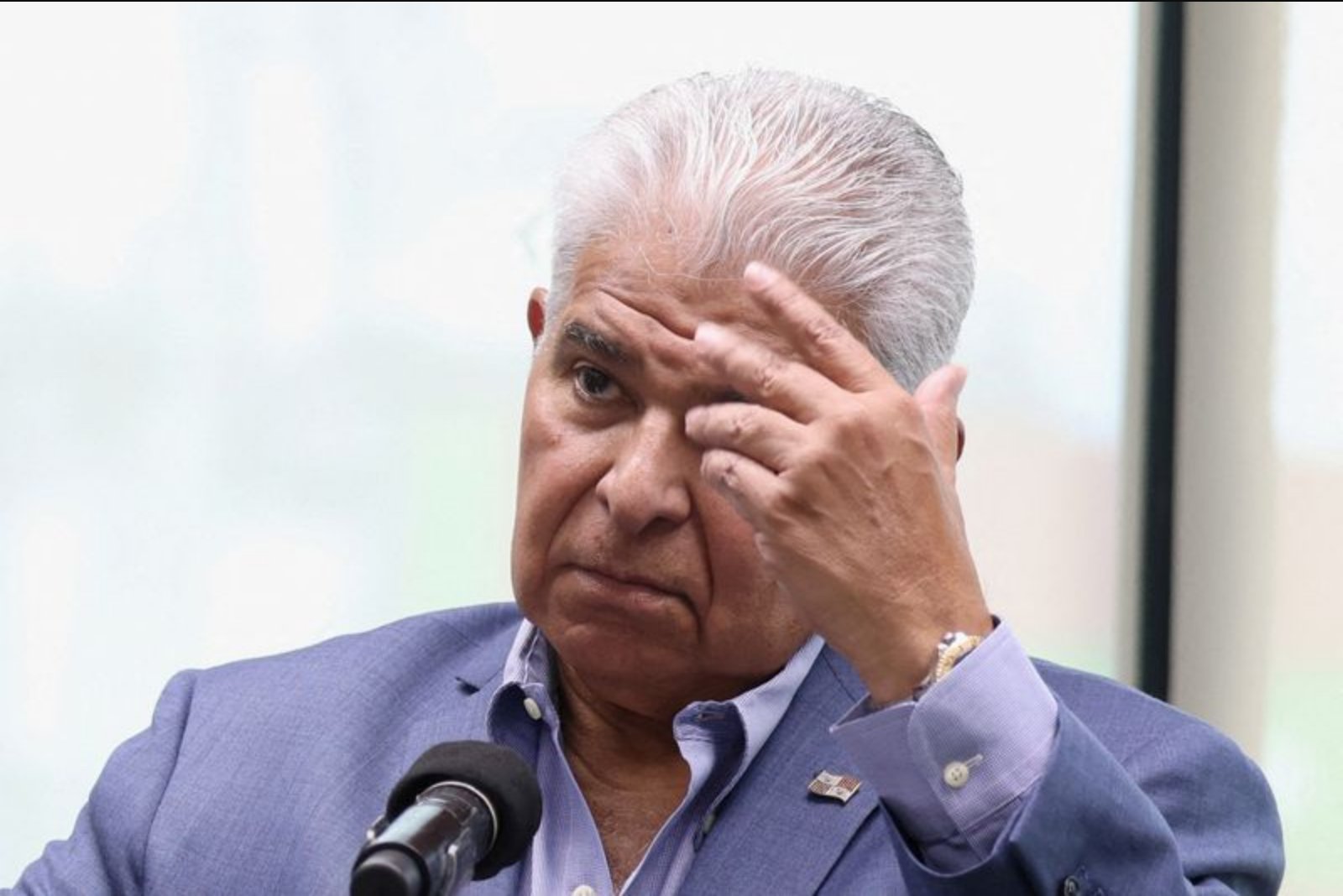
Panama’s president said his government is seeking to keep bilateral relations with China intact even as the country finds itself swept up in a dispute between two global powers over control of strategic port contracts.
Speaking at a regular press conference, President Jose Raul Mulino described a recent communication from Beijing as "high-level" and said it acknowledged Panama’s contention that the disagreement over port concessions will be resolved through international arbitration courts. Mulino said the message, delivered by China’s ambassador in Panama, indicated that the issue did not amount to a dispute between the Panamanian and Chinese governments.
At the same time, Mulino raised alarm about an increase in detentions and inspections of Panama-flagged vessels in China. He framed Panama’s predicament as being carried along by the spillover from a larger problem between the United States and China. "We are, in a way, being carried along like a tide by the outcome of a problem between two major powers, the United States and China," Mulino told reporters.
The focal point of the controversy is the entrance to the Panama Canal, which handles about 5% of global maritime trade. Control of ports that serve the canal has become a geopolitical flashpoint between Washington and Beijing.
CK Hutchison, operating through its local unit Panama Ports Company, had held port concessions at the canal entrance for nearly three decades. Those concessions were effectively lost after a Panama Supreme Court decision in January that was widely seen as related to U.S. pressure to curtail Chinese influence over the strategic waterway.
In the wake of the ruling, Panama moved to transfer temporary port operations to Maersk’s APM Terminals and MSC’s TIL Panama. Panama Ports Company has said it will contest the transfer through international arbitration and accused the Panamanian government of a wrongful takeover.
"We did not expropriate the ports, we took over the ports because they were left without a contract,"
Mulino reiterated that line and added, "I have no interest in escalating this problem with China." He nevertheless made clear he was troubled by what he described as "unusually high numbers" of Panama-flagged vessels being detained in China.
The situation drew international attention this week when the United States and allied governments issued a joint statement voicing support for Panama’s sovereignty. China responded by calling that statement misleading and accused the U.S. of politicizing the ports.
Mulino said he has not reached a decision on additional steps and stressed his desire to avoid escalation. "I do not want this to escalate due to a geopolitical conflict, and for our Panamanian-flagged vessels to be used to try to apply pressure," he said. "I believe that is not fair."
Context and implications
For Panama, the dispute ties directly to the administration of assets that sit at the entrance to a waterway responsible for a significant portion of global maritime commerce. The legal pathway referenced by both Panama and China - international arbitration - will determine whether the government's takeover is upheld or reversed. In the interim, operational control has been placed with major global terminal operators while the prior concessionaire pursues legal remedies.