
With an extended ceasefire halting U.S. and Israeli military strikes that began on February 28, the North American Iranian community finds itself at a crossroads. Opinions are split over whether continued foreign pressure can help dismantle Iran's clerical leadership or whether such action would only intensify hardship for people still living in Iran.
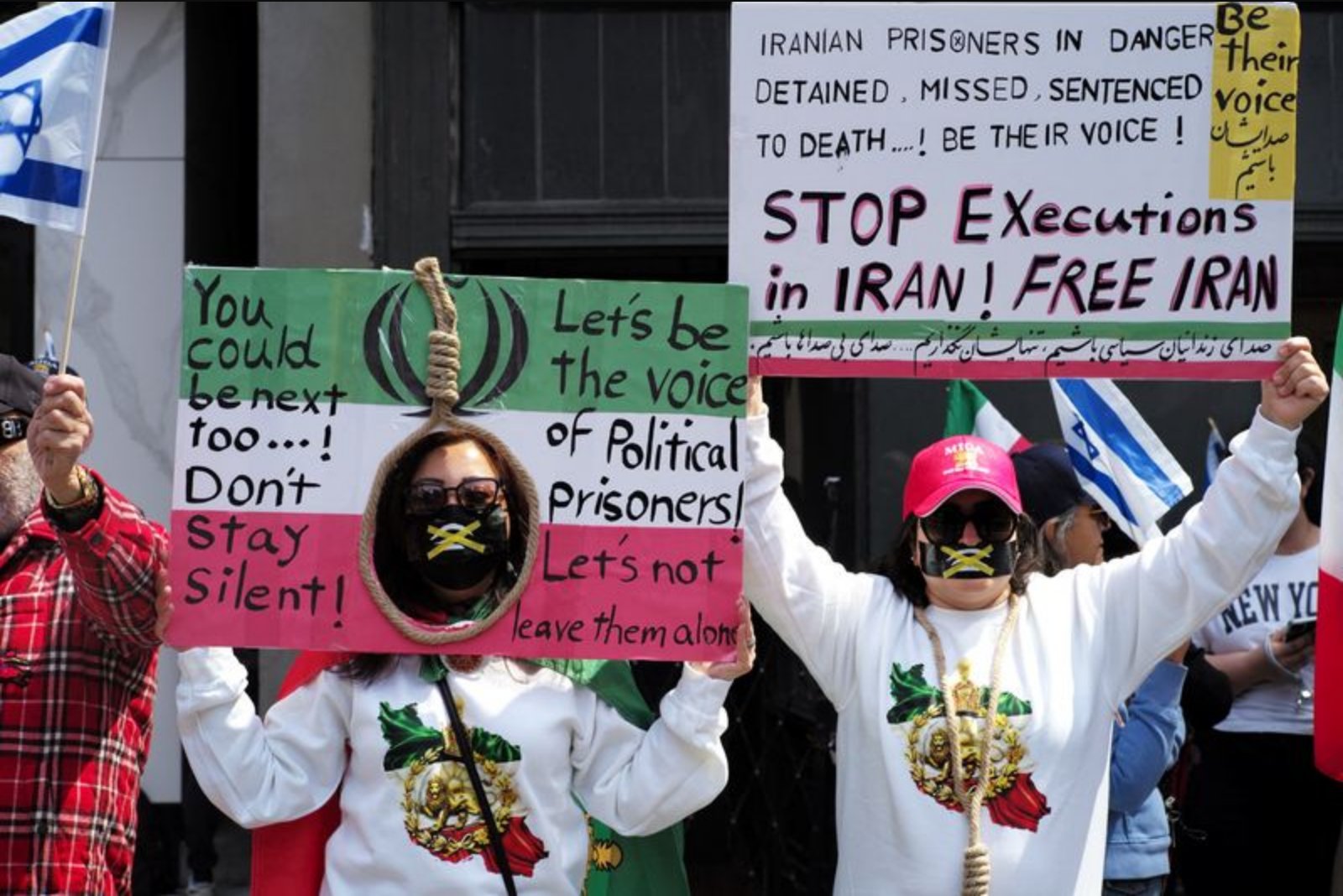
In Toronto on Sunday, roughly 300 demonstrators gathered in one of North America’s largest Iranian communities. They waved U.S. and Israeli flags and demanded an end to the theocratic system in Tehran, which they hold responsible for decades of repression. Many at that rally echoed earlier signals of opposition seen in mass anti-government demonstrations in the city earlier this year, when hundreds of thousands took part.
At those earlier protests, participants often carried the pre-revolution Lion and Sun flag, a symbol commonly linked to supporters of the opposition figure Reza Pahlavi, the exiled son of Iran’s last shah. The flags and slogans returned at the Toronto rally as demonstrators called for international action to bring down the current leadership.
"The Islamic regime is our main enemy. We want countries like the U.S. and Israel to help us bring this regime down," said Ali Daneshfar, an operations coordinator with Cyrus the Great, a Toronto-based Iranian group.
Daneshfar framed the appeal for foreign assistance as a response to repeated, violent crackdowns on internal protest. He said that sustained repression within Iran has left many Iranians with few options to pursue political change from inside the country.
But not all expatriate voices endorse military intervention. In Los Angeles, which hosts the world's largest Iranian expatriate community, some opposition leaders welcomed the ceasefire and cautioned that air strikes and bombardment would likely strengthen hardline elements in Iran rather than weaken them.
"We believe that bombing the regime is not going to bring democratic change in Iran," said Nasser Sharif, president of the California Society for Democracy in Iran, who supports the National Council of Resistance of Iran.
Sharif argued that the regime has used the wartime environment to expand suppression inside Iran, increasing executions and terrorizing the population, and that a pause in fighting could provide space for Iranians to organize. He contended that lasting political transformation must be led by Iranians themselves and warned against approaches that rely on foreign troops or prolonged external military involvement.
The human toll of the conflict has been severe. The war has killed thousands of Iranians and pushed oil prices higher, exacerbating inflationary pressures and clouding prospects for global economic growth. Those consequences are part of the calculus weighing on the diaspora, where concern for relatives and friends back home competes with political aims.
Estimates of how many Iranians live abroad vary. Iranian government figures put the number at up to 5 million, the bulk residing in North America and Western Europe, while Iranian media outlets have suggested a figure closer to 10 million. What is clearer is that many who fled Iran after the 1979 Islamic Revolution are overwhelmingly opposed to the clerical rulers—but they diverge on the question of whether foreign military involvement is a viable path to change.
Academic observers note the depth of these divisions within the diaspora. Akaash Maharaj, a fellow at the University of Toronto’s Munk School of Global Affairs who studies diaspora politics and authoritarian regimes, said expatriate Iranians wrestle with competing priorities.
"On the one hand, what they’re concerned about is the well-being of people in Iran, their friends and their relatives who are often collateral damage to politics and to conflict. On the other hand, they want to be seen and to be understood as being patriotic citizens of the new countries, which they now call home," Maharaj said.
Those personal ties to people inside Iran were echoed by individuals at the Toronto rally. Mohammad Solehi, an Iranian living in Toronto, relayed what friends and family had told him about conditions inside the country: life has become increasingly precarious, he said, with neither war nor peace providing a reliable respite.
"People expect fighting to resume at any moment and have no idea what comes next," Solehi said.
Complicating the political landscape within Iran itself, the killing of Supreme Leader Ayatollah Ali Khamenei on the first day of the war and the subsequent elevation of his wounded son, Mojtaba, have left the governing system intact but reshaped by an altered balance of power. Commanders of the Islamic Revolutionary Guard Corps now dominate the scene in ways that critics say have limited meaningful institutional change, even where individual figures have been removed.
Sharif described the IRGC as remaining inseparable from the ruling order, suggesting that reorganizations at the top have not altered the core structure of power in Iran.
For many in the diaspora, the current lull in fighting offers a fraught moment of decision. Some see continued external pressure as a necessary lever to hasten the end of clerical rule. Others view the ceasefire as an opportunity for Iranians inside the country to regroup and pursue domestic avenues for democratic change without inviting the increased suffering that, they argue, accompanies bombardment and foreign military action.
The outcome of that debate among expatriates is uncertain, as is the trajectory of the conflict itself. In the meantime, the division of opinion highlights the human and political complexities that shape diaspora responses to war, repression and prospects for democratic change in Iran.