
World April 30, 2026 08:30 AM

Merz Reaffirms NATO Commitment Amid U.S. Signals on Troop Presence

German chancellor stresses close transatlantic ties and readiness to assist in reopening Strait of Hormuz as U.S. reviews forces in Germany

By Ajmal Hussain
Merz Reaffirms NATO Commitment Amid U.S. Signals on Troop Presence

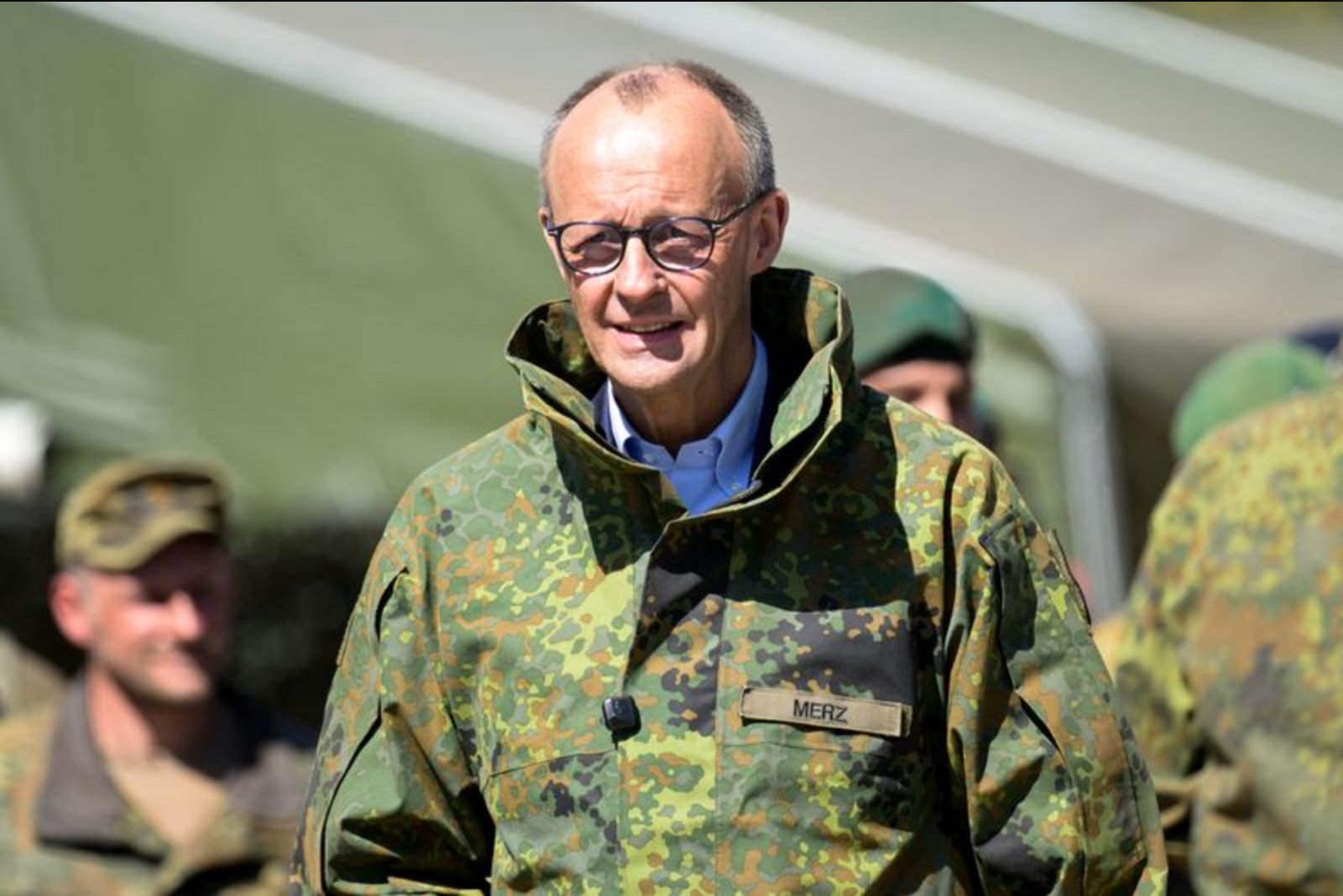
Speaking at a military base in Munster, Germany, Chancellor Friedrich Merz underscored Berlin's dedication to a robust NATO alliance and a dependable relationship with the United States, after President Donald Trump said his administration was reviewing a possible reduction of U.S. troops stationed in Germany. Merz reiterated Germany's willingness to join an operation to reopen the Strait of Hormuz if the conditions are met and said Germany remains in trusting contact with partners, particularly Washington, over the Iran conflict.

Key Points

  • Chancellor Merz emphasized Germany's continued commitment to a strong NATO alliance and a dependable partnership with the United States, speaking at a military base in Munster.
  • President Trump announced on Truth Social that the United States is reviewing a possible reduction of troops in Germany, saying a determination will come in the near term; the U.S. has just over 68,000 active-duty personnel in Europe as of December 2025, with about 36,400 stationed in Germany.
  • Merz confirmed Berlin's openness to taking part in a mission to reopen the Strait of Hormuz once conditions are met; the strait has been largely blockaded since the Iran conflict began.

At a military installation in Munster on Thursday, Chancellor Friedrich Merz made a pointed reaffirmation of Germany's commitment to the transatlantic relationship with the United States at a moment of renewed public tension over U.S. forces in the country.

Merz said Berlin's direction continues to be anchored in support for a strong NATO military alliance and a stable partnership with the United States. "As you know, this transatlantic partnership is particularly close to our hearts - and to mine personally," he said to reporters during the visit.

The chancellor's comments came hours after President Donald Trump wrote on Truth Social that "The United States is studying and reviewing the possible reduction of troops in Germany, with a determination to be made over the next short period of time." The remark followed recent exchanges between the two leaders over the ongoing conflict involving Iran. Earlier in the week, Trump and Merz had sparred over statements about the conduct of Iranian negotiators, with Trump saying Merz did not know what he was talking about after Merz said the Iranians were humiliating the U.S. in talks to end the two-month-old war.

Merz did not address Trump's most recent comment directly, nor did he field questions after his prepared statement. He did, however, reaffirm that Germany is open to participating in a military mission to reopen the Strait of Hormuz once the necessary conditions are in place. The strait has been largely blockaded since the outbreak of the Iran conflict.

On the broader diplomatic front, Merz said Berlin remains in "trusting contact" with international partners and especially with Washington on matters related to Iran. His remarks sought to emphasize continuity in Germany's security posture despite the charged public exchange at the leadership level.

The U.S. currently has just over 68,000 active-duty military personnel permanently assigned to overseas bases in Europe as of December 2025, according to data from the U.S. Defense Manpower Data Center (DMDC). More than half of those forces - about 36,400 - are based in Germany. That presence is markedly smaller than the roughly 250,000 U.S. troops stationed in Germany in 1985.


Merz's statements framed Germany's policy stance in terms of alliance reliability and operational readiness, while the U.S. public signal of a potential force review has underscored uncertainty about future troop levels on German soil.

Risks

  • Potential changes to U.S. troop levels in Germany create uncertainty for defense-related planning and for local economies that host bases, impacting the defense sector and regional economic activity.
  • The blockade of the Strait of Hormuz, linked in the article to the Iran conflict, poses ongoing operational and supply-chain risks for sectors connected to maritime transit and energy.
  • Public tensions between leaders over the Iran conflict could complicate diplomatic coordination, introducing uncertainty for governments and organizations that rely on stable transatlantic security cooperation.

More from World

Met Gala Draws High-Profile Arrivals as Protesters Target Bezos Sponsorship May 4, 2026 Three Die After Small Plane Crashes Into Residential Building in Belo Horizonte May 4, 2026 Quarantine at Sea: Passengers Stranded as Suspected Hantavirus Claims Three Lives aboard M/V Hondius May 4, 2026 U.S. Intelligence Sees No Material Change in Iran’s Nuclear Timeline Despite Recent Campaign May 4, 2026 Judge Criticizes Jail Conditions for Man Accused in Trump Gala Shooting Attempt May 4, 2026