
Summary
What began as a consolidation of influence for Moscow in Mali has been shaken by a string of reversals that have exposed vulnerabilities in the Kremlin’s approach to security and resource access in the region. A coordinated offensive by a West African branch of al Qaeda and a Tuareg-led separatist group over the weekend inflicted significant political and military wounds on Mali’s junta, whose leadership had forged close ties with Russia after expelling French and U.N. forces following coups in 2020 and 2021. The developments included a suicide bombing that killed Mali’s defence minister, a withdrawal of Russian-backed forces from an important northern town, and the deployment of Russian helicopter gunships and strategic bombers to blunt insurgent advances.
The immediate setbacks
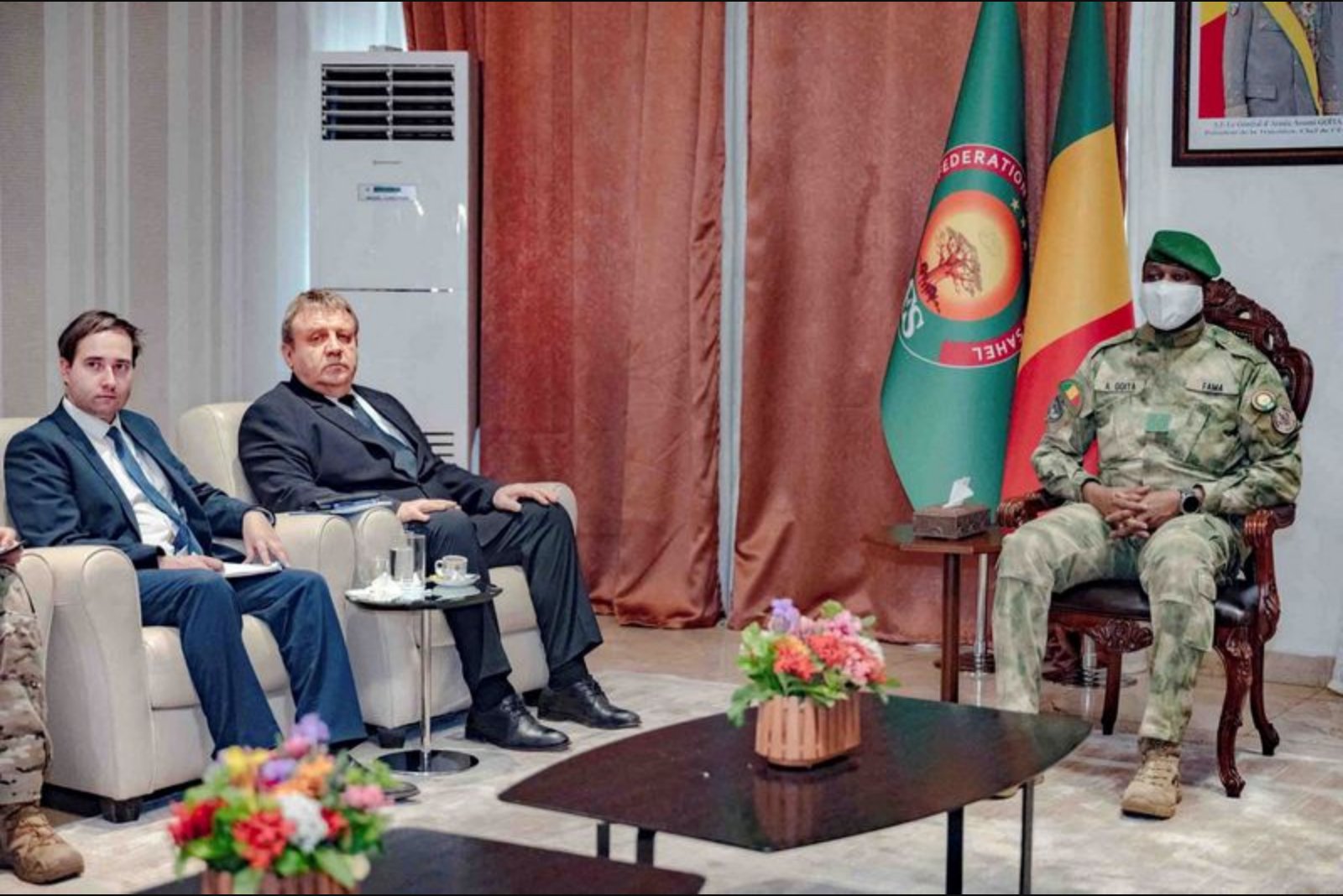
The attack left Sadio Camara, Mali’s defence minister who received training with Russian forces, dead. Russian-aligned units were compelled to abandon Kidal - a strategically significant town that Russian mercenaries helped capture in 2023 - even as Moscow employed air assets to prevent further insurgent gains. The junta leader, Assimi Goita, who met President Vladimir Putin in Moscow last summer, survived the assault but now confronts the possibility that armed groups could seize large tracts of Mali’s expansive northern desert. Russian officials have warned that insurgent groups are attempting to regroup.
Political analysts say the consequences for Moscow could be severe. With Russian military resources stretched by ongoing operations in Ukraine and diplomatic influence under strain in other regions, the Kremlin’s handling of the crisis in Mali is being monitored closely around the world.
Strategic and economic stakes
Scholars and analysts highlight Mali as a key node in Russia’s broader West African strategy. Irina Filatova, an Honorary Research Associate at the University of Cape Town, described Mali as "one of the centres of power for Russia in West Africa." She noted that Mali sits within a chain of countries - including Burkina Faso, Niger and the Central African Republic - where Moscow has cultivated relationships aimed at gaining geopolitical influence and access to mineral wealth in exchange for security assistance.
Filatova warned that failure to recapture Kidal swiftly would damage Russia’s reputation as a dependable security partner, weakening perceptions of its capacity to defend Mali and other allied governments. Support for this view can be found in commentary from other analysts who argue that successive campaigns against the junta illustrate shortcomings in Russian intervention that could spill over into threats to strategic and economic interests in the Sahel.
Energy and mining projects tied to the partnership
The relationship between Moscow and Bamako has included talks and agreements tied to large-scale infrastructure and resource projects. President Putin met with Assimi Goita in the Kremlin in June of last year, addressing him as "Respected Mr President," and Goita attended a Russia-Africa summit in St Petersburg in 2023. In the past year Moscow and Bamako signed a deal intended to lay the groundwork for the potential future construction of a Russian-built nuclear power plant in Mali - a project the two nations have discussed for some time.
Beyond nuclear ambitions, Russia has engaged with Mali on renewable energy and mining. The two sides have held discussions about a joint solar plant and have seen Russian backing for a lithium project. Mali also began construction last year on a gold refinery financed with Russian support. Those projects represent tangible economic interests that are intertwined with Moscow’s security commitments to the junta.
Diplomatic posture and messaging
Moscow has sought to position itself as a partner distinct from former Western powers, tapping into anti-colonial sentiment to portray its engagement as pragmatic cooperation rather than dependency. After meeting with Goita, Russia’s ambassador to Mali, Igor Gromyko, was quoted by the state TASS news agency as saying "Russia will always be alongside Mali." Goita’s office said the meeting had covered "the current situation and the strong partnership between Bamako and Moscow."
Outlook for Russian forces and the junta
Observers remain divided on whether the recent losses amount to a temporary setback or signal a deeper erosion of Moscow’s position. Flore Berger, senior Sahel analyst at the Global Initiative Against Transnational Organized Crime, described the events as a short-term setback for Russia but cautioned that it is too early to determine whether the Africa Corps will withdraw entirely or be reconfigured.
The Africa Corps in Mali comprises many former fighters from the Wagner mercenary group, which previously received Russian state funding. The unit is estimated at about 2,000 troops and is officially under the control of the Russian Defence Ministry, which has stated that these fighters remain committed to carrying out their tasks. Berger emphasized the tight link between the junta’s prospects and the future of the Africa Corps, saying: "What happens to the junta will directly shape what happens to the Africa Corps and the Russian presence more broadly in Mali. At the moment we do not know if the junta is going to recover or not. What we know is that it’s extremely weakened."
Conclusion
The recent offensive and its fallout have put a spotlight on the fragility of Russia’s security partnerships in West Africa and on the vulnerability of linked economic projects. As analysts watch whether Russian forces can stabilize the situation and whether the junta can regain strength, the outcome will determine Moscow’s immediate credibility as a security guarantor and its longer-term access to resource and energy opportunities in Mali and the wider Sahel.