
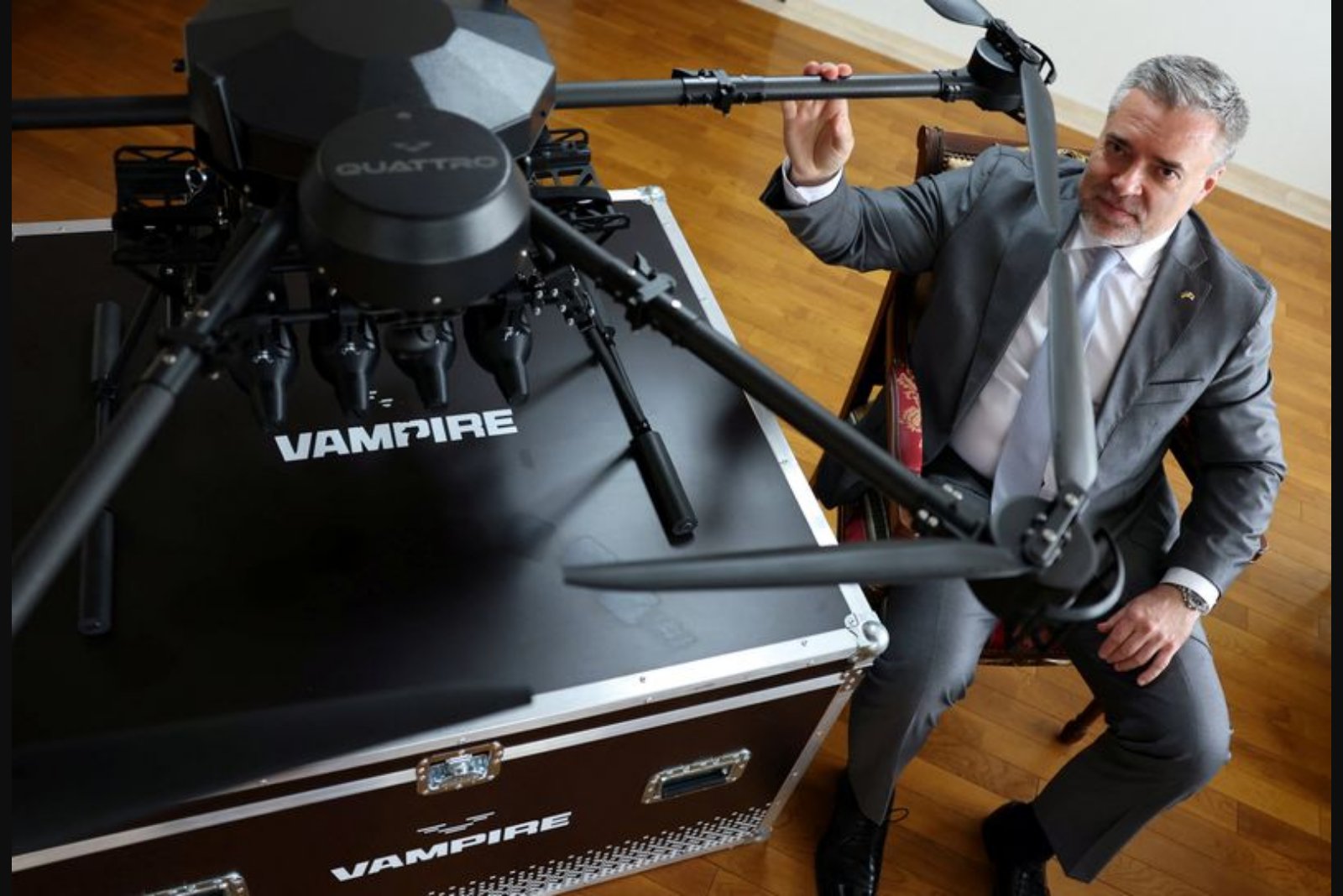
Japan's decision to loosen some restrictions on weapons exports has opened a diplomatic door that Ukraine hopes will lead to Japanese military assistance, Ukraine's ambassador to Tokyo said in an interview at the embassy. Yurii Lutovinov described the change in Tokyo's export policy as - in theory - a significant advance that now permits conversations the previous rules had effectively blocked.
The policy shift, announced by Prime Minister Sanae Takaichi last week, marks another step in Japan's gradual move away from the strict postwar pacifist approach that long shaped its defence posture. Although Tokyo's overhaul continues to bar arms exports to active conflict zones, it introduces narrowly defined exceptions intended to serve Japan's security interests. Kyiv is positioning itself to benefit from those carve-outs.
Japan has publicly framed Ukraine's security as linked to its own amid rising concerns about China's military posture in the region. Japanese territory lies as close as 110 km to Taiwan - a proximity Tokyo says could draw it into any cross-strait crisis. In that context, Japanese leaders have signalled that the security risks Ukraine faces are not isolated to Europe.
Ambassador Lutovinov reiterated that connection. "If Ukraine falls, it's going to be a big domino effect," he said, adding that the Indo-Pacific and Europe are inseparable when viewed through security lenses. He argued that this interdependence gives Tokyo a stake in Kyiv's survival against Russian aggression.
Despite the policy change, there is no public indication from Prime Minister Takaichi that she would back direct arms transfers to Ukraine. Her office said she told Ukrainian President Volodymyr Zelenskiy in a November phone call that "Japan stands with Ukraine" and supported Kyiv's efforts toward a just and lasting peace as soon as possible, but that statement did not promise weapons transfers.
Any Japanese military assistance to Kyiv would also require formal legal and technical arrangements. Ukraine would need to conclude a defence and equipment technology transfer agreement with Japan - a type of pact Tokyo has already signed with 18 countries, including Germany, Australia, the Philippines and Vietnam.
Lutovinov said Ukraine is cautious given the sensitivities in Japan surrounding defence exports. That caution, he said, has not stopped Kyiv from seeking practical cooperation in areas where Japan could help quickly and within current legal limits.
One near-term priority, according to Lutovinov, is funding for Ukraine's work on an indigenous air-defence capability. He noted that Kyiv wants to reduce dependence on U.S.-made Patriot systems, which are becoming scarcer, and that Japan could finance development of a domestic system to fill that gap. "We have all necessary industrial capacities for production. But we need investment. We need funds," the ambassador said.
Talks are also under way about Japan joining NATO's Prioritised Ukraine Requirements List, known as PURL - a mechanism that has financed purchases of U.S.-made equipment for Kyiv. The programme has delivered more than $4 billion in equipment and munitions to date, and last year Australia and New Zealand were the first non-NATO participants. Lutovinov said countries can take part in PURL in ways that respect their domestic legal frameworks, and that participation could include non-lethal supplies.
Beyond heavy systems, Ukrainian officials are exploring partnership opportunities in electronics and micro-components needed for the thousands of drones Kyiv uses on the front lines. Lutovinov pointed out that Ukrainian forces have relied heavily on Chinese-made components for those drones, citing a 2025 report by the Ukrainian think tank Snake Island Institute. Japanese firms, he suggested, could help diversify suppliers for key parts.
The embassy's reception area provided a tangible reminder of those needs. Behind Lutovinov sat a Vampire bomber drone built by Skyfall, a Ukrainian maker of low-cost drones. Skyfall says it has reached production capacity sufficient to export, a fact Lutovinov highlighted while discussing potential industrial cooperation.
Takaichi's administration intends to present a defence strategy and procurement plan this year that is expected to call for a substantial expansion of air, sea and land drones - similar to the systems Ukraine has deployed to blunt Russian attacks. Lutovinov emphasized Ukraine's ambition not merely to receive assistance but to reciprocate. "We are not the country that would like to just ask. We are the country that is going to provide as well," he said, proposing that combining Japanese technology with Ukrainian operational experience could yield high-quality products.
Summary
Japan's recent easing of weapons-export rules has created an opening for dialogue between Tokyo and Kyiv. While the new policy retains strict controls on shipments to conflict zones, Japan's allowance for security-related exceptions has prompted Ukraine to pursue talks on funding an indigenous air-defence system, joining multilateral procurement mechanisms, and partnering to diversify drone electronics supply chains.
Key points
- Japan's export rule change enables conversations that could lead to military equipment cooperation with Ukraine; this affects the defence sector and military procurement markets.
- Ukraine seeks Japanese investment to develop an air-defence system to lessen dependence on scarce U.S. Patriot missiles, which has implications for defence contractors and systems integrators.
- Japanese firms could supply electronics and micro-components for Ukrainian drones, impacting the electronics, semiconductor and drone manufacturing supply chains.
Risks and uncertainties
- There is no public sign that Prime Minister Takaichi supports direct arms transfers to Ukraine - a political uncertainty that affects defence trade and procurement timelines.
- Defence exports remain a sensitive issue in Japan, meaning negotiations and technology-transfer agreements could be prolonged or constrained, influencing market entrants and investment flows in the defence and electronics sectors.
- Ukraine's reliance on U.S. Patriot systems - now in shorter supply - creates an operational vulnerability; delays in financing or technology transfer could prolong Kyiv's dependence on limited foreign stocks, affecting allied logistics and procurement planning.
Note: This article reports statements made by Ukraine's ambassador and outlines Japan's stated policy changes and potential cooperative paths under discussion. It does not assert definite outcomes of those talks.