
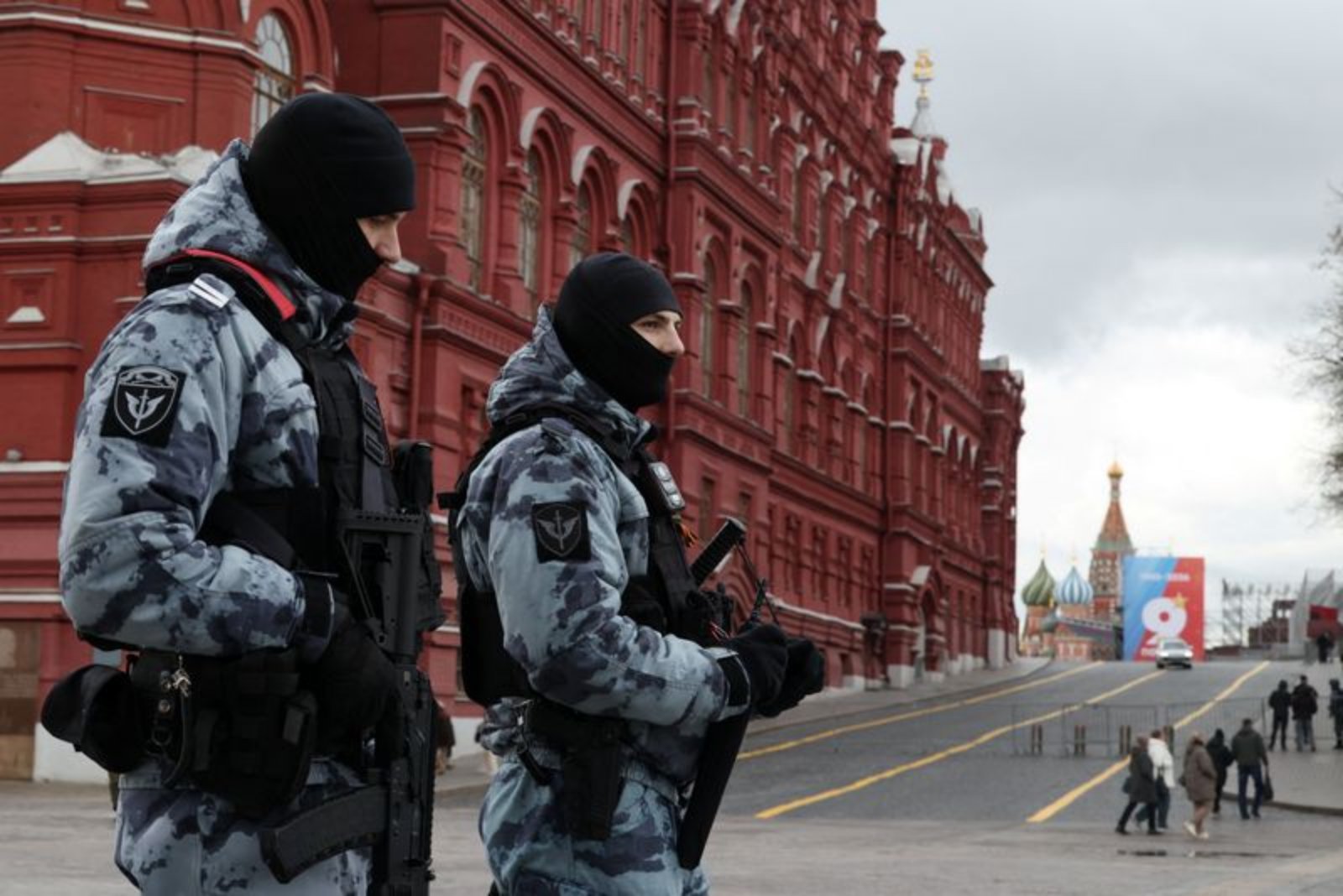
Russian authorities have decided to stage a slimmed-down Victory Day parade on May 9 in Moscow’s Red Square, removing the usual exhibition of military hardware, the Kremlin announced on Wednesday. Officials attributed the change to what they described as an elevated threat from Ukrainian forces.
The May 9 event is one of the most prominent entries in the Russian state calendar, commemorating the Soviet Union’s defeat of Nazi Germany in a war that claimed 27 million Soviet lives. In recent years the parade has included displays of major weapon systems - at times even intercontinental ballistic missiles - and has been used by President Vladimir Putin as an occasion to solidify public support for the campaign in Ukraine, now in its fifth year.
However, the Defence Ministry said this year military equipment would not be paraded because of "the current operational situation." When reporters sought comment about the move, Kremlin spokesman Dmitry Peskov said:
"The Kyiv regime, which is losing ground on the battlefield every day, has now launched full-scale terrorist activity. And therefore... all measures are being taken to minimise the danger."
The announcement arrives against a backdrop of stalled U.S.-mediated peace talks, with attention in Washington focused elsewhere. On the ground, Russia has asserted it is making incremental gains, while Ukraine has been able to strike at Russian ports and oil refineries, inflicting what Moscow has described as significant damage.
Throughout the conflict, Ukrainian drones have intermittently reached Moscow, and Russian authorities have blamed Kyiv for a series of assassinations and attempted killings of senior military figures in and around the capital. Kyiv has said it carried out some of those operations and denied responsibility for others.
Critics of the Kremlin reacted sharply to the decision to omit weapons from this year’s parade. Abbas Gallyamov, a former Kremlin speechwriter now designated as a "foreign agent" by Russian authorities, wrote on social media: "Are they afraid of a mutiny? Or has all the equipment burned up in Ukraine?"
John Foreman, a former British defence attache in Moscow, placed recent decisions in context by recalling that the 2025 parade featured roughly 11,000 troops and some 150 military vehicles, including tanks that had not appeared in the two preceding years. He said the choice to avoid displaying equipment this year reflected both pressure on Russia’s armed forces and concern that a large, well-equipped parade could present an inviting target to Ukrainian forces with growing long-range strike capability.
Foreman added that a grand military display at a time when the war shows no sign of ending could expose the Kremlin to domestic criticism, particularly as officials have had to confront public discontent. He noted that disruptions to internet services - measures defended by President Putin on security grounds - have been a source of frustration among the population.
"It’s not going well - the mood is not great, there are economic difficulties, they (Russians) see a war with no end,"Foreman said in a telephone interview.
News of the pared-back ceremony set off debate across Russian social media platforms. In a Telegram chat thread, one participant called it a "very strange parade" without weapons, arguing that a principal purpose of the display is to signal to potential adversaries the force they would face. Others wrote that a full military parade would be appropriate only once Russia had achieved victory. "But when will that be?" one contributor asked.
The Kremlin’s explanation centers on security considerations tied to ongoing hostilities and specific operational risks. Officials framed the move as a protective measure for participants and spectators, while critics treated it as a sign of military strain or political vulnerability. Public reaction has ranged from ironic commentary to sober concern about the trajectory of the conflict and its domestic effects.
As both sides continue to claim tactical developments on the battlefield, and with diplomacy stalled, the scaled-back parade stands as a conspicuous symbol of the tensions that persist within Russia and beyond its borders.