
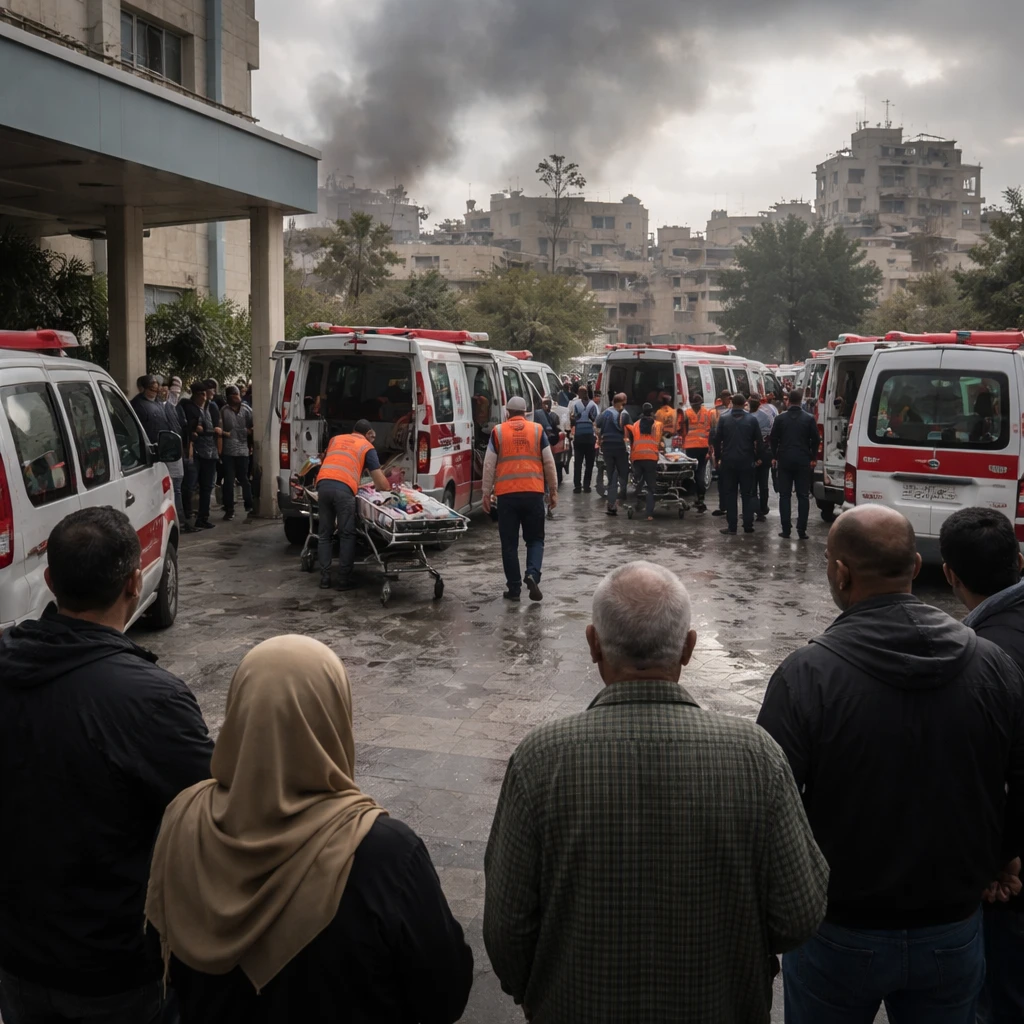
Israeli strikes on Thursday killed at least four Palestinians in the Gaza Strip, local health officials and medics said, as Hamas delegates met with mediators in Cairo in an effort to reinvigorate a six-month-old, U.S.-brokered truce. Medical teams reported that one strike killed at least three people near the Salahudeen road in central Gaza, while a separate strike near a hospital in Deir Al-Balah in the south killed one person. The Israeli military did not immediately respond to those reports.
Violence has continued since the ceasefire took effect in October 2025, despite its intent to halt large-scale fighting. Both Israel and Hamas have accused the other of violating the truce. Local medics say at least 800 Palestinians have died since the ceasefire began. Israel has reported that militant attacks during the same period have killed four Israeli soldiers.
On Thursday, a Hamas official said a delegation from the group had arrived in Cairo two days earlier for meetings with mediators aimed at advancing U.S. President Donald Trump’s Gaza plan. Sources close to the discussions told mediators that efforts to move Israel and Hamas toward implementation of a planned second phase have so far made little progress.
Under the U.S.-backed plan, the second phase would include a further Israeli pullback, the establishment of a transitional authority to assume control in Gaza, and the deployment of a multinational security force. The plan also envisions Hamas being disarmed as reconstruction work begins. The parties involved are reported to be negotiating those steps, but negotiators say implementation remains limited at this stage.
Casualty figures from the broader Gaza war remain high. Gaza health authorities report that more than 72,500 Palestinians have been killed since the conflict began in October 2023. Israeli tallies record that the Hamas-led attacks of October 7, 2023, killed 1,200 people.
The current diplomatic engagement in Cairo seeks to translate the ceasefire framework into concrete measures. Delegations and mediators are discussing sequencing and security arrangements, but sources familiar with the talks indicate limited forward movement toward the agreed second phase. Meanwhile, the continuation of periodic strikes underscores how fragile the truce remains and how quickly violence can resume.
The humanitarian toll and the political impasse preserved in these developments underline the difficulties negotiators face in moving from ceasefire to sustainable arrangements on the ground. Local health authorities and medics continue to provide casualty counts as talks proceed, while both sides maintain mutual accusations over violations.