
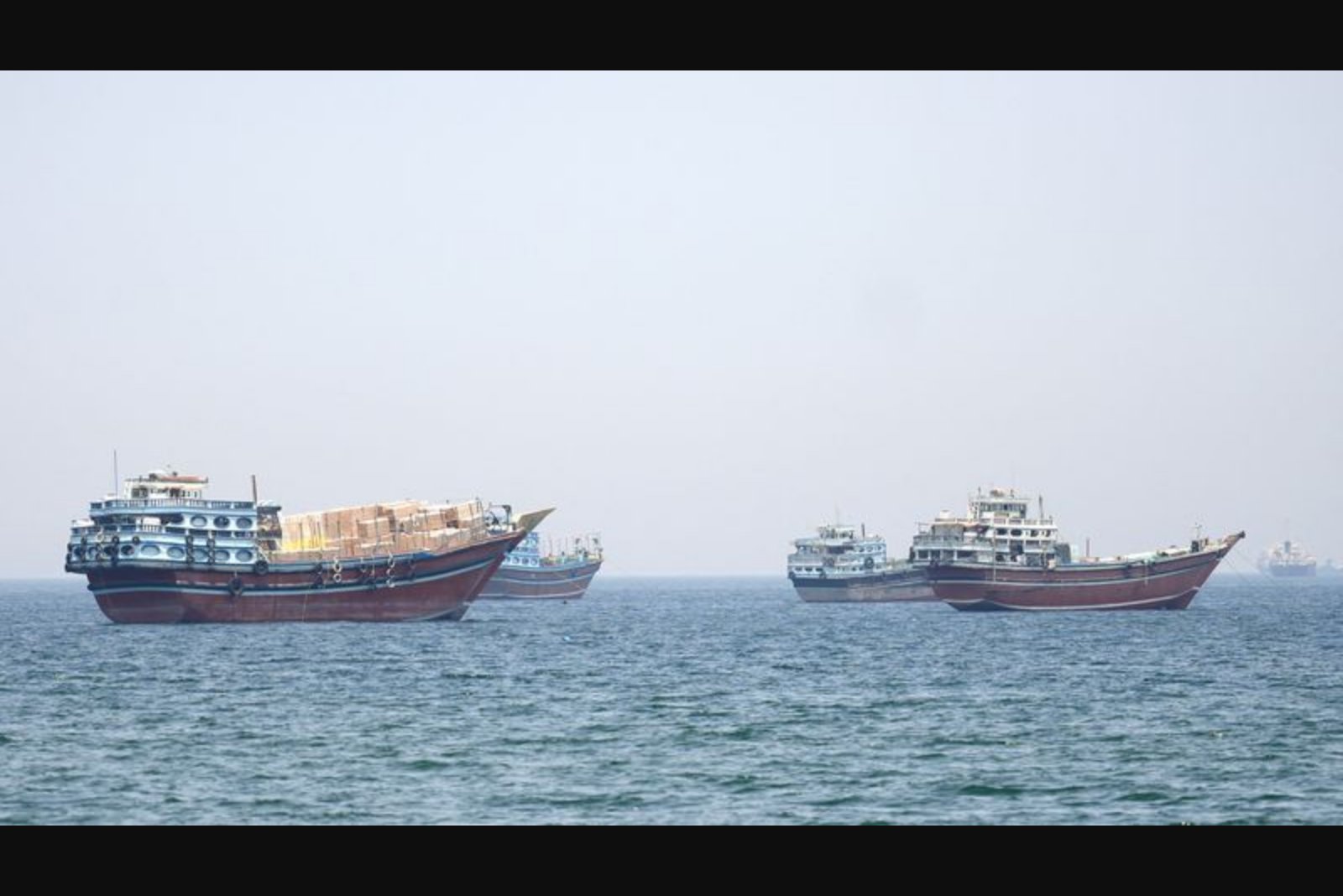
Iran has issued a stark warning that renewed U.S. attacks would draw "long and painful strikes" against American positions in the region, complicating Washington's efforts to form an international coalition to reopen the Strait of Hormuz. The vital waterway has been closed for two months since the conflict began with U.S.-Israeli strikes, cutting off about 20% of global oil and gas exports and sending energy prices sharply higher.
The closure, combined with strikes and counterstrikes across the Middle East, has pushed benchmark oil prices to volatile levels. Brent crude briefly climbed above $126 a barrel - its highest since March 2022 - before easing back toward $113 a barrel. The spike followed reporting that President Trump would receive a briefing on plans for new military strikes intended to pressure Iran into greater flexibility on nuclear negotiations.
A senior official from Iran's Islamic Revolutionary Guard Corps made the country's posture clear. Aerospace Force Commander Majid Mousavi, quoted by Iranian media, warned that "We’ve seen what happened to your regional bases, we will see the same thing happen to your warships," and reiterated that any U.S. attack, even if limited, will be met with "long and painful strikes" on U.S. regional positions.
The strait's closure has had immediate effects on markets and on the conduct of military and diplomatic activity. Brent prices have roughly doubled since the initial U.S.-Israeli operation on February 28 that set off the current confrontation, contributing to global inflationary pressure and raising fuel costs at the pump. Iran has restricted nearly all commercial shipping through the strait to its own vessels, and has launched drones and missiles targeting Israel as well as U.S. bases, infrastructure and U.S.-linked firms in Gulf states.
Among companies reporting direct damage from the fighting, Amazon said damage to its cloud regions in Bahrain and the United Arab Emirates had occurred and that returning operations to normal could take months. The company did not immediately clarify when the damage took place or whether it resulted from a drone strike or nearby attacks.
The ceasefire that has held since April 8 has not resolved the core issues. Iran's continued control of the strait is a response to a U.S. blockade of Tehran's oil exports - an economic choke point for the country. Tehran's position, articulated by Supreme Leader Mojtaba Khamenei in a written message, affirmed an intention to remove what he called "the enemies’ abuses of the waterway" under Iranian management, signaling that Iran intends to maintain its grip on passage through the channel.
Yet diplomatic efforts continue. Pakistan, acting as a mediator, sought to prevent a flare-up while the parties exchanged proposals. A Pakistani source said the United States had shared "observations" on an Iranian proposal that would defer discussions about Iran's nuclear program until the conflict formally ends and shipping issues are resolved. The proposal, which is under consideration, did not meet President Trump's demand that the nuclear question be addressed first. The Pakistani source said Iran had requested time until the end of the week to respond.
Germany's chancellor, Friedrich Merz, urged Tehran to stop "playing for time." Meanwhile, Japan's prime minister, Sanae Takaichi, spoke with Iran's president, Masoud Pezeshkian, to press for the safe passage of a Japanese-linked vessel and for the protection of all commercial shipping through the strait.
On the U.S. side, planning appears to encompass multiple possible actions. One package of options due to be briefed to President Trump reportedly includes a series of fresh military strikes intended to extract concessions on nuclear negotiations. Another plan reportedly under consideration would involve taking control of part of the Strait of Hormuz to re-open it to commercial traffic, and such an operation could involve ground forces.
In parallel, the State Department has circulated a cable inviting partner nations to join a new security grouping called the Maritime Freedom Construct - or MFC - designed to enable ships to navigate the strait. The cable described the MFC as "a critical first step in the establishment of a post-conflict maritime security architecture for the Middle East," and it was scheduled to be presented orally to potential partner countries by May 1. Several nations, including France and Britain, have discussed contributing to such an effort but said they would only assist in reopening the strait once the conflict ends.
Tehran has also issued a separate warning of "unprecedented military action" if U.S. blockading of Iran-linked vessels continues. That message, together with the possibility of renewed U.S. strikes, increases the risk of further disruptions to Middle East oil output from a conflict that Reuters reports has killed thousands.
In Washington, the administration has been preparing for contingencies. The White House said President Trump discussed with U.S. oil companies how to reduce the economic impact if the U.S. blockade of Iranian ports needed to be prolonged for months. U.S. intelligence agencies, assigned by senior officials, are also studying potential Iranian responses should the president declare a unilateral victory, two U.S. officials and a person familiar with the matter told Reuters this week.
For now, diplomatic and military planning proceed in parallel while the strait remains closed. The competing objectives - reopening a critical trade route, safeguarding commercial navigation, avoiding escalation, and pressing Iran on nuclear issues - have yet to find a pathway to resolution. With energy markets already sensitive to supply constraints, decisions in the coming days and weeks could keep oil prices unstable and sustain pressure on an economy contending with rising inflation.
Summary: Iran has warned that any new U.S. attacks will be met with significant retaliation, casting doubt on U.S. efforts to assemble a coalition to reopen the Strait of Hormuz. The strait remains closed two months after the conflict began, cutting about 20% of global oil and gas supplies and driving a surge in energy prices. Diplomatic exchanges continue amid ceasefire conditions and competing proposals for maritime security and conflict resolution.