
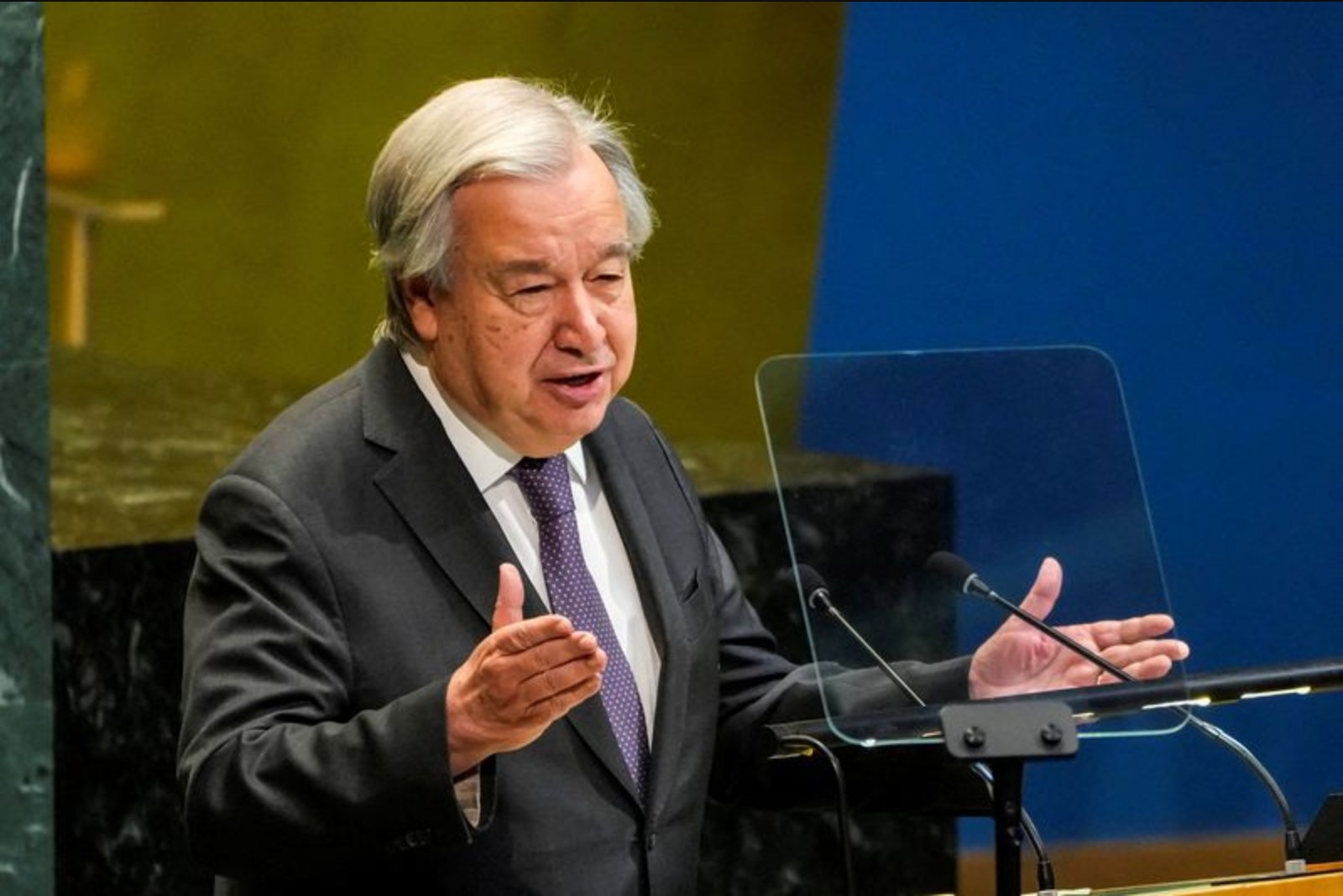
United Nations Secretary-General Antonio Guterres said on Thursday that the billions of dollars the United States owes to the world body are "non-negotiable," responding to media reports that Washington set conditions on further payments.
The development outlet Devex reported this week that two diplomatic notes circulated by the U.S. listed nine "quick-hit" reforms as conditions for releasing additional funds. According to the report, the U.S. proposals included measures aimed at trimming costs and limiting external influence within the U.N.
Asked about those reports, Guterres told reporters: "The money we are talking about is referred to as assessed contributions. Assessed contributions are an obligation of member states. They are non-negotiable."
Guterres, who is overseeing reform efforts under pressure from member states including the United States, said the organization would continue to try "to make sure that we make this organization as effective and as cost-effective and as able to deliver for the people we care for." He added: "But these are two separate things."
Devex detailed a range of U.S.-requested cost-saving measures, which the outlet said included overhauling the U.N. pension system; ending long-distance business-class travel for some senior staff and for all mid-level professionals; additional reductions among senior ranks; and a 10% cut to longstanding and ineffective peacekeeping missions. The notes reportedly also sought to block China from channeling tens of millions of dollars each year into a discretionary fund located in the office of the U.N. secretary-general, a step described as aimed at countering Chinese influence.
The U.S. mission to the United Nations has not issued a comment on the reported diplomatic notes.
U.S. officials have said they will continue to press the United Nations to implement reforms after announcing a withdrawal from dozens of U.N. bodies this year and trimming millions of dollars in funding last year.
Guterres has previously warned of severe financial strain at the U.N. In January he cautioned that the organization faced "imminent financial collapse" due to unpaid fees, most of which he said were owed by the United States. In February the U.N. reported that the United States had paid about $160 million of the more than $4 billion it owes to the world body.
The exchange highlights a tension between the U.N.'s legal funding framework - where assessed contributions are mandatory - and persistent calls from influential member states for internal reform and tighter controls over funding channels.
As the U.N. balances pressure to reduce costs and improve efficiency with its need for predictable financing, the dispute underscores the broader challenge of maintaining operations and programs that rely on timely member state payments.