
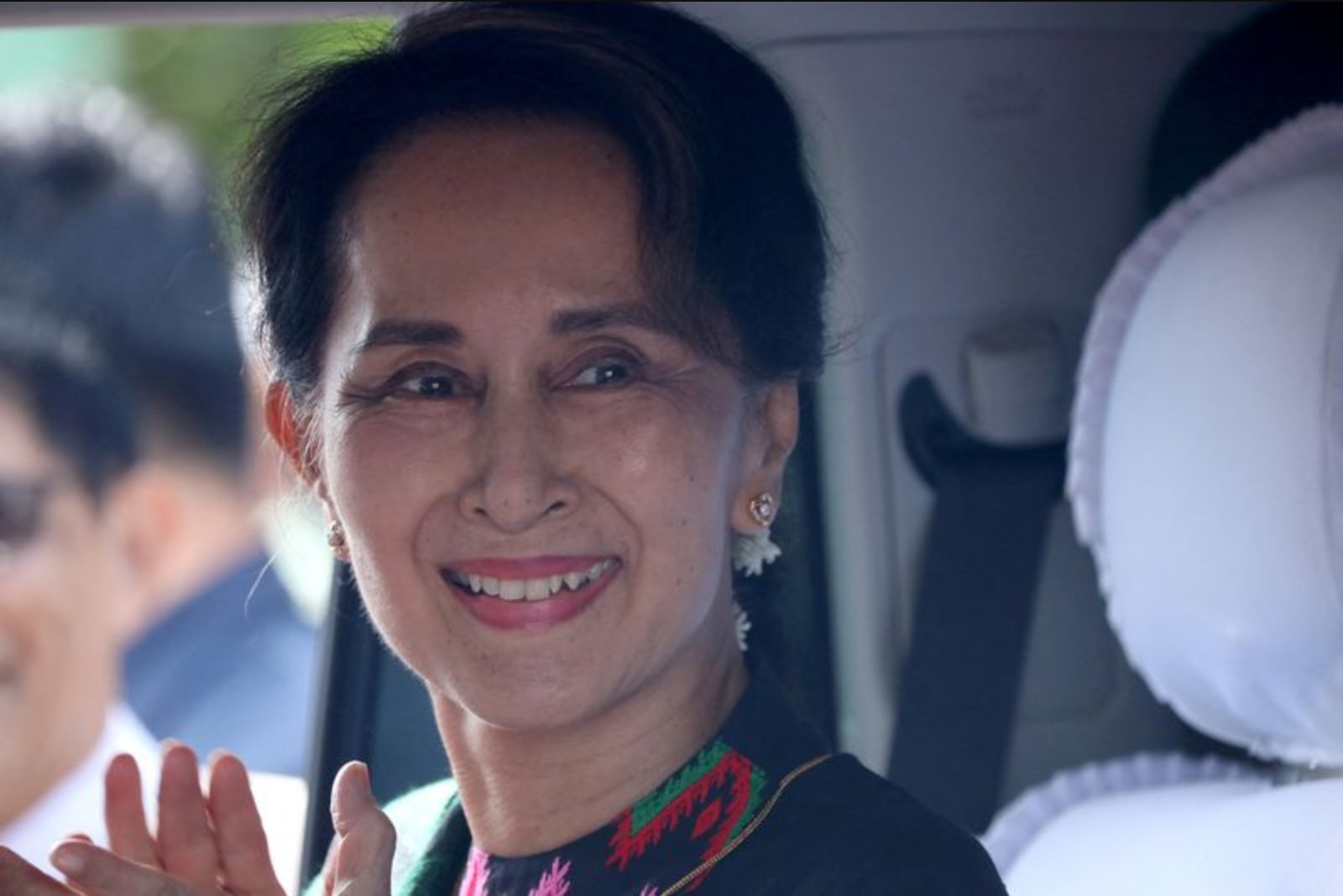
April 30 - Myanmar’s detained former leader Aung San Suu Kyi is to be transferred to house arrest, state-run media said on Thursday, more than five years after the military displaced the civilian government she led and jailed the Nobel laureate. The announcement said the remaining portion of her sentence would be commuted to be served at a designated residence.
State-run MRTV used the honorific "Daw" when referring to the veteran politician and aired a photograph showing Suu Kyi seated on a wooden bench with two uniformed personnel standing beside her - the first publicly released image of her in years.
International response and U.N. reaction
At the United Nations in New York, U.N. spokesperson Stephane Dujarric said he had seen the reports and welcomed the commutation of Suu Kyi's sentence to what he described as "a so-called house arrest in a designated residence." He added that the development "is a meaningful step towards conditions conducive to credible political process."
Dujarric further said that any viable political solution in Myanmar "must be based on immediate cessation of violence and a genuine commitment to inclusive dialogue."
Family and legal team express doubts
Despite the state media announcement, Suu Kyi's son, Kim Aris, said the move provided little reassurance about her status. In a statement, he said the authorities’ announcement on Thursday did not alleviate his fears about his mother's condition or even confirm that she was still alive.
"I still do not know where my mother is. I do not know how she is. I remain deeply concerned about whether she is still alive," Aris said. He added, "If she is alive, I ask for proof of life."
Members of Suu Kyi's legal team told Reuters they had not received direct notification of the change and learned of the reported house arrest from the news announcement. The lawyers said they had only received secondhand details about her health since her detention, referring to previously reported problems with her heart, bones and gums.
Sentence history and amnesties
Suu Kyi was handed a combined 33-year sentence following an extended series of trials on charges that include corruption, inciting election fraud and breaching state secrets, convictions her allies say were politically motivated and designed to sideline her. That 33-year term was later commuted to 27 years.
On April 17, a Myanmar New Year amnesty reduced sentences by one-sixth for some prisoners and freed her ally and co-defendant Win Myint, the former president. Earlier on Thursday, state authorities again reduced Suu Kyi's sentence by a further one-sixth as part of a broader amnesty covering all prisoners in Myanmar's jails, and announced that the remaining portion of her sentence would be served at a designated residence.
Context within the coup and regional diplomacy
Suu Kyi has been in junta custody since the February 2021 coup that ousted her civilian government and set off a violent civil war that has spread across much of the country. She had previously been detained under house arrest for 15 years by an earlier junta at her family residence on Yangon’s Inya Lake, where she once addressed supporters from behind the gates.
Myanmar's junta chief-turned-president Min Aung Hlaing, who led the coup that removed Suu Kyi from power, has faced sustained international pressure to release political detainees following a recent election. The Southeast Asian bloc ASEAN, which had barred Myanmar from its summits, has pushed for reengagement; state commentary says Min Aung Hlaing is seeking to reengage with the bloc.
According to reporting, Min Aung Hlaing told Thailand’s foreign minister last week that Suu Kyi was being "well looked after" and that his government was considering unspecified "good things."
What remains unresolved
Although state media reported the commutation and released a photograph, significant questions remain unanswered. Suu Kyi's family and legal team say they have not had direct contact or independent confirmation of her condition or location. U.N. commentary framed the commutation as a potentially positive procedural step, while underscoring that cessation of violence and inclusive dialogue are prerequisites for a credible political resolution. The broader context of the ongoing civil war and the history of repeated sentence reductions and amnesties leave the practical implications of the reported move unclear.