
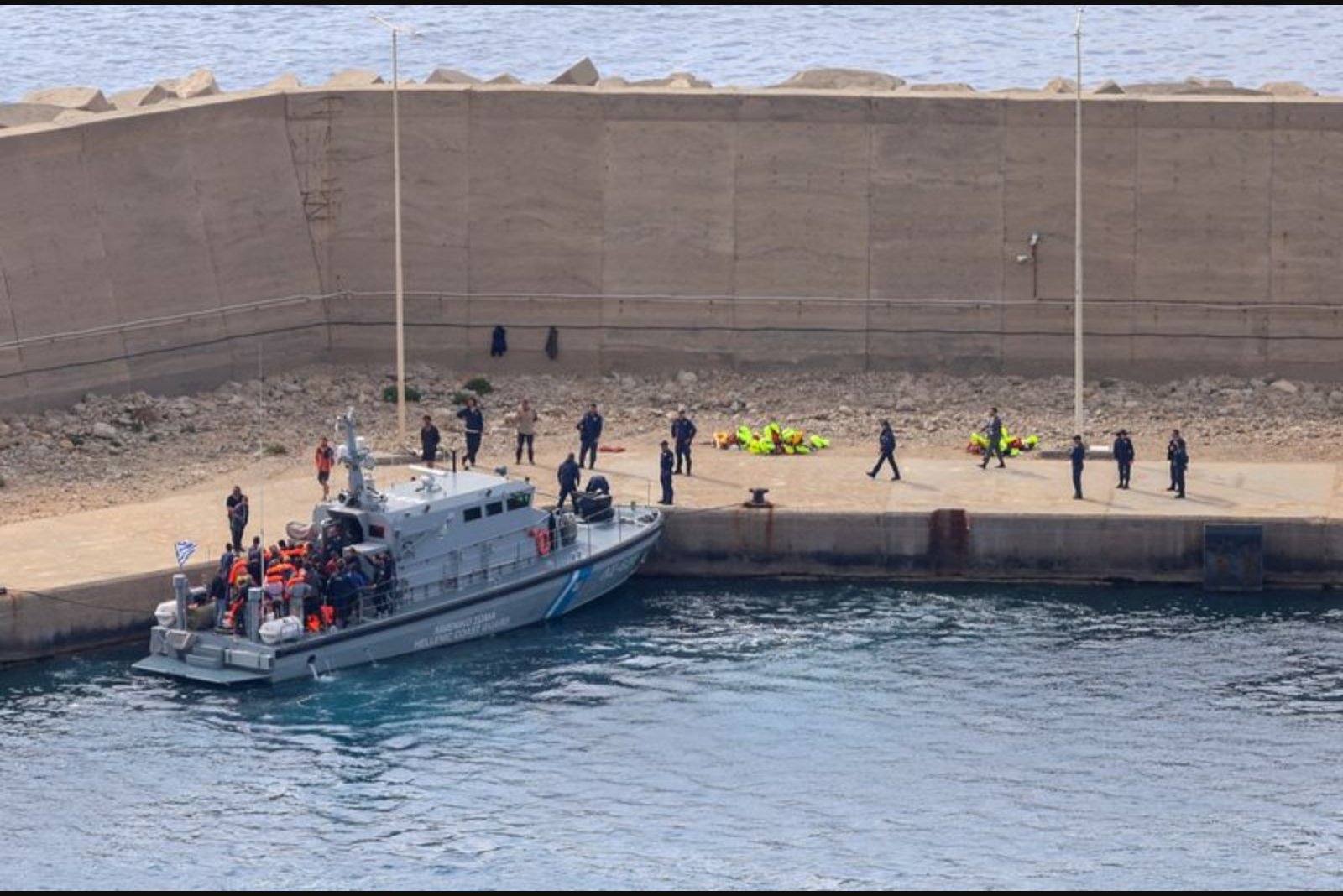
More than 100 pro-Palestinian activists who had been aboard ships en route to Gaza were taken to the Greek island of Crete on Friday after Israeli forces seized a number of vessels in international waters close to Greece, flotilla organisers said.
The activists were participants in what organisers described as the second Global Sumud flotilla, a recent campaign aimed at attempting to breach Israel's naval blockade of the Gaza Strip by delivering humanitarian supplies. The ships departed the Spanish port of Barcelona on April 12, according to organisers.
Organisers said an Israeli army vessel transferred 168 members of the flotilla crew to Greek boats on Friday. Those Greek vessels then carried the activists to shore, where buses and an ambulance were waiting to transport them, organisers said and footage showed.
Israel's foreign ministry described the flotilla organisers as "professional provocateurs." The organisers reported that two activists remained in the custody of Israeli authorities.
Spain's foreign minister, Jose Manuel Albares, said 30 Spaniards had arrived in Crete but that one Spanish national, identified as Saif Abu Keshek, had been "illegally" arrested and was being taken to Israel. "We demand his immediate release," he said.
Israel's foreign ministry said Abu Keshek was suspected of affiliation with a terrorist organisation and that he, along with a second activist suspected of illegal activity, would be taken to Israel for questioning. "Israel will not allow the breach of the lawful naval blockade on Gaza," the ministry added.
Germany and Italy's foreign ministries issued a joint statement saying they were following the developments with "deep concern."
An unnamed source told organisers that while 22 boats had been intercepted by Israel, 47 other vessels remained at sea off southern Crete and planned to anchor there at some point before continuing on toward Gaza. The source said each ship was carrying about a ton of food, medical supplies and other equipment.
Organisers said the 22 vessels were seized late on Wednesday in international waters off Greece's Peloponnese peninsula, a location hundreds of miles from Gaza.
In a statement on Thursday, the U.S. State Department warned that it might "impose consequences" on those who support the flotilla, characterising the effort as pro-Hamas. Pro-Palestinian activists have countered that Israel and the United States wrongly equate their campaigning for Palestinian rights with support for Hamas extremists.
Last October, Israel's military halted a previous flotilla organised by the same group, detaining Swedish activist Greta Thunberg and more than 450 participants. That action followed a series of earlier seaborne attempts to reach blockaded Gaza.
Humanitarian groups and Palestinians say that supplies entering Gaza remain insufficient despite a ceasefire reached in October that included guarantees of increased aid. Most of Gaza's more than 2 million residents have been displaced, with many living in damaged buildings, makeshift tents on open ground, on roadsides or atop the rubble of destroyed structures. Israel, which controls access to the Gaza Strip, denies that it withholds supplies from the territory's residents.
Context and immediate developments
The latest flotilla action has resulted in the transfer of the bulk of intercepted activists to Crete and the retention by Israeli authorities of at least two individuals for further questioning. Governments across Europe have signalled diplomatic concern, while officials in Israel have defended the interdiction as enforcement of a naval blockade.
The flotilla organisers have framed the voyages as humanitarian in intent, asserting that each ship carries roughly a ton of relief material. Authorities and foreign ministries involved have offered contrasting accounts, focusing on legal and security dimensions of the interdiction.
What happens next
The situation remains fluid. Dozens of vessels reported to be still at sea off southern Crete may attempt to stage further movements toward Gaza, organisers said. Meanwhile, at least one detained activist is being transported to Israel for questioning on suspicion of links to a terrorist organisation, according to Israeli authorities.