
In a littered Beirut parking lot near the Mediterranean, a makeshift tarp tent serves as home for Hassan Yahya. He has tied a worn piece of cardboard to a traffic signal pole beside the shelter, its hand-scrawled message a fragile echo of the entrance sign that once welcomed visitors to Kfar Kila, his ancestral village dozens of miles away. The cardboard, the tent and the few salvaged belongings around it mark part of a wider scene of dispossession for many southerners who have seen their villages vanish in recent years.
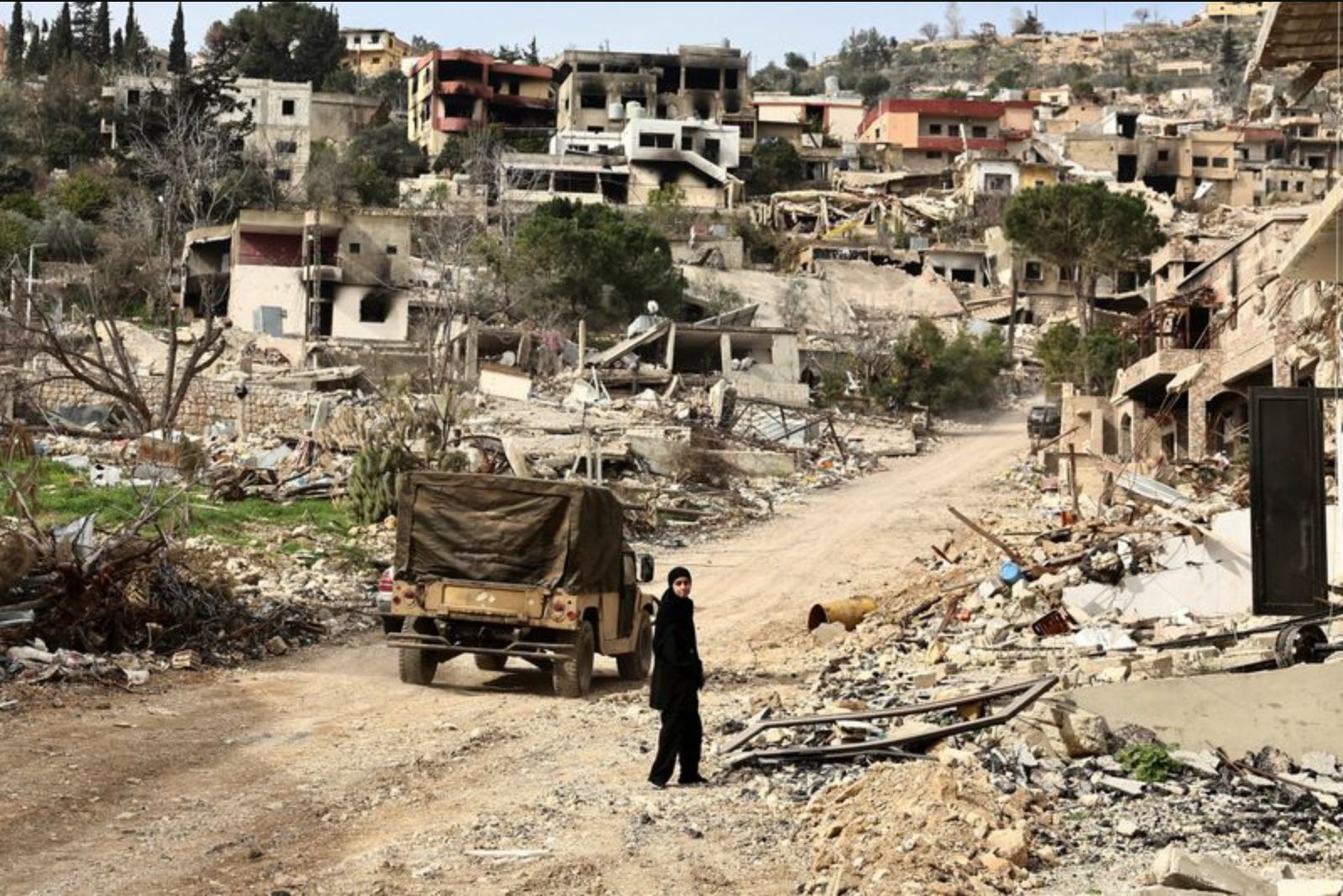
Kfar Kila is among roughly a dozen settlements along Lebanon’s southern border that have been progressively levelled over the past two and a half years by Israeli bombardment and subsequent clearance operations. What remained of built life - homes, bakeries, shops, schools and olive groves - has been reduced to open ground and ruin as bulldozers and controlled demolitions move in to create what Israeli forces describe as a buffer zone aimed at securing the frontier.
For those who grew up in Lebanon, villages occupy an outsized cultural role. They are not simply places of residence but anchors - the day'a that link families across generations, occasions and geographies. People travel back for weddings, holidays and the olive harvest; they build houses to preserve ties and invest in communal life. That network of obligation and attachment has been severed for hundreds of thousands.
"It’s like fish, if they leave the water, they die," said 58-year-old Yahya, who sat on a plastic chair inside the tent as a generator hummed behind him. "We can’t leave. We die." His voice captured a common sentiment among former Kfar Kila residents: physical displacement has become existential dislocation.
Israeli military statements have characterised Kfar Kila and some other demolished villages as hubs of Hezbollah activity. In official accounts, Kfar Kila was labelled a "flagship village of Hezbollah" allegedly hosting extensive military infrastructure, including in civilian structures like homes and schools. The military said it seized more than 90 truck-loads of weapons there in 2024 and additional caches this year and that it has sought to reduce harm to civilians. Those claims could not be independently verified in this reporting.
The most recent escalation of hostilities, which began early last month after Hezbollah fired rockets into Israel in apparent solidarity with Iran following attacks on its ally, has driven roughly 1.2 million Lebanese people from their homes - about one-fifth of the country’s population. The mass displacement has produced dispersed communities and placed immediate pressures on shelter, services and local economies.
Reconstructing the story of Kfar Kila required speaking with five former residents now scattered across Lebanon and examining satellite imagery, social posts and photographs and videos they and others shared. Those pieces together present a portrait of a village with deep historical roots and an economy centred on agriculture and local trade.
Mentions of Kfar Kila date back centuries, appearing in the travel accounts of Al-Maqdisi in the 10th century and later in Ottoman tax registers and British colonial surveys. Prior to the fighting that erupted in October 2023, Kfar Kila housed about 5,500 inhabitants, according to the village mayor, Hassan Sheet. Farming was the backbone of daily life, supported by a climate that sustained wheat, grapes, watermelons, tobacco, tomatoes, parsley, fava beans and olives.
The village had gained recognition for its olive oil, sold across Lebanon and drawing buyers even from Beirut. Routine life centered on neighbourhood bakeries, restaurants and cafes where locals gathered to trade news, jokes and cards. Weddings were communal events that could last a week, enabled by gifts to the groom that funded feasts. Each year on the day of Ashura, crowds packed the village centre to watch re-enactments of the Battle of Karbala, a ritual that combined historical memory and communal spectacle.
During the two decades before October 2023, Kfar Kila experienced what the mayor described as relative prosperity. New schools and clinics opened, literacy rose and road improvements connected residents more reliably to Nabatieh and other urban centres. Diaspora remittances from Europe, the Gulf and Africa helped finance homes and local businesses. Members of Yahya’s extended family who had settled in Sweden completed a house beside the Fatima Gate - a local border crossing whose surroundings had become a magnet for restaurants and a replica of Jerusalem’s Dome of the Rock.
Yahya himself had built a three-storey stone and cement house in the village and installed a basement oven to bake pastries for neighbours. Utility and family investments like these underpinned a sense of rootedness that the destruction has since eroded.
Within days of the October attacks on Israel, Hezbollah launched what it termed a "war of support" for Hamas and fired missiles into Israel. Some Israeli border towns, including Metula, sustained heavy damage, with hundreds of homes reported destroyed or harmed. Israel’s military response was extensive across southern Lebanon and by January 2024 Kfar Kila had been largely emptied, according to the mayor. In subsequent months Israeli forces reported destroying dozens of underground structures and hundreds of weapons found in the village; Hezbollah has categorically denied maintaining military infrastructure within civilian settlements.
Hezbollah’s media office did not immediately respond to requests for comment on the demolitions and the military’s statements about Kfar Kila. Publicly, the group has condemned the demolitions and denied the presence of military installations in populated areas. It has previously displayed parts of a tunnel network and other preparations in media presentations; one of four tunnels discovered by Israel in 2018 was reported to run from Kfar Kila under the border to Metula.
Those who fled have taken diverse paths. Yahya moved north from Kfar Kila before arriving in Beirut. His neighbour and childhood friend, Kheder Hammoud, relocated near the Syrian border. Grocery store owner Jameel Fawwaz - whose shop and home were destroyed - initially moved to the southern town of Habbouch and later to a school in Sidon that sheltered hundreds of people. Sitting beside a wall in the school, which displayed dozens of paper signs with the names of villages hit by the war, Fawwaz said simply: "It all went up in smoke."
A ceasefire in November 2024 allowed some residents to return briefly, but by then nearly 85% of Kfar Kila’s buildings had been destroyed, Sheet said. Some remaining residents attempted to re-establish a presence by erecting prefabricated homes near the ruins, hopeful that reconstruction would follow. In February this year, Prime Minister Nawaf Salam visited the village and promised residents that rebuilding would begin soon. That hope was short-lived when fighting resumed within a month; bulldozers and controlled demolitions were used more aggressively and images from late March showed earthmoving equipment operating on the outskirts of the village. By late April an Israeli military official, speaking anonymously, told reporters that over 90% of homes in Kfar Kila had been destroyed.
For displaced villagers, daily life now relies on sporadic phone calls to maintain family ties. Funerals and weddings have been muted; Sheet said marriages, when they occur, often happen without customary fanfare. The psychological effect of losing a place that served as the locus of family memory and ritual has been profound. "Everything in the old village has meaning and significance for us - the historic houses, our family’s homes, the homes of our ancestors," Hammoud said, leaning on his late mother’s walking stick - one of the few possessions salvaged from his home. "These things are impossible to bring back."
The debate over whether the buffer zone will remain temporary or become more permanent is a source of anxiety. Israeli authorities have characterised the clearances as measures to secure the border; many Lebanese worry the cleared land could remain under long-term control. Comparisons have been drawn by residents to other territories that were captured in past conflicts, heightening fears about the future status of lands formerly occupied by villages such as Kfar Kila.
Beyond the immediate human cost, the destruction of Kfar Kila severs agricultural supply chains and local commercial networks. The village’s olive oil trade reached buyers nationwide and the loss of orchards, storage and processing facilities undermines livelihood streams for families that relied on farm income and remittances. The demolition of homes and community infrastructure - schools, clinics and roads - further weakens economic resilience and raises questions about financing reconstruction, the sequencing of rebuilding and who will underwrite restoration of services and housing.
Mayor Sheet, who now resides in his uncle’s house in a mountain village at the country’s centre, emphasised the depth of the attachment to place. "There’s a spiritual connection, psychological connection, a connection with your roots - a very strong one. This is fundamental for Kfar Kila," he said. "It’ll take time, for sure, but when we get back, we’ll rebuild." He paused and added: "This isn’t just talk. We’re going back."
For now, those words are a pledge held against the uncertainty of repeated displacement and the scale of physical destruction. The village that once hosted festivals, harvests and daily commerce has, for many, become an absence - an open, flattened field where houses and memories once stood.
As Kfar Kila’s former residents navigate displacement, the intersecting challenges of social cohesion, economic restoration and political contestation remain unresolved. Rebuilding, if it occurs, will demand not only materials and capital but also the reconstitution of the informal social and cultural institutions that sustained daily life. For the moment, daily survival and the maintenance of family ties are the priorities for those who remain scattered across the country.