
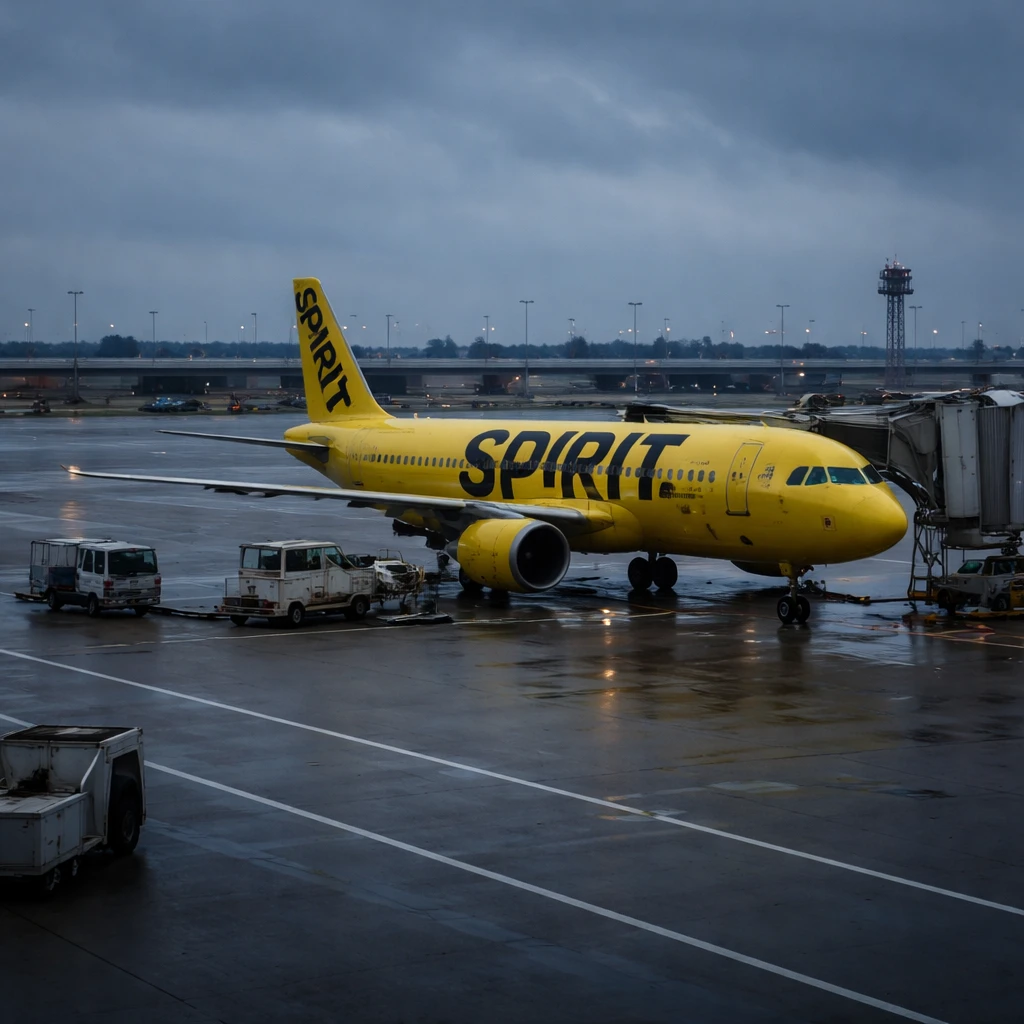
Spirit Airlines is making preparations to wind down operations after efforts to secure a $500 million lifeline were unsuccessful, according to people familiar with the matter.
Those individuals said the ultra-low-cost carrier was unable to marshal sufficient backing from some bondholders or obtain government support needed to finalize funding before running out of cash. The shortfall in financing has left the airline facing an imminent cessation of service.
Markets reacted sharply to the report. Shares of Spirit Airlines tumbled roughly 75% on Friday after the news broke. At the same time, several competing carriers posted gains: Southwest Airlines rose about 3%, JetBlue Airways advanced roughly 6%, and Frontier Group climbed about 8%. Shares of other major carriers, including Delta, American and United, also moved higher in response to developments.
The failed financing effort centered on a $500 million package that would have relied on a combination of support from bondholders and a government-backed component, according to the people. Those familiar with the situation said the necessary commitments were not secured in time to prevent the carrier from exhausting its cash reserves.
As the carrier moves toward ceasing operations, the immediate market response highlighted investor reassessment across the airline sector. The rapid decline in Spirit's share price coupled with upward moves in peer stocks underscores how news about liquidity and potential shutdowns can quickly redistribute market value within a concentrated industry.
Details remain limited to what people familiar with the matter have described about the financing attempts and their timing. The inability to finalize the $500 million package, and the resulting decision to prepare to stop operations, were the central facts cited by those sources.
Summary
People familiar with the situation say Spirit Airlines failed to obtain a $500 million lifeline that depended on bondholder and government support, leaving the carrier without the funds necessary to continue operations and prompting preparations to cease service. Spirit's shares plunged about 75%, while several rival airlines posted gains.
- Key points
- Spirit failed to secure a $500 million financing package that required bondholder and government backing.
- Shares of Spirit fell approximately 75% after reports of the failed lifeline.
- Rival carriers including Southwest, JetBlue and Frontier saw their stock prices rise following the news.
- Risks and uncertainties
- Timing and completeness of financing commitments were insufficient to prevent Spirit from exhausting cash - impacting airline liquidity and operations.
- Potential operational shutdown creates market disruption for the carrier and could affect industry pricing and capacity dynamics.
- Limited public detail about the failed negotiations leaves uncertainty about next steps and the timing of any operational changes.