
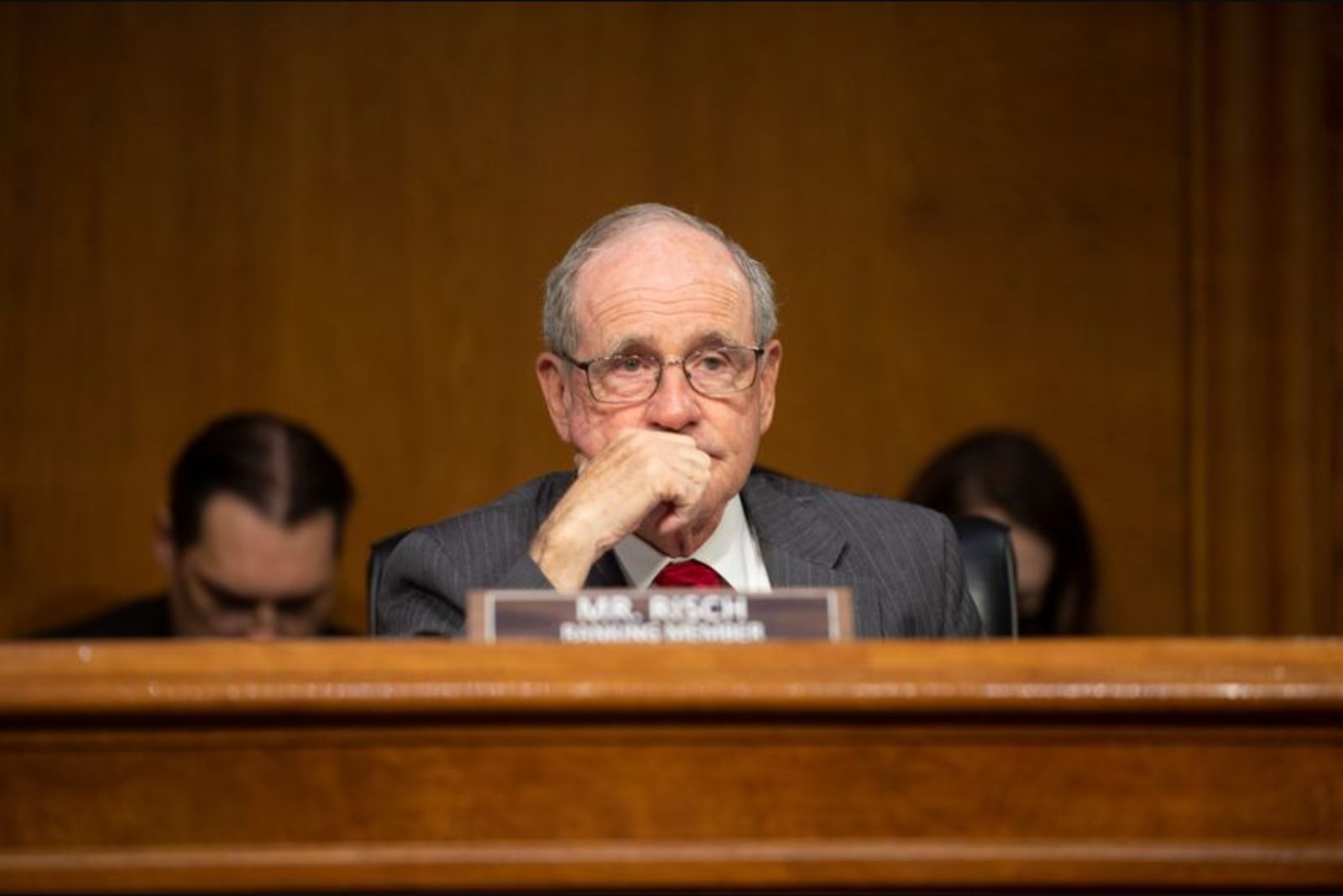
WASHINGTON, April 29 - The chair of the Senate Foreign Relations Committee will use a Thursday hearing to press for renewed efforts to address national security vulnerabilities tied to undersea communications cables, which carry roughly 99% of international internet traffic.
In prepared remarks reviewed by Reuters, Republican Senator Jim Risch said it is important to publicly identify perpetrators when sabotage occurs where possible, and to rally an international response to strengthen the resiliency of this critical infrastructure and to reduce the impact of attacks.
The committee convened the hearing amid concerns about a series of suspected incidents. It stated that since 2022 there have been at least eight suspected undersea sabotage events in the Baltic Sea, where Russia is suspected of likely involvement. The prepared comments referenced both high-end undersea warfare capabilities and lower-technology measures that can mimic damage from an anchor dragging on the sea floor.
Risch’s remarks also expressed worries about suspected actions by China. The hearing follows broader alarm in Washington that has been growing for more than a year about threats to the network of more than 400 subsea cables that carry the vast majority of international internet traffic, and about pressures posed by activities attributed to both China and Russia.
Last year, U.S. House lawmakers noted what they described as a pattern of coordinated malign activity tied to the People’s Republic of China and the Russian Federation, targeting subsea infrastructure in regions including the Baltic Sea and the Indo-Pacific, according to a letter first reported by Reuters.
The Russian and Chinese embassies in Washington did not immediately offer comment on the matter.
On the regulatory side, Federal Communications Commission Chair Brendan Carr said the agency plans to adopt rules that would bar companies using Chinese technology or equipment from connecting undersea communication cables to the United States.
The concerns cited in the hearing reflect a string of concrete incidents. In November 2024, two undersea fiber-optic telecommunication cables in the Baltic Sea were cut, prompting investigations into possible sabotage. In 2023, Taiwan accused two Chinese vessels of cutting the only two cables that provide internet access to the Matsu Islands. And earlier this month, Britain said it had deployed military vessels to guard cables after Russian submarines spent more than a month in and around British waters earlier this year.
The hearing aims to push for clearer attribution, heightened international collaboration on protecting subsea networks, and measures to improve both prevention and mitigation when incidents occur.
Summary
The Senate Foreign Relations Committee chair will call for public attribution and coordinated international efforts to protect undersea communications cables after multiple suspected sabotage incidents since 2022, with particular concern about actions attributed to Russia and China. Federal regulators and allied navies have signaled policy and operational steps in response.
Key points
- Undersea communications cables carry about 99% of international internet traffic, making them a critical infrastructure sector - primarily affecting telecommunications and internet services.
- Since 2022 there have been at least eight suspected sabotage incidents in the Baltic Sea; Russia is suspected of likely responsibility in several cases, while concerns about suspected Chinese activity have also been raised.
- Regulatory and military measures are being signaled - including planned FCC rules to bar connections that include Chinese technology and deployments by Britain to protect cables - impacting telecom procurement and maritime security operations.
Risks and uncertainties
- Ongoing sabotage or damage to undersea cables could disrupt international internet traffic and telecommunications services, posing operational risks for the communications sector.
- Attribution challenges and geopolitical tension - with suspected involvement by Russia and concerns about China - create uncertainty about how effectively responsibility can be assigned and addressed.
- Regulatory changes, such as FCC plans to bar certain equipment, could affect suppliers and procurement decisions in the telecommunications industry.