
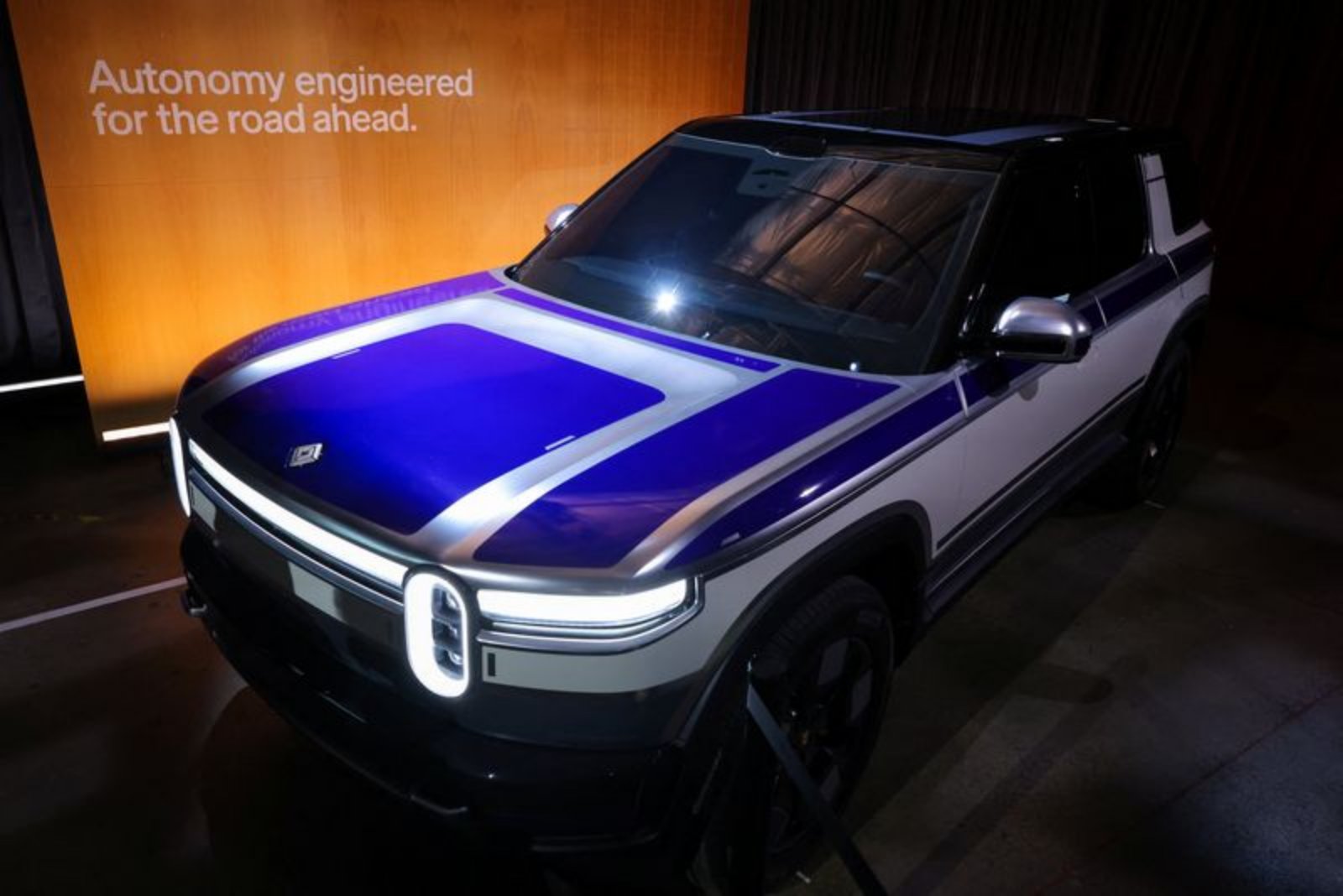
Rivian said on Thursday it will obtain up to a $4.5 billion loan from the U.S. Department of Energy to finance construction of its Georgia manufacturing plant, a reduction of roughly $2 billion from the $6.6 billion initially approved for the project. The company also said the loan will be structured across a single phase rather than the two-phase framework that had been in place previously, and the funds will be drawn earlier than planned in 2027.
Rivian indicated the change in loan size and phasing reflects an updated approach to building the site. "Whereas before the loan was across two phases, it’s now the $4.5 billion loan across a single phase," Rivian CEO RJ Scaringe said. "I look at it as it reflects the level of confidence we have on our midsize platform."
The Georgia plant will produce Rivian's smaller R2 SUVs, which the company has positioned as a more affordable offering intended to broaden its addressable market. Rivian began producing R2 vehicles for customers last week and expects deliveries to start later this spring. The company also indicated plans to produce an R3 crossover at the Georgia facility at a later date.
On capacity, Rivian said it will increase the plant's initial annual production target to 300,000 units from an earlier 200,000 units. That revised figure remains below a previously discussed long-term plan that envisioned 400,000 units across two phases.
Rivian also reported first-quarter financial and delivery results that beat Wall Street estimates. Revenue rose about 11 percent to $1.38 billion for the quarter, topping the consensus estimate of $1.36 billion. Adjusted core loss narrowed to $472 million, a figure that was smaller than analysts had expected.
The company delivered 10,365 vehicles in the first three months of the year, exceeding estimates, and reaffirmed its full-year delivery guidance of 62,000 to 67,000 vehicles, a range the company said will be supported in part by the R2 launch.
Rivian said the R2 launch variant was priced at $57,990, with lower-priced trims scheduled for next year. The company reiterated plans for a widely anticipated $45,000 R2 variant expected by late 2027, a model it says could materially expand its potential customer base.
Executives highlighted that growth in higher-margin software and services revenues helped offset some pressure in the core automotive business during the quarter. Despite the shift in loan size, the automaker pointed to its midsize platform as a reason for confidence in the plant's economics.
Rivian is pursuing partnerships intended to support future growth. The company said it has a deal with a ride-hailing company to deploy up to 50,000 autonomous R2 robotaxis, and it continues to collaborate with a European automaker that recently unlocked a $1 billion investment tied to joint software development milestones.
Management also framed the R2 as a vehicle that could help counteract weaker demand after the expiration of a $7,500 U.S. federal tax credit last year, though analysts cited by the company expect the higher-priced R1T and R1S models to remain the core of deliveries in the near term.
Summary
Rivian will accept up to $4.5 billion in DOE financing for its Georgia plant and will draw funds earlier than planned in 2027. The company raised the plant's initial annual capacity target to 300,000 units, down from a previously discussed 400,000-unit two-phase plan. Rivian reported quarterly revenue and delivery beats and reiterated full-year delivery guidance, while advancing R2 production and partnerships intended to support scale.