
Stock Markets May 4, 2026 11:45 AM

Panthalassa Secures $140M Series B Led by Peter Thiel to Scale Ocean-Based AI Nodes

Funding to finish Portland pilot factory and accelerate Ocean-3 autonomous wave-powered AI inference nodes toward 2026 pilot and 2027 commercial rollouts

By Caleb Monroe
Panthalassa Secures $140M Series B Led by Peter Thiel to Scale Ocean-Based AI Nodes

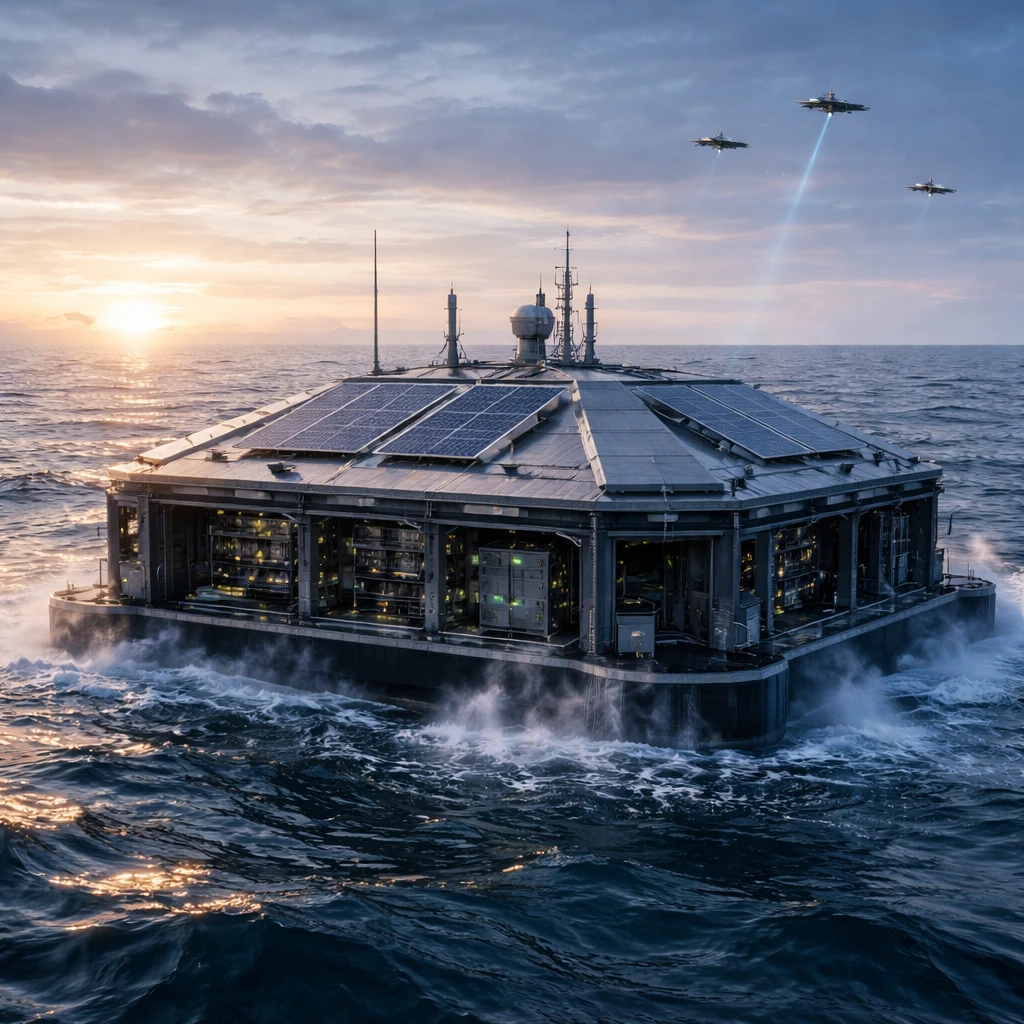
Panthalassa, a Portland, Oregon company developing ocean-powered autonomous computing systems for AI inference, raised $140 million in a Series B round led by Peter Thiel. The proceeds will complete a pilot manufacturing facility and expedite deployment of the Ocean-3 node series that run AI chips on electricity generated at sea and transmit inference outputs via satellite. The company plans a northern Pacific pilot in 2026, with commercial deployments targeted for 2027.

Key Points

  • Panthalassa raised $140 million in a Series B round led by Peter Thiel to fund manufacturing and deployment of ocean-powered AI computing nodes - impacts renewable energy, AI infrastructure, and coastal manufacturing sectors.
  • Funds will finish a pilot manufacturing facility near Portland and accelerate Ocean-3 node deployment, which uses wave-generated electricity to run AI inference chips and transmits outputs to land by satellite - relevant to data center demand and satellite communications markets.
  • Company plans a northern Pacific pilot of Ocean-3 in 2026 and aims for commercial deployments in 2027 after refining manufacturing processes and demonstrating AI inference capabilities - affects timelines for deployment in energy and compute markets.

Overview

Panthalassa announced it has closed a $140 million Series B financing round, led by investor Peter Thiel, to support the manufacturing and deployment of its autonomous ocean-based computing systems designed for AI infrastructure. The Portland, Oregon-based renewable energy and ocean technology company said the new capital will be used to complete a pilot manufacturing facility near Portland and to accelerate the rollout of its Ocean-3 series of nodes.


What the funding will support

The company described the Ocean-3 nodes as autonomous, floating energy systems manufactured from plate steel in coastal factories and intended to operate in distant ocean regions. These nodes generate electricity continuously from ocean waves and use that power directly onboard to run AI inference chips. Rather than transmitting generated power back to land grids, Panthalassa sends inference tokens to shore by satellite. The surrounding ocean is used as a natural supercooling resource, which the company says helps address a significant engineering challenge faced by land-based data centers and can extend chip lifetimes.


Investor participation

Alongside the lead investor, the round includes a wide group of new investors and returning backers. New participants listed are John Doerr, TIME Ventures, SciFi Ventures, Susquehanna Sustainable Investments, Hanwha Group, Anthony Pratt, Fortescue Ventures, Future Positive, WTI, Nimble Partners, Super Micro Computer, Sozo Ventures, Dylan Field, Planetary VC, Leblon Capital, Resilience Reserve, Portland Seed Fund, and the Intrepid Oregon Fund. Returning investors named include Founders Fund, Gigascale Capital, Lowercarbon Capital, Unless, and WovenEarth.


Technical development and timeline

Panthalassa said it spent the past decade developing its core technologies in power generation, propulsion, autonomy, and at-sea computing. It cited prior prototypes - Ocean-1, Ocean-2, and Wavehopper - which proved the capabilities at sea in 2021 and 2024. The company plans to deploy Ocean-3 pilot nodes in the northern Pacific Ocean in 2026 to demonstrate AI inference capabilities and to refine its manufacturing process ahead of commercial deployments planned for 2027. Panthalassa positions the platform as a way to expand energy and AI computing capacity without building new land-based data centers or power plants.


Contextual notes

The announcement emphasizes manufacturing scale-up and at-sea deployment as near-term priorities. The firm intends to complete its pilot manufacturing facility near Portland to support mass production of the Ocean-3 series and to accelerate node deployment once piloting validates performance and manufacturing workflows.

Risks

  • Planned deployment and commercial timelines are targets - the company must demonstrate Ocean-3 inference capabilities and refine manufacturing before commercial rollouts, creating execution risk for manufacturing and deployment.
  • The approach depends on at-sea operation, autonomy, and satellite transmission of inference outputs; operational and communications performance at scale remain to be proven during the 2026 pilot.
  • Scaling mass production from a pilot manufacturing facility requires process refinement; manufacturing challenges could affect pace of commercial deployments and impact coastal manufacturing and supply chain participants.

More from Stock Markets

Brockman Reveals Near-$30 Billion OpenAI Stake and Financial Links to Altman During Musk Trial May 4, 2026 California Launches Probe into Federal Deal That Scrapped Central Coast Offshore Wind Project May 4, 2026 Pilots Union Praises Kirby’s Merger Vision, Stops Short of Endorsing Deal May 4, 2026 Embraer Sees Follow-On Middle East Defense Sales After UAE C-390 Agreement May 4, 2026 Intel hires long-serving Qualcomm executive to oversee PCs and physical AI unit May 4, 2026