
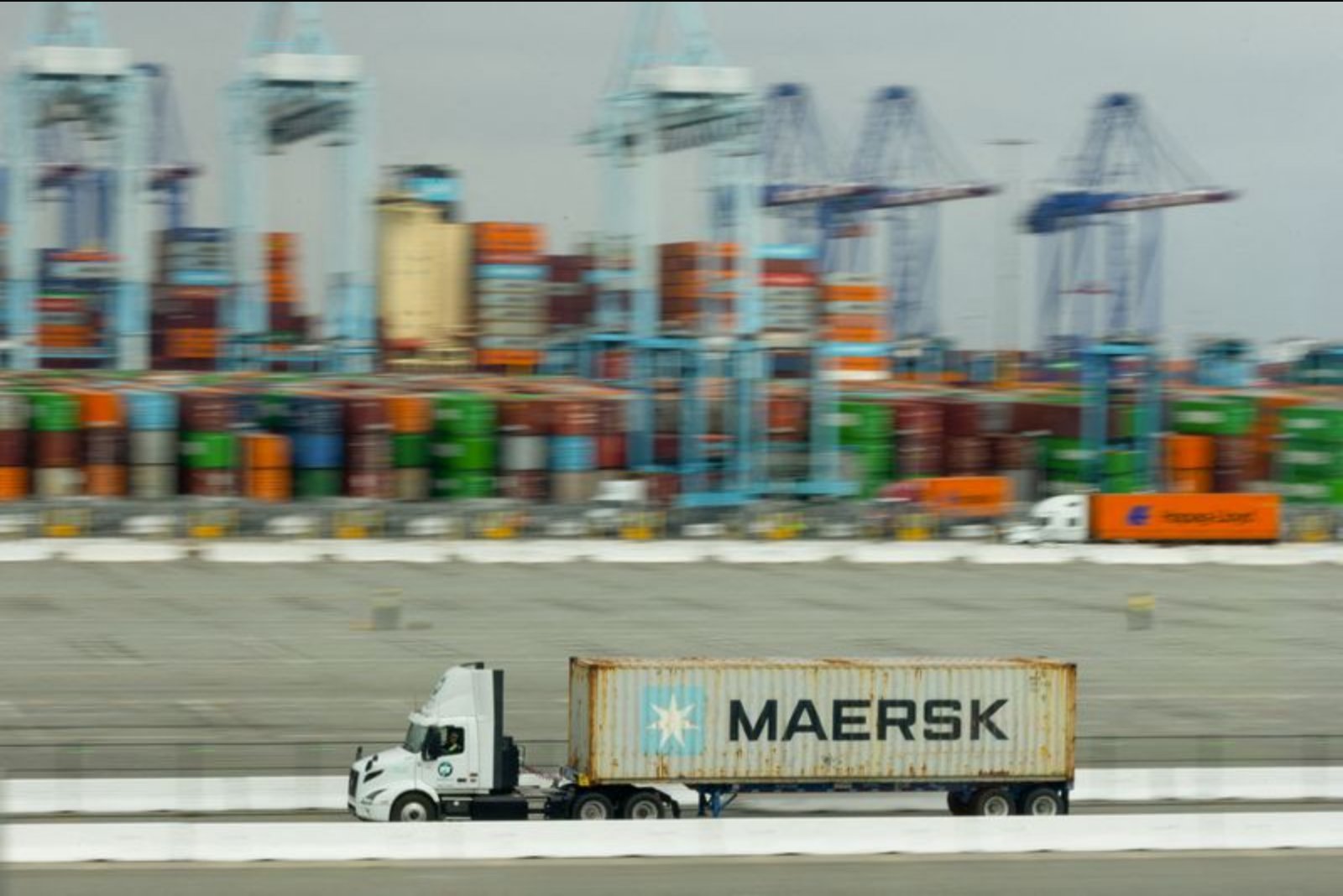
Maersk posted underlying earnings before interest, tax, depreciation and amortisation (EBITDA) of $1.73 billion for the January-March quarter, modestly ahead of the $1.66 billion median forecast from a company-supplied poll of 10 analysts. The shipping group kept its full-year earnings guidance intact.
The company reiterated a projected range of 2% to 4% growth in global container volumes for the year, a signal that management still expects modest expansion in trade flows despite emerging security risks in the Middle East. "We’ve seen strong demand across most regions this quarter, supporting robust volume growth in our three business segments," Chief Executive Vincent Clerc said in a statement.
Maersk noted that the first quarter's results do not fully reflect the consequences of the recent escalation in the Middle East. The conflict began on February 28 when the United States and Israel launched coordinated strikes on Iran, and the fallout has affected commercial shipping in the region.
Among the operational impacts, Iran closed the Strait of Hormuz to commercial traffic, a move that has pushed up certain costs including fuel. The broader security environment has remained fragile: French shipping group CMA CGM reported that one of its container ships was struck while transiting the Strait of Hormuz, resulting in crew injuries and damage to the vessel.
These developments have continued to influence routing decisions. Maersk is maintaining detours that send vessels around Africa rather than through the Suez Canal and the Bab el-Mandeb Strait, reversing tentative efforts to resume some Suez services. The company said this marks an abrupt halt to its cautious steps toward reinstating the Suez route, a measure that would have been seen as progress toward easing years of disruption tied to attacks on ships in the Red Sea.
Separately, an investment-focused notice within the reporting highlighted a service that evaluates MAERSKb alongside thousands of other companies using more than 100 financial metrics. The notice referenced past performance examples, naming Super Micro Computer (+185%) and AppLovin (+157%) as notable winners, and invited readers to explore whether MAERSKb is included in any strategies or if other opportunities exist in the same sector.
Coverage note: This article focuses on Maersk's published first-quarter financials, guidance and operational remarks as they relate to global container volumes and routing decisions amid Middle East security concerns.