
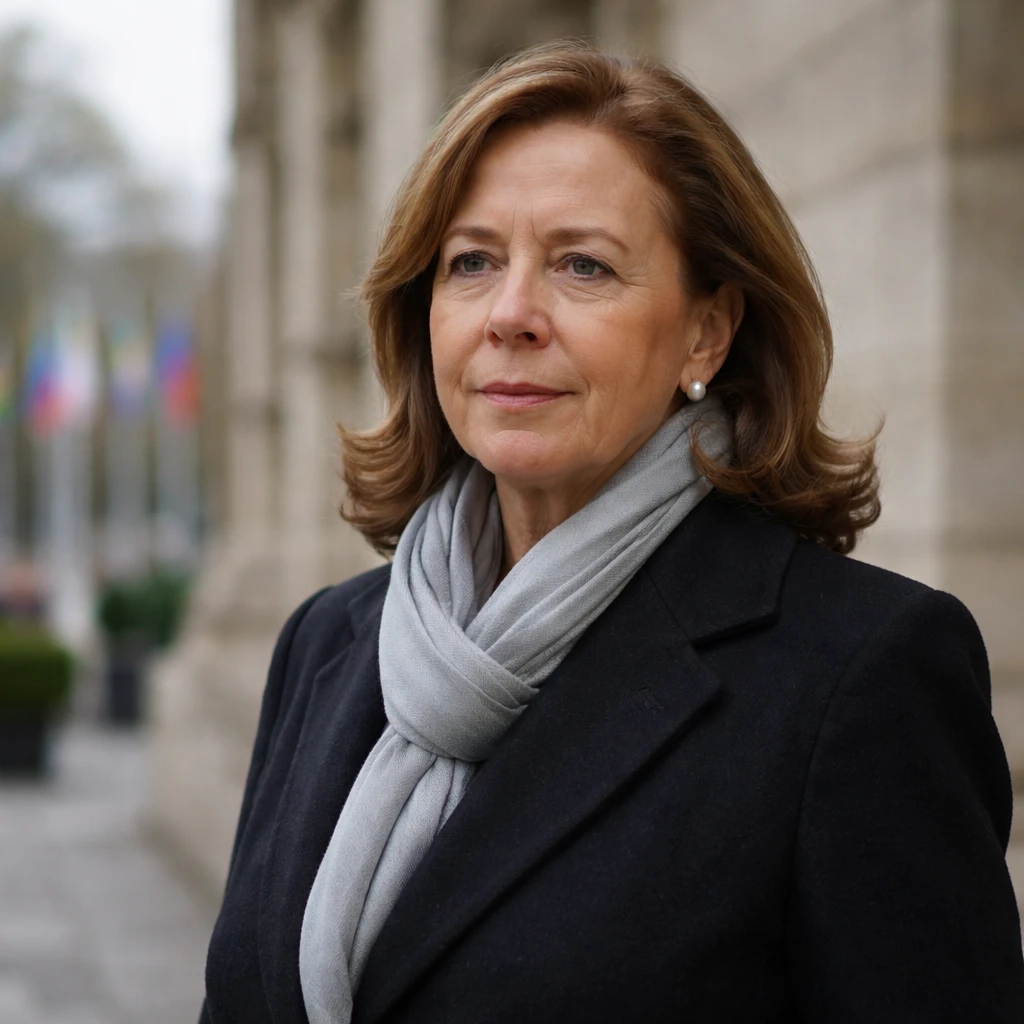
Rebeca Grynspan, a leading candidate to become the next U.N. secretary-general, warned that the United Nations is confronting a precarious fiscal moment and must adapt to shrinking and uncertain resources by prioritising its activities.
Speaking in Paris while campaigning among countries that sit on the U.N. Security Council, the former Costa Rican vice president and current head of the United Nations Conference on Trade and Development said the organisation's financial sustainability is imperilled by late or withheld member contributions. She said those payment uncertainties are restricting the U.N.'s capacity to plan and operate effectively.
Grynspan underscored the gravity of the situation: the organisation has been signalling that it is approaching effective bankruptcy, with delayed or withheld contributions from major donors - and with the United States, its largest funder, frequently in arrears. Against that backdrop, she said the U.N. must adjust its ambitions to available resources.
"I think that we are in a very difficult moment," she said in an interview in Paris. "I think that the financial sustainability of the budget of the U.N. is at stake."
Her prescription is blunt. "I don’t think we should do more with less. I think that we have to do less with less - and focus more," she said, calling for a pared-down approach that concentrates efforts on priorities the organisation can support reliably.
Grynspan, 70, who was born to parents who fled Europe after World War Two, is one of four candidates vying to replace Secretary-General Antonio Guterres at the start of next year. The winner will inherit an institution whose influence has been challenged by great-power rivalry and criticism of multilateralism from powerful states.
She argued that the U.N. has been absent from too many conflicts and urged a willingness to take greater risks in proposing mediation more often - even if initial offers are rebuffed. That, she said, could revive the organisation's relevance in conflict resolution.
She also advocated a reconfigured role for the U.N. as an enabler that leverages partnerships outside the organisation’s own structures. "Not everything has to happen within the U.N.," she said, suggesting closer cooperation with non-governmental organisations and the private sector.
Asked about U.S. President Donald Trump, described in her remarks as a fierce critic of the U.N., she said the institution should respond with less defensiveness. She referenced a comment Mr. Trump made at the General Assembly that the U.N. "has potential, but it’s not living up to the potential," and indicated that such criticism could be a prompt to reform.
On whether the organisation faces an existential crisis, she struck a cautiously optimistic tone: "If it’s a life or death moment for the U.N., I have my doubts. Most of it comes from the conviction that the world is better with the U.N. than without it. I am running because I believe in the charter, I believe in the principles of the U.N."
Her comments frame a campaign that is emphasising fiscal realism, targeted action, and external partnerships as central themes for any future leadership tasked with steering the U.N. through its present financial and political constraints.