
Ford Motor Co. raised the midpoint of its annual profitability outlook on Wednesday by $500 million after booking a sizable, though not fully realized, tariff refund. The improvement was largely driven by a $1.3 billion relief tied to a February U.S. Supreme Court ruling that invalidated portions of prior tariff policy; Ford recorded a paper gain on the expected refund in the first quarter.
The company increased its guidance for projected earnings before interest and taxes (EBIT) to a range of $8.5 billion to $10.5 billion for the year, from a prior forecast of $8 billion to $10 billion. Management said the net impact of tariff costs for the year will be $1 billion, but did not disclose the gross tariff exposure that contributed to that figure.
Ford’s first-quarter financials reflected the tariff relief: adjusted earnings per share came in at $0.66, well ahead of analysts’ expectations of $0.19. Adjusted EBIT for the quarter totaled $3.5 billion, and revenue reached $43.3 billion. The automaker also reported a net profit of $2.5 billion for the period.
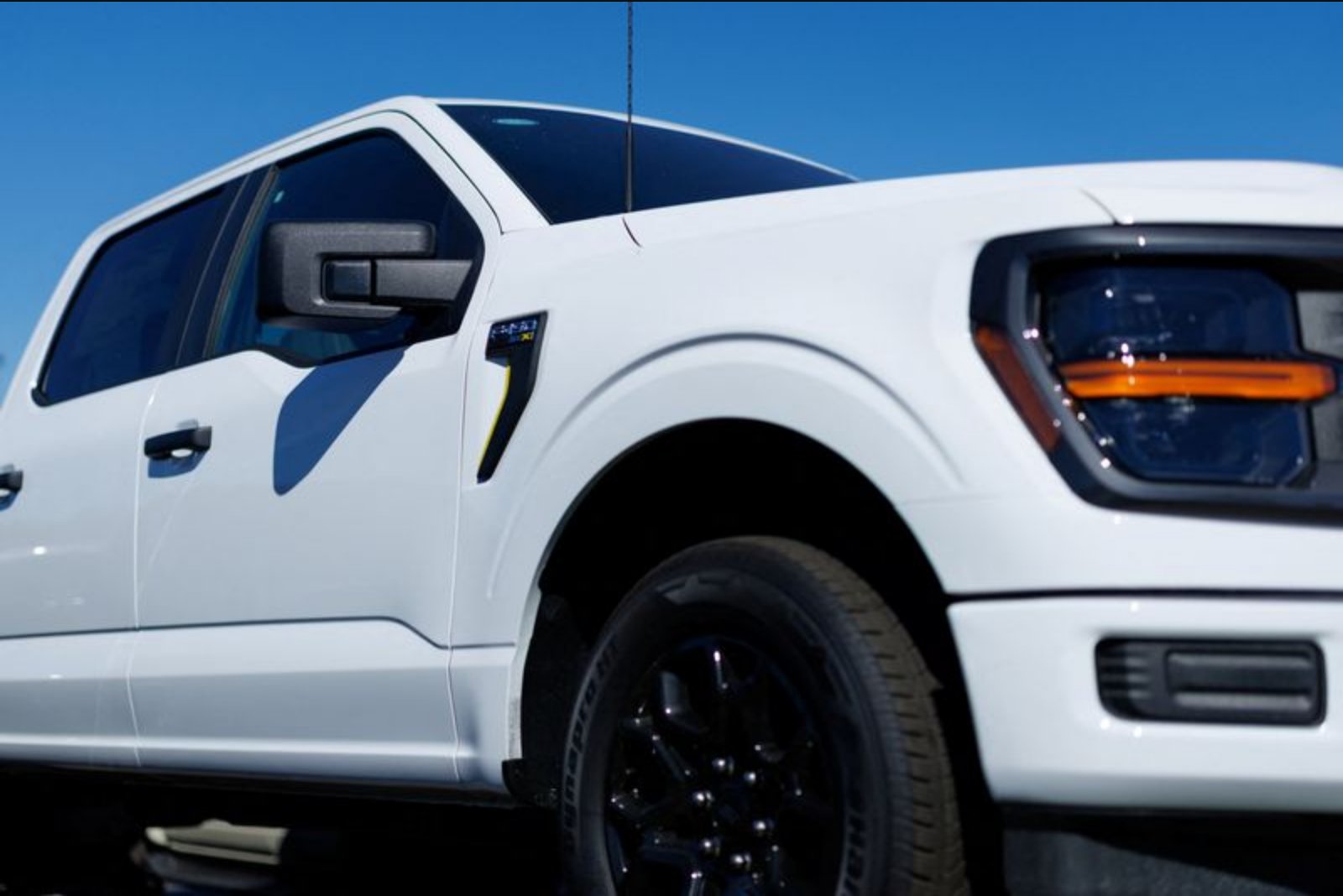
Despite the lift from the tariff refund, executives cautioned that material cost pressures remain, especially for aluminum used in the F-150 pickup line. Those costs rose after Ford’s major U.S. aluminum supplier, Novelis, experienced two large fires in 2025. The disruptions have curtailed output at the supplier’s affected New York plant, with Ford estimating that production at that portion of the facility will resume sometime between May and September. Novelis said it expects to restart production late in the second quarter.
The timing and magnitude of the government reimbursement for tariffs also remains uncertain. Ford recorded an accounting gain on the expected refund in the first quarter, which supported its results, but management acknowledged it does not yet know how quickly the funds will actually be returned by the government.
Inventory and production figures for the F-150 underscore the operational impact. Data from Catalyst IQ showed F-150 inventory in April declined 38% from the prior year, a drop Ford attributed largely to the Novelis fires. Separately, S&P Global Mobility data cited by JPMorgan indicated F-Series production was estimated to have fallen 12% year-over-year in the first quarter as of mid-April, a steeper decline than previously expected.
"Ford may be having a more difficult time recovering from the Novelis fire than was earlier expected," JPMorgan analyst Ryan Brinkman wrote in a note.
The F-150 is a long-standing sales leader and a principal earnings contributor for Ford; as such, any interruption to its output has an outsized effect on company profits and margin structure. Ford also said its total vehicle sales were down 9% in the first quarter, with roughly half of that decline attributable to lower demand for electric and hybrid vehicles.
Cross-town rival General Motors reported solid results as well: GM posted a 22% increase in first-quarter core profit and raised its full-year earnings forecast, helped by a resilient U.S. market and an anticipated $500 million tariff refund.
In market performance over the past 12 months, Ford’s shares have risen about 20%, while General Motors’ stock has climbed by more than 60%.
Bottom line - Ford’s guidance upgrade reflects a meaningful tariff refund recognized in the first quarter, but higher-than-expected tariff costs and ongoing aluminum supply constraints tied to the Novelis fires continue to present a material headwind for F-150 production, inventory levels, and unit economics.