
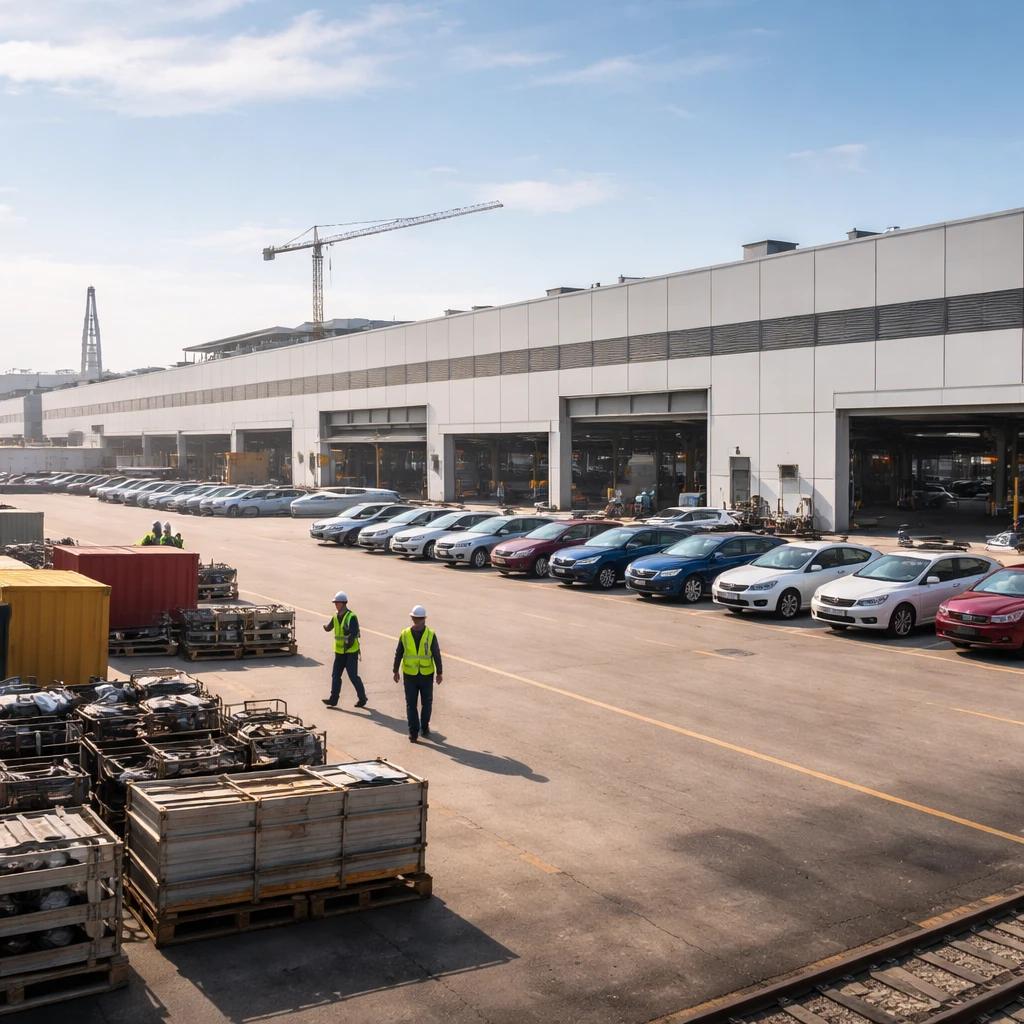
Spanish automaker EBRO has set a production target of 25,000 to 30,000 vehicles at its Barcelona plant for this year, potentially roughly doubling the volumes it delivered last year, Chairman Rafael Ruiz said on Wednesday. The company, which halted sales in 1987 before relaunching in 2024, currently manufactures four models and recorded sales of about 14,000 vehicles in the previous year.
EBRO holds a 60% stake in a joint venture with Chinese automaker Chery to produce cars at a former Nissan facility in Barcelona. Ruiz told reporters that Chery intends to begin manufacturing at the site either by the end of this year or during the first quarter of 2027. He said the stated production target of up to 30,000 cars for this year may include vehicles from Chery.
Addressing delays in the start of Chery production, Ruiz confirmed that a Chery electric vehicle will be manufactured in Barcelona and attributed the postponements to commercial factors, specifically citing European Union tariffs on Chinese-made electric vehicles as one of the issues influencing timing.
Ruiz described the partnership with Chery as "magnificent" and explained operational sequencing at the plant: "We have given priority to the EBRO vehicles to launch them as soon as possible industrially and we have been sequencing the capacity that we have had." He noted that the Barcelona facility directly employs 1,600 people and has an installed annual capacity of up to 200,000 cars.
Following a net loss of 16.3 million euros in the prior year, EBRO expects to return to profitability this year on the back of stronger sales, Ruiz said. The company’s plan to materially increase output in Barcelona, combined with the joint-venture arrangement, underpins management’s forecast for improved financial results.
Context and implications
The production plan reflects a rapid scaling effort at a recently relaunched automaker and relies in part on a joint venture with a Chinese manufacturer to expand model availability and capacity utilization. The sequencing of capacity toward EBRO models and the timing of Chery production are cited as operational priorities and constraints.
While management projects a return to profit driven by higher sales volumes, the pace and mix of production will be influenced by commercial considerations, including tariff dynamics that have affected the schedule for Chery-built electric vehicles.