
Economy May 6, 2026 09:47 AM

U.S. to Press China on Iranian Oil Purchases During Beijing Talks, Trade Representative Says

Officials flag energy imports from Tehran as a potential topic during next week's meeting between the two presidents

By Maya Rios

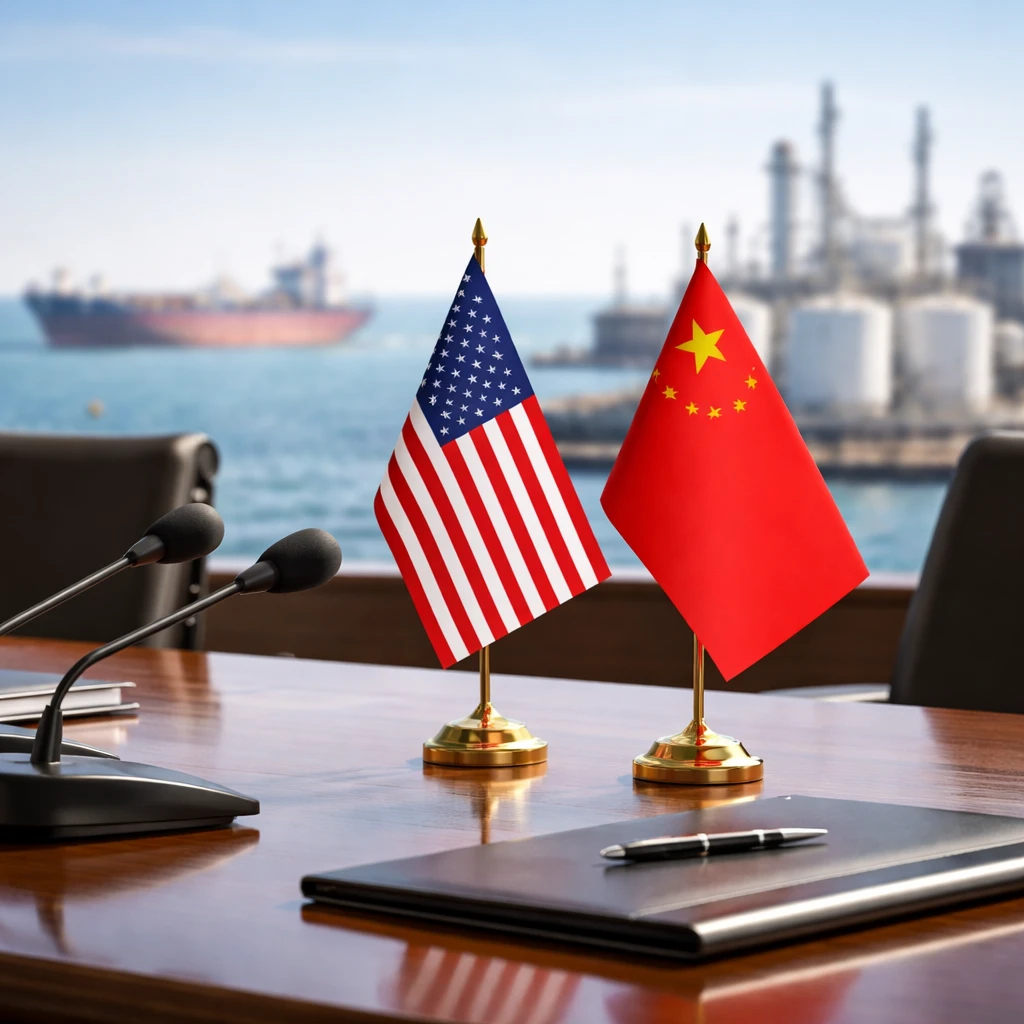
U.S. Trade Representative Jamieson Greer said the Trump administration intends to raise China's ongoing energy purchases from Iran during President Trump's upcoming meeting with President Xi Jinping in Beijing. While Washington hopes the exchange will not derail broader talks or potential agreements, officials view the matter as a point of concern and have warned of possible secondary sanctions for financial institutions that facilitate Iranian oil sales.

U.S. to Press China on Iranian Oil Purchases During Beijing Talks, Trade Representative Says

Key Points

  • U.S. Trade Representative Jamieson Greer said President Trump will raise China’s purchases of Iranian energy during next week’s meeting with President Xi Jinping in Beijing.
  • The administration hopes the issue will not derail broader talks or potential agreements from the summit, but views it as a matter of concern.
  • Washington has warned banks they could face secondary sanctions if they support Chinese refiners buying Iranian oil, as part of efforts to stop shipments that provide revenue to Tehran.

U.S. Trade Representative Jamieson Greer on Wednesday indicated that President Trump will bring up China's continuing energy imports from Iran at his meeting with President Xi Jinping scheduled for next week in Beijing.

Speaking on Bloomberg TV, Greer said the administration plans to address the subject directly. He added that the administration hopes the issue will not interrupt broader bilateral relations or derail any potential agreements emerging from the Beijing discussions, but emphasized it remains a concern that could be part of the conversation.

The U.S. government has criticized Beijing for effectively providing financial support to Tehran through its purchases of Iranian energy. As part of efforts to limit Iran's revenue streams, Washington has warned banks they may face secondary sanctions if they assist Chinese refiners in buying Iranian oil.

Those warnings form part of a broader U.S. push to reduce or halt shipments of Iranian crude, which the administration says constitute a vital source of income for Tehran. Greer characterized Iran as the world’s largest state sponsor of terrorism and argued that any entity buying oil from Iran contributes to that status.

Officials have framed their measures as targeting the financial channels that enable Iranian exports. Greer's comments suggest the topic of energy trade and financial exposure tied to Iranian oil will be raised at a high diplomatic level during the upcoming summit.


Context and implications

While Greer expressed a desire to keep discussions on track across the wider U.S.-China agenda, his remarks underline that energy trade and sanctions compliance remain active elements of U.S. policy toward Iran and a potential point of friction in the bilateral relationship.

The administration's stance signals ongoing scrutiny of both commercial actors and financial institutions whose activities might facilitate Iranian crude exports.


Note: The information above reflects the statements and positions described by the U.S. Trade Representative during his appearance as reported on Wednesday.

Risks

  • Potential diplomatic tension between the U.S. and China if discussions on Iranian energy purchases prove contentious - impacts diplomatic relations and trade negotiations.
  • Financial institutions or refiners found to be facilitating Iranian oil purchases could face secondary sanctions - impacts banking and energy sectors exposed to Iran-related transactions.
  • Efforts to interrupt Iranian oil revenue streams may affect global oil market participants tied to crude supply and shipping of Iranian-origin barrels - impacts oil and shipping markets.

More from Economy

National Bank of Poland Leaves Policy Rate at 3.75%, Flags Inflation Risks May 6, 2026 St. Louis Fed's Musalem Says Inflation Risks Now Outweigh Employment Concerns May 6, 2026 Morgan Stanley Sees Further Upside for Venezuelan Sovereign and PDVSA Bonds After U.S. License May 6, 2026 White House Weighs Executive Order to Require Pre-Release Testing of AI Models May 6, 2026 Russia's April Oil Tax Receipts Reach Six-Month High as Middle East Tensions Lift Prices May 6, 2026