
European gas benchmarks pared some losses but settled lower on renewed hopes that negotiations between Washington and Tehran could lead to an end to the conflict affecting the Middle East. By 09:09 ET (13:09 GMT) the Dutch front-month contract at the TTF hub was down 6.7% at 43.77 euros per megawatt hour, after earlier trading near 41 euros per megawatt hour.
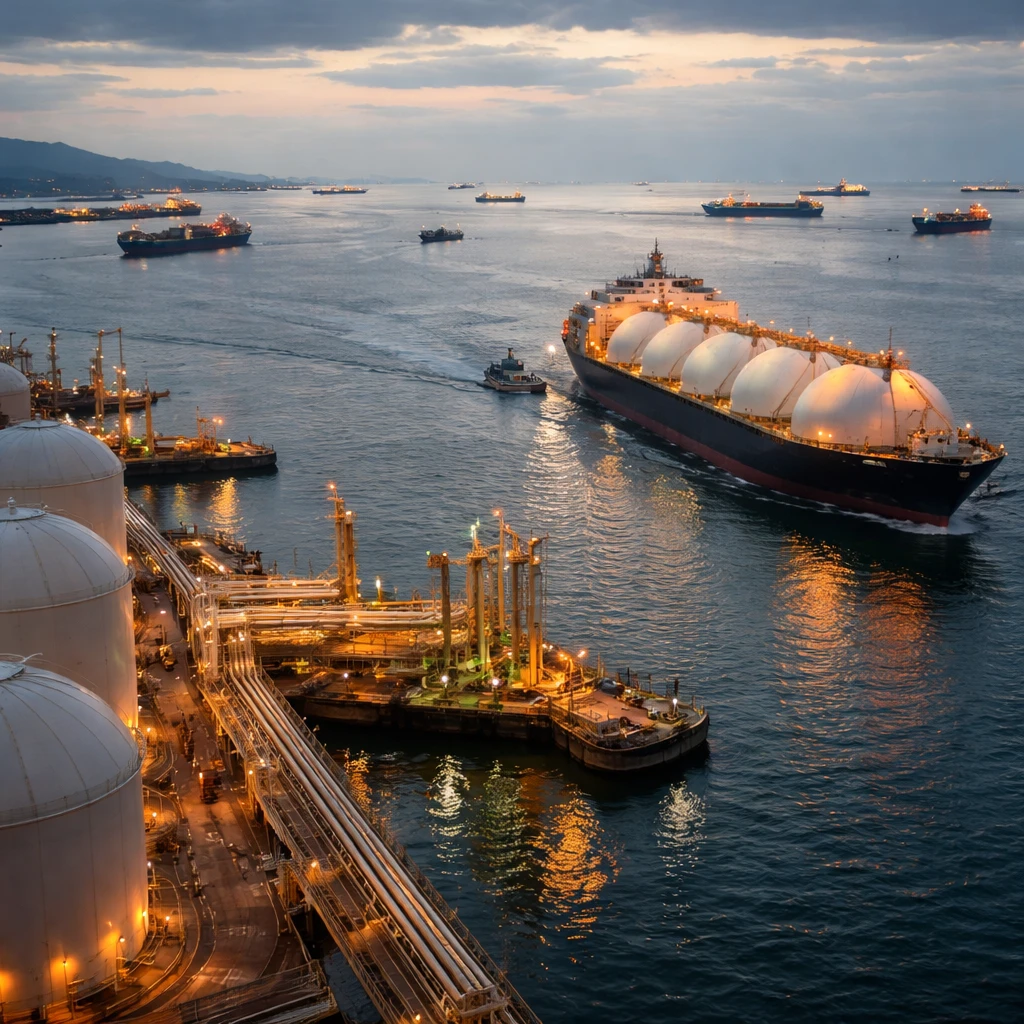
Despite the intraday decline, the TTF contract remains well above levels seen before the outbreak of hostilities. Market observers attribute the sustained premium largely to the continued effective closure of the Strait of Hormuz, which has curtailed liquefied natural gas shipments from the Gulf region that normally support European supply.
Developments in Washington fueled much of the market reaction. U.S. President Donald Trump indicated on social media that the Strait of Hormuz would be "OPEN TO ALL" if Iran accedes to U.S. demands, reflecting growing optimism that a diplomatic accommodation could be close at hand. In his post he said the U.S. assault on Iran, initiated with Israel in late February, "will be at an end" if Tehran "agrees to give what has been agreed to."
Trump did not specify details of the commitments he said Iran had made, but he warned that should talks fail, bombardments could resume "at a much higher level and intensity than it was before." The president also asserted that "great progress" had been achieved in the discussions, while telling the New York Post it was "too soon" to consider direct, in-person talks with Iranian officials.
Separately, an Axios report cited White House sources saying U.S. officials believe they are close to agreeing a one-page memorandum of understanding to end the war. According to the report, that document would establish a framework for more detailed nuclear negotiations and Washington expected Tehran to provide responses on several major points within the next 48 hours. Axios described the situation as the closest both sides have come to a settlement since fighting began in late February, although it noted that nothing has yet been formally agreed.
The contours of the potential arrangement outlined in the report would include a moratorium by Iran on nuclear enrichment activities. In exchange, the United States would agree to lift sanctions and release billions of dollars in frozen Iranian assets. The arrangement would also see restrictions on transit through the Strait of Hormuz lifted, allowing shipping to resume through the strategic chokepoint, the Axios account said.
Responses from the parties involved were cautious. An Iranian foreign ministry spokesperson said Tehran was "evaluating" Washington's proposal, CNBC reported. Pakistan, which has acted as an intermediary between the two capitals, confirmed that both sides were closing in on an agreement, Reuters added.
Markets are parsing the limited details as traders weigh the probability and timing of any accord against the existing supply constraints. The ongoing uncertainty around the Strait of Hormuz and LNG flows from the Gulf continues to underpin a premium in European prices even as short-term headline-driven volatility produces intraday swings.
For now, market participants must contend with two conflicting dynamics: the prospect of a de-escalation that could restore a key transit route and ease LNG availability, and the persistent risk that talks may falter, keeping supply channels disrupted. Until more definitive confirmations emerge from the parties involved, prices are likely to remain sensitive to diplomatic signals and daily headlines.
Summary
European natural gas futures fell intraday but stayed elevated, as reported progress toward a U.S.-Iran memorandum of understanding increased hopes of restoring transit through the Strait of Hormuz and normalizing LNG supplies to Europe.
Key points
- TTF front-month futures were down 6.7% at 43.77 euros per megawatt hour by 09:09 ET (13:09 GMT), after earlier trading near 41 euros per megawatt hour.
- Prices remain above pre-war levels, driven by the effective closure of the Strait of Hormuz and reduced LNG imports from the Gulf.
- Diplomatic reports suggest a possible one-page memorandum of understanding could include a moratorium on Iran's nuclear enrichment in exchange for U.S. sanctions relief and the release of billions in frozen funds, and the lifting of transit restrictions at the Strait.
Risks and uncertainties
- Negotiations could fail - if talks collapse, renewed or intensified military action could re-close routes and push prices higher; this affects energy and shipping sectors.
- Limited information - details remain preliminary and reports indicate that "nothing has yet to be agreed," leaving market participants exposed to headline risk; this influences traders and energy markets.
- Operational disruption - the continued effective closure of the Strait of Hormuz is currently depriving Europe of Gulf LNG supplies, maintaining upward pressure on European gas prices and affecting downstream industries reliant on gas.