
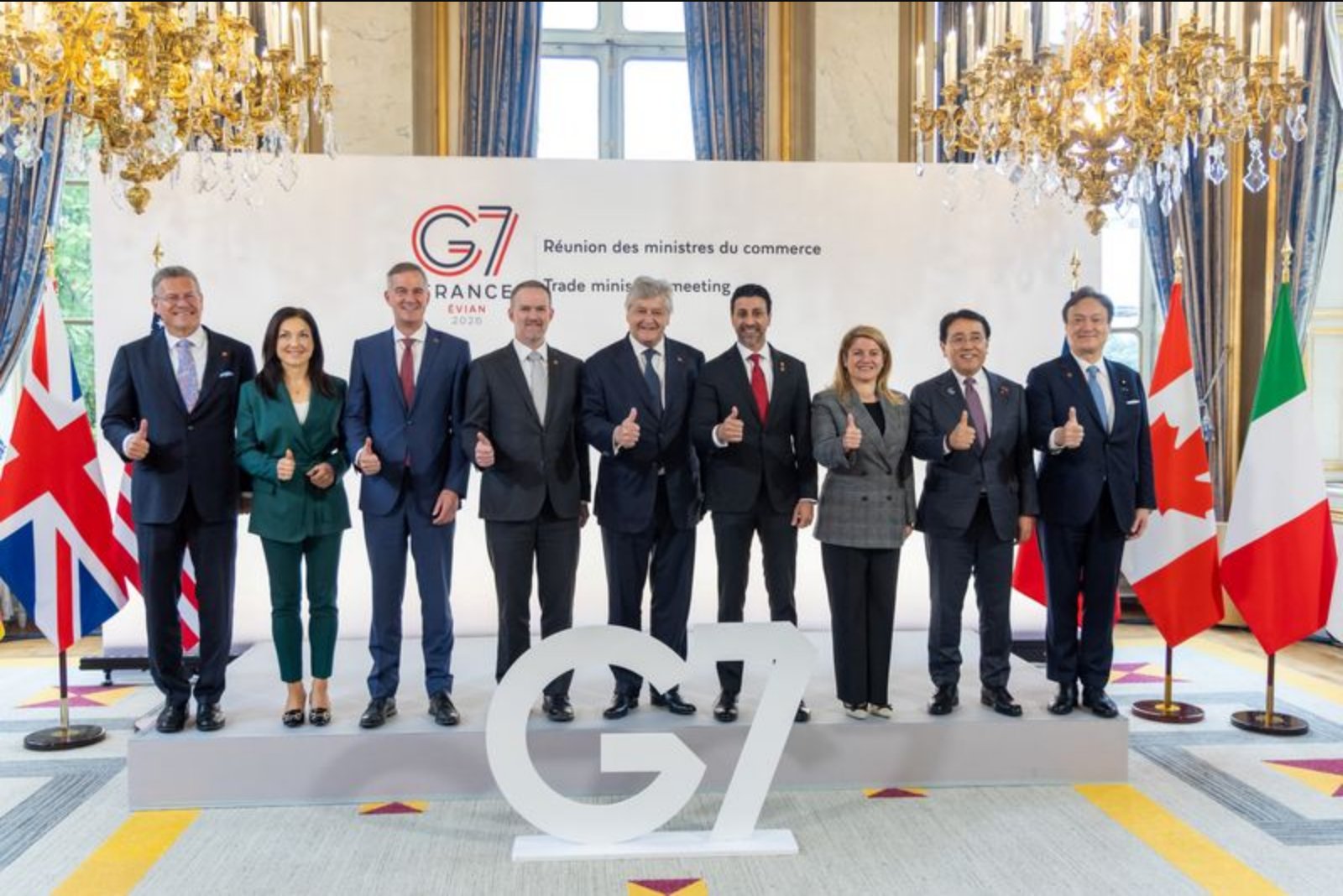
The Group of Seven trade ministers met in Paris on Wednesday with a clear priority: to make progress on securing supplies of critical minerals and rare earths that are largely dominated by China. French officials, keen to deliver tangible results during France's G7 presidency, emphasized that mineral supply security should be among the most concrete outcomes as ministers prepare for a leaders' summit in mid-June.
Arriving for the talks, Foreign Trade Minister Nicolas Forissier said he expected measurable movement on these issues. "I believe we will make very concrete progress on rare earths and critical minerals, securing our supply chains and ensuring we are not held hostage by certain countries," he said.
Officials participating in the discussions reported broad agreement on the need to reduce dependence on China for critical mineral supplies. However, they also cautioned that significant differences persist over the methods and policies needed to achieve that objective.
Complicating efforts to present a united front, comments by U.S. President Donald Trump have put pressure on G7 cohesion. The U.S. leader said Washington would raise tariffs on European Union-made cars to 25% from 15%, asserting that Brussels had not complied with a trade deal agreed in Turnberry, Scotland, last year. Those remarks have introduced an immediate source of tension among trading partners at the Paris meeting.
Germany's Economy Minister Katherina Reiche said she was engaged in intensive discussions with U.S. officials about the tariff threat. The German automotive sector, which relies heavily on exports, has already been feeling strain from a combination of factors identified by officials: weakening demand in China, slower global growth and higher input and labour costs.
EU Trade Commissioner Maros Sefcovic reported that he and U.S. Trade Representative Jamieson Greer had reviewed the Turnberry agreement at a meeting in Paris on Tuesday. Sefcovic said he would head to the European Parliament, where negotiations on EU legislation connected to the trade deal were scheduled to take place later on Wednesday. "We both clearly concluded that it’s important to respect the deal from Turnberry from both sides, so we have to deliver on what was promised in Scotland," Sefcovic said.
Beyond mineral supply security and the tariff dispute, trade ministers were expected to examine industrial overcapacity, identifying China as the main source cited by officials, and to discuss reform of the World Trade Organization, according to Forissier. Those topics formed part of a wider agenda as ministers sought to reconcile shared concerns with divergent policy preferences ahead of the leaders' meeting.
Context and next steps
Delegates at the Paris talks sought to translate agreement on the need to reduce reliance on a single supplier into actionable measures, while simultaneously managing transatlantic tensions prompted by U.S. tariff announcements. With mid-June's summit approaching, ministers faced the task of narrowing differences on implementation approaches and advancing negotiations on related EU legislation in parallel diplomatic channels.