
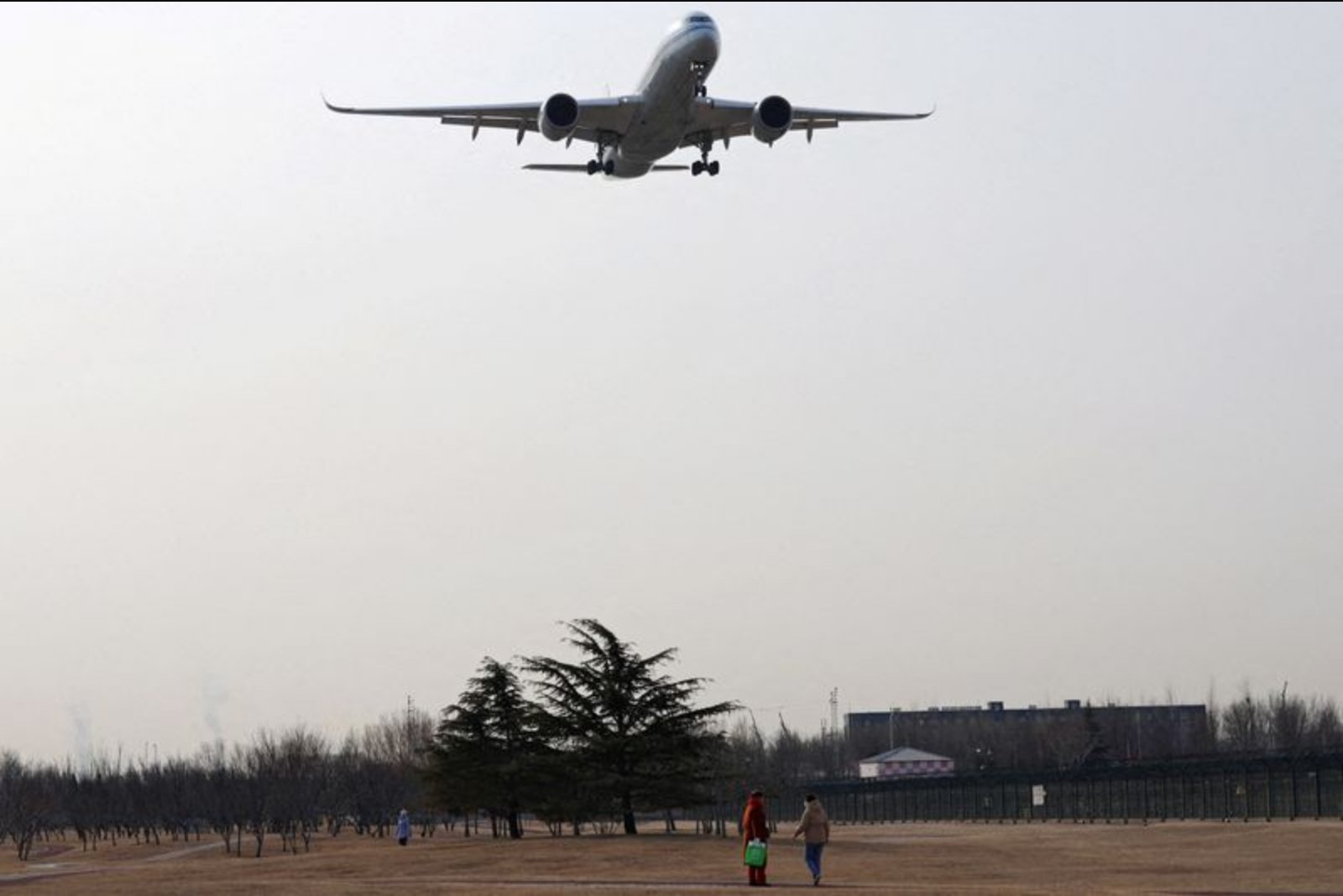
Overview
China's three largest state-owned carriers swung back to profitability in the first quarter, supported by strong demand over the Lunar New Year period and a rebound in international travel. The return to the black, however, arrives amid a steep rise in jet fuel prices driven by the conflict in Iran, which clouds the near-term outlook for route economics and fares.
Quarterly results
Guangzhou-based China Southern reported a net profit of 1.48 billion yuan for the first three months, reversing a 747 million yuan loss in the same quarter a year ago. Flag carrier Air China posted a 1.71 billion yuan net profit compared with a 2.04 billion yuan loss a year earlier. Shanghai-headquartered China Eastern recorded a net profit of 1.63 billion yuan, after a loss of 995 million yuan the prior year.
Despite the profitable quarter, the Hong Kong listings of the three carriers fell on the day, with shares slipping as much as 2.7% for one, 2.9% for another and 2.3% for the third, reflecting investor caution about fuel and demand dynamics.
Fleet commitments signal confidence
Underpinning a longer-term recovery narrative, China Southern signed a large purchase with Airbus on Wednesday. The airline and its subsidiary Xiamen Airlines agreed to procure 102 and 35 A320neo series aircraft, respectively, for a combined catalogue value of about $21.4 billion. Deliveries are scheduled in stages from 2028 to 2032. Separately, China Eastern recently signed for 101 A320neo jets in a deal worth approximately $15.8 billion at list prices.
International traffic trends
All three carriers reported double-digit increases in international passenger traffic for March: Air China recorded a 28% rise, China Southern a 23% rise and China Eastern 22%. A Bank of America forecast cited in company commentary expects Chinese international airline capacity to expand by about 13% year-on-year in the summer of 2026, returning to roughly 91% of 2019 levels. Europe and Australasia are identified as the primary growth corridors. By contrast, capacity on China-North America routes remains well below pre-pandemic levels, with China-U.S. and China-Canada routes at about 29% and 40% of 2019 capacity respectively.
Fuel costs and pricing power
Industry analysts highlighted the pricing sensitivity of the Chinese travel cohort as a key constraint on the carriers' ability to pass through higher input costs. HSBC analysts noted that the big three are "adversely positioned vs peers given a structurally more price-sensitive travel cohort in China," adding that rising fuel costs weigh more heavily on their earnings as they struggle to transfer costs to customers without reducing demand.
Before the Middle East conflict, the global airline industry had expected record profits of $41 billion for 2026. A near-doubling of jet fuel prices since then has put that outlook at risk. Jet fuel costs have risen almost twofold, outpacing a roughly 65% increase in crude oil prices, and mainland Chinese carriers have responded by raising domestic passenger fuel surcharges six-fold.
The three carriers increased surcharges on domestic routes to 60 yuan for flights under 800 km and 120 yuan for flights over 800 km, up from 10 yuan and 20 yuan respectively. The changes reflect an attempt to recoup higher fuel bills while avoiding broad fare hikes that could further suppress demand.
Operational impact and cancellations
Willie Walsh, head of the International Air Transport Association, warned that the jet fuel crisis could affect Asia earlier and harder as the northern hemisphere summer peak approaches. The effect on specific routes has already been visible. Flight Master data showed several Southeast Asia services were cancelled between April 1 and April 12, including Xian-Phuket, Chongqing-Phuket and Hohhot-Bangkok. On Oceania routes the cancellation rates were high on some sectors: Guangzhou-Darwin at 83.3%, Hangzhou-Auckland at 57.1% and Wuhan-Sydney at 50%.
Independent aviation expert Li Hanming said these routes were no longer commercially viable at current oil prices. "Carriers can’t really raise fares either, because higher ticket prices would further dampen demand," he said, summarizing the narrow path carriers face between absorbing costs and losing passengers.
Exchange rate note
The article uses the exchange rate of $1 = 6.8169 Chinese yuan renminbi for its monetary conversions.
This analysis focuses on reported results, capacity and cost data as disclosed by the carriers and referenced analysts. It does not introduce additional data or forecasts beyond those cited.