
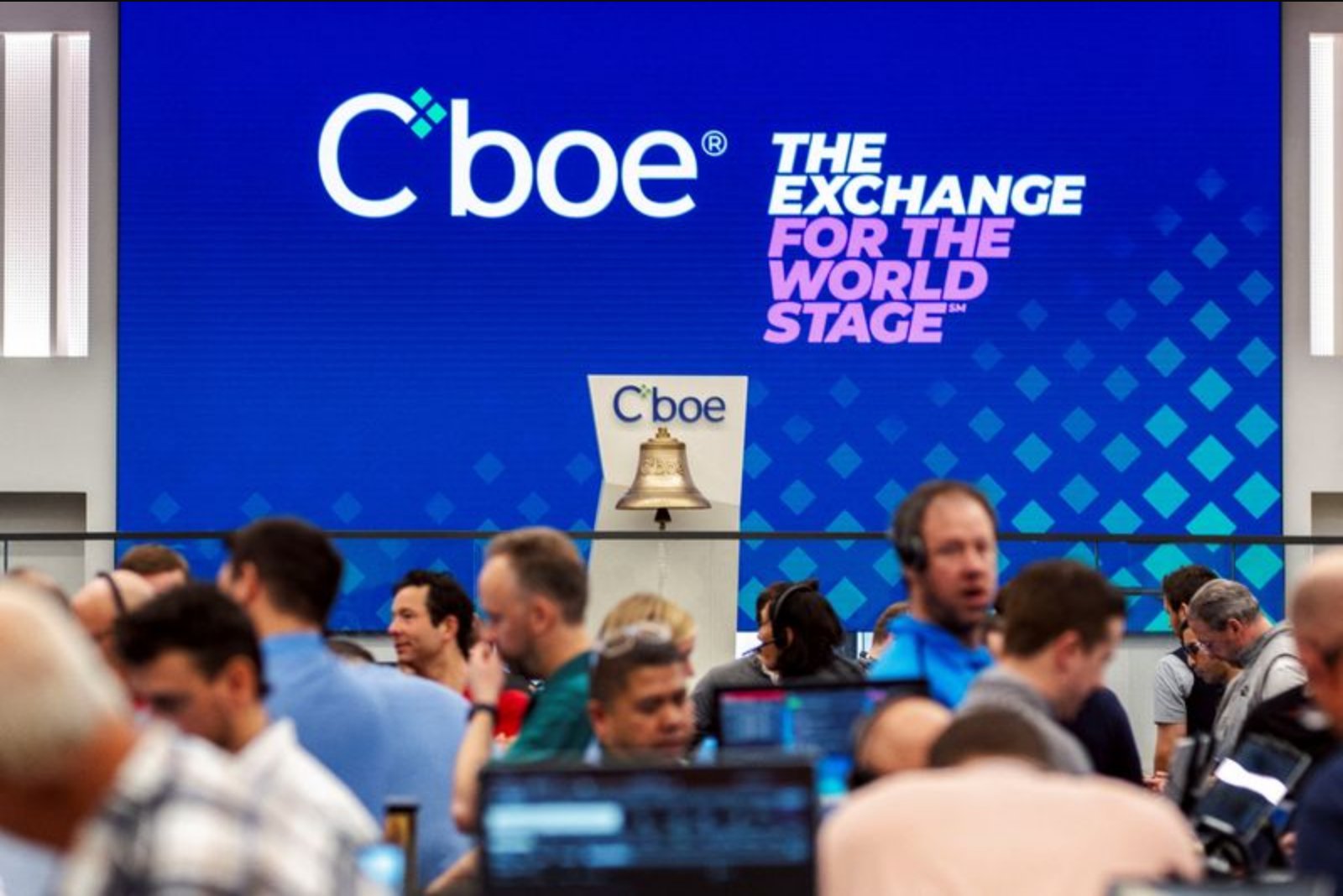
May 1 - Cboe Global Markets said first-quarter profit rose sharply as increased market volatility spurred greater options trading and related hedging activity. The derivatives exchange reported net income allocated to common stockholders of $384.1 million, or $3.66 per share, compared with $249.4 million, or $2.37 per share, in the year-ago quarter.
The exchange's shares traded higher in premarket activity, climbing about 4%, after management also disclosed plans to reduce headcount by roughly 20% as part of a strategic realignment. In a statement, CEO Craig Donohue said: "We announced a realignment to increase focus and investment in the core businesses that drive our earnings."
Executives attributed the uplift in trading to a period of intensified market swings. The company highlighted several developments that contributed to elevated volatility during the quarter, including the capture of Venezuela's President Nicolas Maduro and his wife by U.S. forces in January, concerns around disruptions from AI, and an escalation in the U.S.-Israel war with Iran that raised oil supply risks. Such turbulent stretches tend to prompt heightened trading and hedging, which in turn supports transaction and clearing fee revenue for exchange operators like Cboe.
Index options activity in the quarter ended March 31 set a new average daily record, with 6.1 million contracts traded per day versus 4.8 million in the same period a year earlier. Cboe's quarterly performance contributed to a broadly strong reporting period for U.S. exchange operators, as volatility underpinned higher activity at peers including CME Group, Nasdaq and Intercontinental Exchange.
The company's combination of stronger trading volumes and strategic cost actions underpinned the increase in reported earnings per share year over year. Management's announced workforce reduction is intended to reallocate resources toward areas the company considers central to future earnings growth.
Market context and implications
- Volatility-driven flows lifted options volumes and fee-related revenue for exchange operators.
- Energy market tensions and geopolitical events were cited among drivers that amplified trading activity.
- Peers in the exchange sector also reported benefit from higher volatility during the quarter.
Financial detail
- Net income allocated to common stockholders: $384.1 million, or $3.66 per share.
- Prior-year quarter: $249.4 million, or $2.37 per share.
- Average daily index options volume: 6.1 million contracts, up from 4.8 million.