
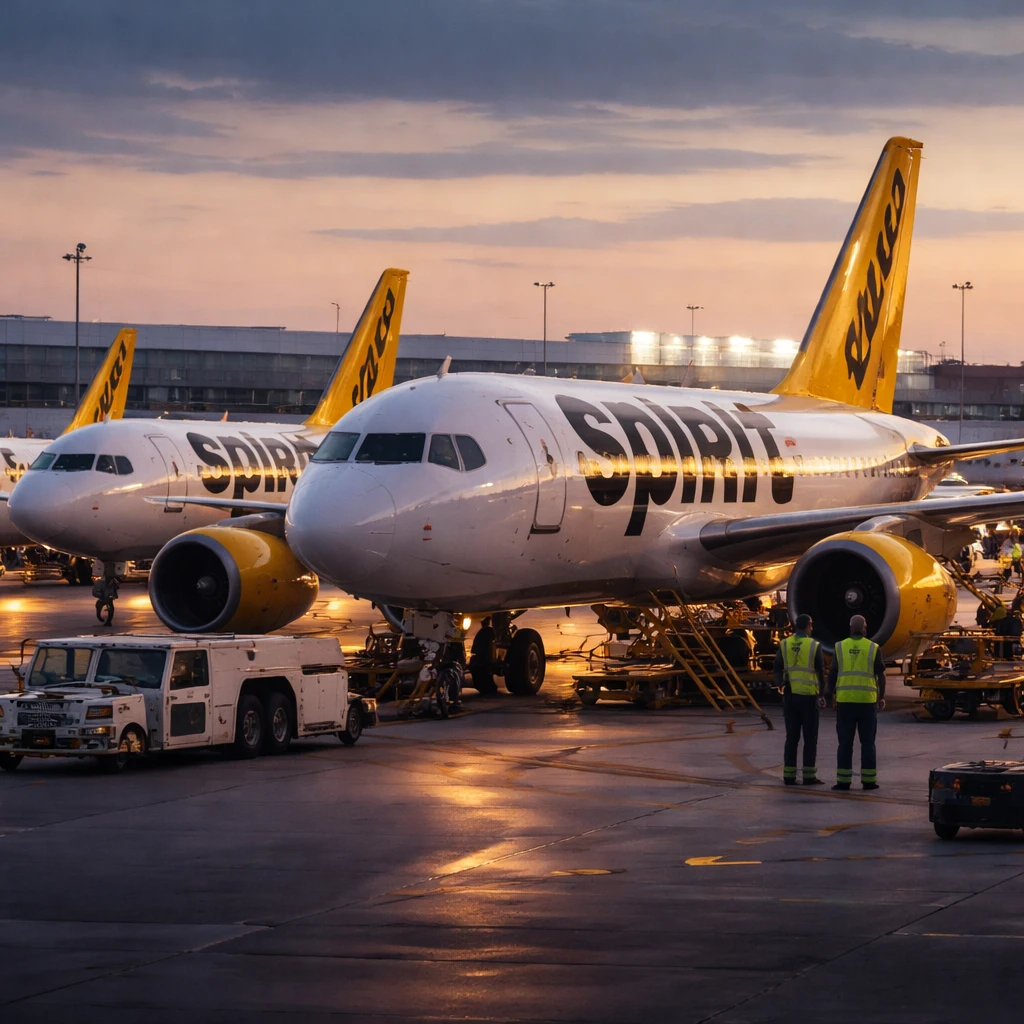
Spirit Airlines ceased flying and initiated an orderly wind-down on Friday, with its last scheduled service, flight NK1833 from Detroit to Dallas/Fort Worth, touching down shortly after midnight. The carrier had been under financial strain for an extended period prior to the shutdown, leading to its liquidation.
Bank of America analysts characterize the aircraft disposition as having only a limited effect on the broader commercial aerospace industry. While the airline’s collapse will create clear hardship for stranded passengers and for Spirit employees, the analysts expect the physical fleet to be rehomed rapidly, limiting supply-side disruption for operators and the sector at large.
Fleet counts show a substantial drawdown prior to the shutdown. Spirit’s operating fleet contracted from roughly 230 aircraft in 2024 to about 125 active airframes by early 2026. Under court-directed restructuring plans, the carrier had announced an intent to reduce the active fleet further to a range of 76-80 aircraft by the third quarter of 2026.
The operator’s narrowbody inventory is predominantly Airbus types, encompassing A319ceo, A320ceo, A320neo, A321ceo and A321neo variants. At the time of Spirit’s second bankruptcy filing in August 2025, the airline reported operating 214 aircraft with a fleet average age of 5.5 years. Within that fleet composition, approximately 57.5% were newer-generation neo models and 42.5% were ceo-family aircraft.
Lease structures will shape how aircraft are redistributed. Around 76% of Spirit’s fleet was leased, leaving roughly 24% as airline-owned. Leased airframes are slated to revert to their lessors, while the aircraft that remain owned by Spirit become assets of the bankruptcy estate to be marketed and sold to other operators. The aircraft that change hands are expected to require interior refurbishment and maintenance work before they enter service with their new operators.
AerCap was identified as Spirit’s largest lessor, followed by SMBC Aviation Capital and Jackson Square Aviation. During bankruptcy proceedings AerCap paid Spirit $150 million as part of an agreement tied to the rejection of 27 leases and the settlement of related claims. Separately, Spirit moved to reject 87 additional leases across multiple lessors.
From an operational and maintenance standpoint, the transaction pathway is clear: leased aircraft return to lessors and are remarketed; owned airframes are sold from the bankruptcy estate and prepared for entry into other operators’ fleets with necessary refurbishment. Bank of America’s assessment is that, despite the human and consumer impacts of the shutdown, the commercial aerospace market will experience minimal disruption as most aircraft are absorbed by other carriers or lessors.