
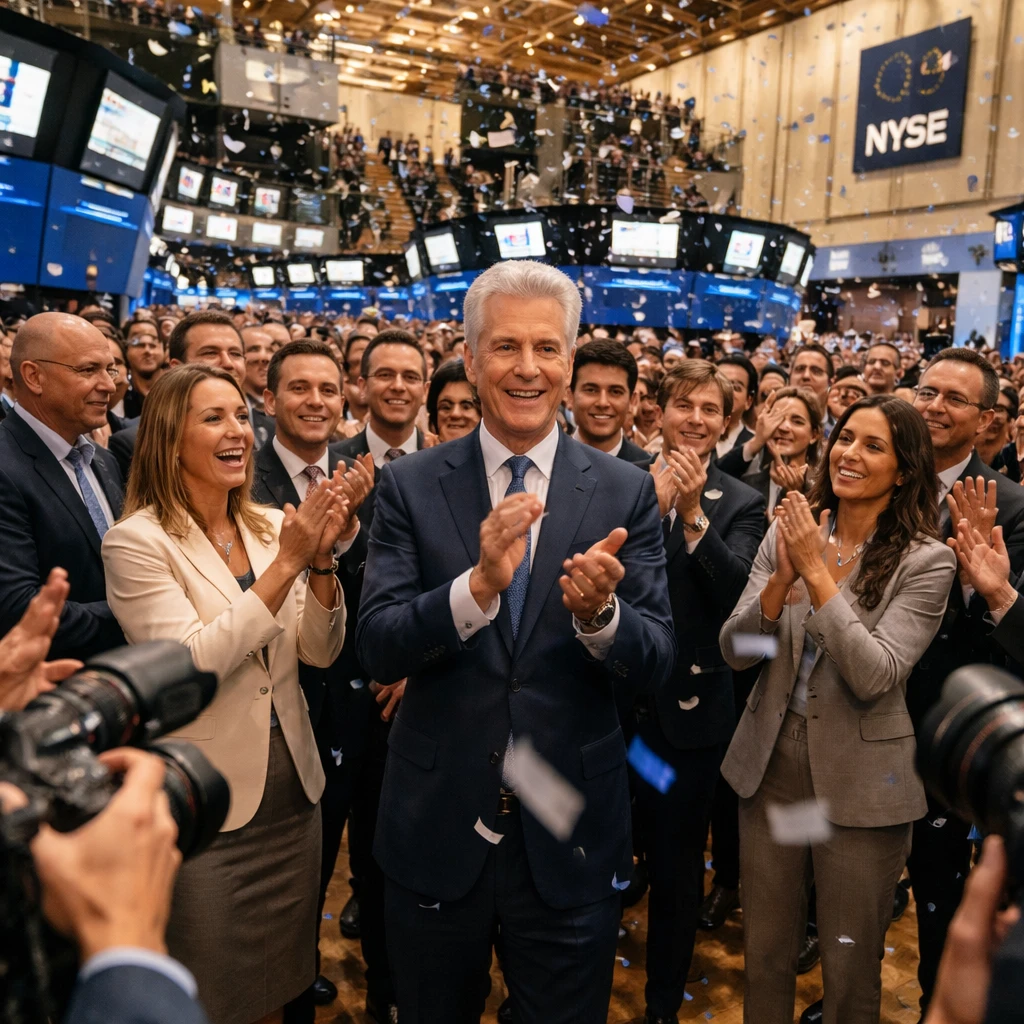
Bill Ackman’s latest fund, Pershing Square USA, opened for trading on the New York Stock Exchange on Wednesday, marking a notable attempt to broaden access to the investment strategy long associated with wealthy accredited investors. The new closed-end vehicle will trade under the ticker PSUS and began life with shares offered at $50 apiece. At the same time, Ackman’s management firm was listed on the same exchange under the ticker PS.
The public offering brought in about $5 billion in fresh capital and increased Pershing Square’s total assets by roughly 25% to approximately $25 billion. Market participants on the exchange floor in Manhattan greeted Ackman with enthusiastic applause as trading began; he arrived alongside his wife, Neri Oxman, and Pershing Square’s chief investment officer, Ryan Israel.
Ackman told Reuters the new vehicle aims to "democratize investing" by making the type of double-digit returns his funds have posted more widely available. He emphasized that the fund is intended to let ordinary investors access a strategy that traditionally was restricted to the wealthiest individuals who met regulatory requirements to invest in private hedge funds.
How the offering was structured
The IPO priced shares at $50 and secured roughly $5 billion in new assets, a transaction Dealogic identified as among the 10 largest public offerings over the past decade. Anchor investors committed $2.8 billion of that total and agreed to a six-month lock-up. As part of the allocation, those anchor investors will receive 1.5 shares of Pershing Square management for every five shares they buy in Pershing Square USA.
To stimulate demand at the retail IPO, Ackman offered free shares of Pershing Square Inc to buyers of Pershing Square USA at the IPO price – an incentive he said was suggested by his wife. Ackman acknowledged that trading in the new vehicles could be volatile initially, with some investors potentially seeking quick exits.
Performance claims and product positioning
Ackman said his strategy has delivered roughly 25% annual returns over the past eight years, substantially outpacing what he cited as an average closed-end fund return of about 7% during that period. He described the product as distinct from typical closed-end funds, citing Pershing Square’s ability to engage closely with companies, apply hedging, and pursue tax efficiency as features that could appeal to investors.
Ackman framed the listing as providing U.S. investors a way to access his returns, noting that Pershing Square Holdings, a closed-end fund listed in London, cannot be marketed directly to U.S. investors. The new NYSE listing therefore serves as the primary onshore vehicle for U.S. participation.
Distribution of investors and holdings
Contrary to an expectation two years earlier that his social media profile might drive retail demand, Ackman said more than 80% of the commitments to the new fund came from institutional sources, including family offices, pension funds, insurance companies, and high-net-worth investors. He intends for retail investors to participate alongside those institutions.
Pershing Square USA is structured to largely mirror Ackman’s other stock-picking funds, with disclosed bets that include stakes in companies such as Alphabet, Universal Music Group, and Uber Technologies.
Market context and a test for closed-end funds
The listing arrives as IPO activity is recovering following a period of volatility and investor caution. The debut will serve as a test of investor appetite for closed-end funds, which often trade at a discount to the net asset value of their holdings. Closed-end vehicles cannot be redeemed by investors and trade only on secondary markets after the initial allocation, a structure that can create sharp price swings divorced from the funds’ underlying asset values.
IPOX Research Associate Lukas Muehlbauer weighed in on the offering’s structure, noting that the inclusion of shares in the manager as an added incentive suggests the closed-end fund alone may not be sufficient to secure the level of investor interest desired. "I would expect decent demand, but the structure with shares of the managing company as a sweetener suggests that the closed-end fund alone may not be enough to secure the desired level of investor interest," Muehlbauer said.
Background on Ackman and the listing attempt
Ackman, who built his public profile through activist campaigns at companies including Canadian Pacific and Chipotle, was estimated by the article to have a personal fortune of about $9 billion. He is an active presence on the social media platform X, where he shares views across topics from nutrition to politics. Nearly two years ago he had attempted to list a New York vehicle for his strategy but withdrew the offering amid weak interest; the current listing therefore represents a successful return to the market after that earlier setback.
Investors and market watchers will now observe how Pershing Square USA and the associated management stock trade on the secondary market and whether the vehicle can maintain investor appetite amid the structural challenges closed-end funds sometimes face.