
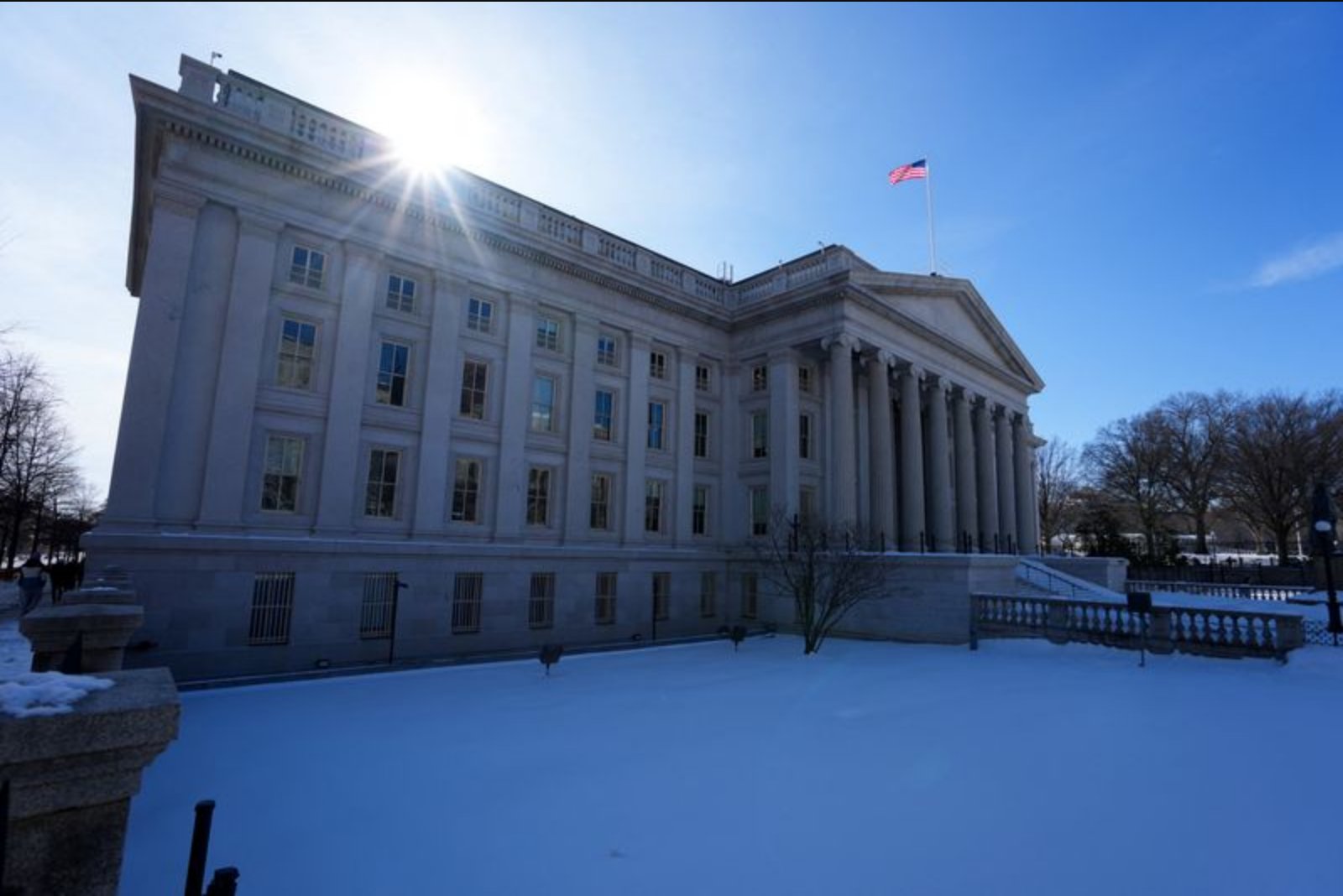
The U.S. Treasury on Wednesday said it does not plan to increase auction sizes for notes and bonds for the near term, aligning with market expectations, as it released details of a $125 billion refunding covering May through July 2026. That financing package is expected to generate $41.7 billion in new cash from private investors.
In its statement the Treasury said it will maintain coupon and floating-rate note auction sizes at current levels for at least the "next several quarters." Minutes from the Treasury Borrowing Advisory Committee (TBAC), made public the same day, showed that primary dealers generally expect nominal coupon auction sizes to rise in early 2027. Those dealers said they expect the Treasury to move its forward guidance several quarters in advance of any actual increase.
The department also confirmed next week’s coupon auction calendar, offering $58 billion of three-year notes, $42 billion of 10-year notes and $25 billion of 30-year bonds. Those sizes are unchanged from the amounts set at the February refunding.
Zachary Griffiths, head of investment grade and macro strategy at CreditSights in Charlotte, North Carolina, said the Treasury’s decision to hold forward guidance steady "matched our expectations...to tread lightly given the recent selloff in nominal Treasuries and widening of inflation expectations." He added that the Treasury remains willing to lean heavily on Treasury bills, particularly with continued support from Federal Reserve purchases.
Planned adjustments to bill issuance
The Treasury said it expects to increase auction sizes of shorter-dated benchmark bills in late May to address what it sees as likely peak liquidity needs at the end of the month tied to maturing coupon securities. To help manage that window, the department anticipates issuing a short-dated cash management bill.
At the same time, the Treasury projects mid-month corporate and non-withheld tax receipts will support inflows that allow a modest reduction in short-dated bill auction sizes in June. For July the Treasury expects marginal increases in bill auction sizes across the curve.
"As always, Treasury will continue to evaluate near-term borrowing needs and assess additional adjustments to bill auction sizes as appropriate," the department said.
Cash balance and refunding-quarter projections
The Treasury is assuming a $900 billion cash balance at the end of June, as set out in its financing estimate released earlier in the week. Based on current projections for the refunding quarter, the Treasury General Account (TGA) - the department’s cash balance held at the Federal Reserve - could peak at approximately $1 trillion, plus or minus $50 billion, in late July.
The Treasury said that expected peak is consistent with its long-standing cash balance policy and is driven by the large outflows it anticipates at that time.
Change to 20-year reopening settlement timing
The department also announced a change to settlement timing for 20-year bond reopening auctions. Beginning with the reopening scheduled for June 16, these auctions will settle on the Friday of the auction week. New issues will continue to settle at month-end.
U.S. 20-year bond reopenings historically have settled at month-end rather than on the week following the auction, as some other coupon auctions do. The Treasury said the adjustment is consistent with feedback received from a variety of market participants, including primary dealers.
Overall, the Treasury’s statements and the TBAC minutes underline an approach that keeps longer-dated coupon issuance steady for the near term while using bill issuance and settlement adjustments to manage short-term liquidity. Primary dealers’ expectations that coupon auction sizes will climb in early 2027 indicate market participants are preparing for a change, even as the Treasury’s current guidance holds issuance steady.