
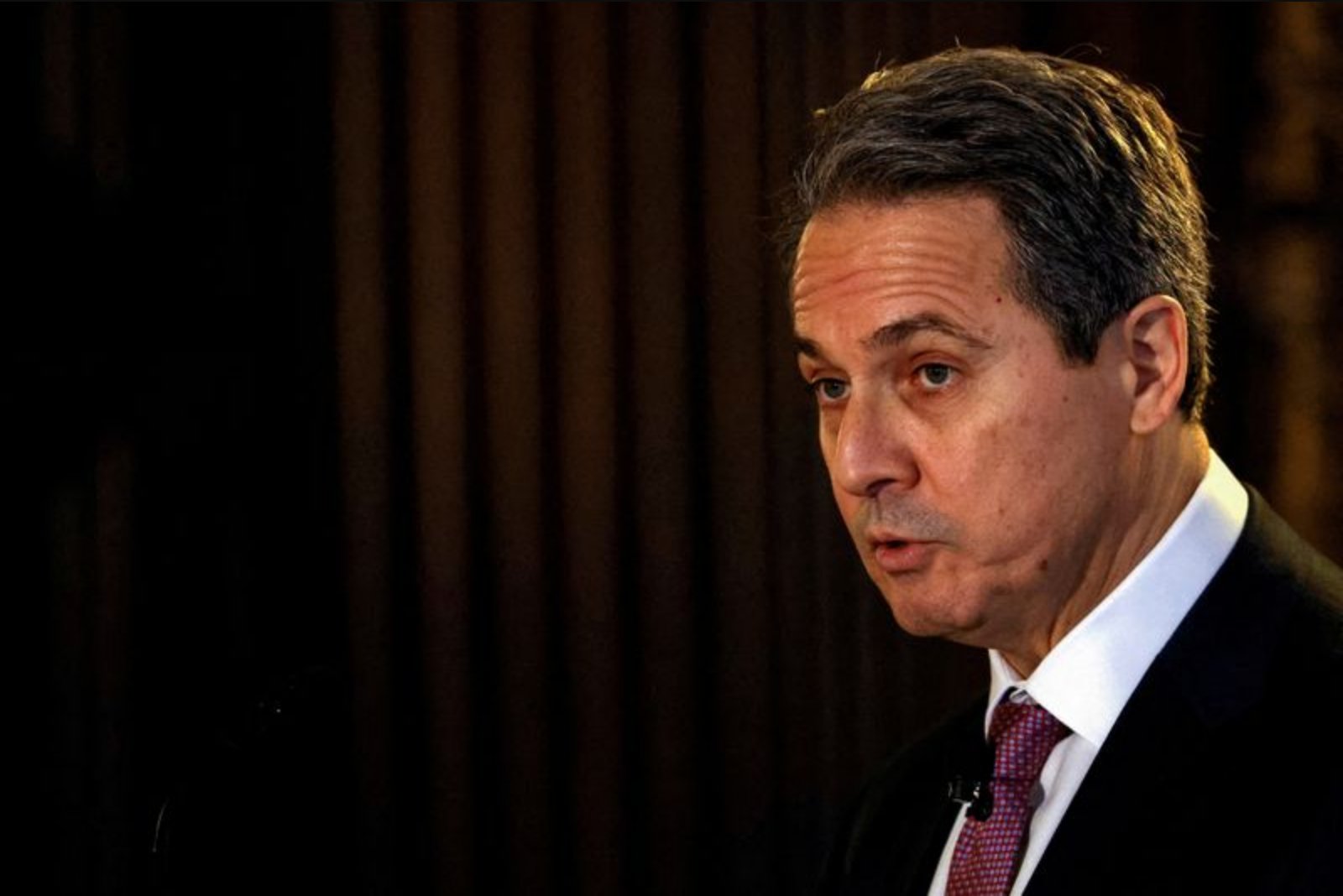
WASHINGTON, May 6 - St. Louis Federal Reserve President Alberto Musalem said on Wednesday that the balance of risks facing U.S. monetary policy has moved toward higher inflation, a shift that could force interest rates to remain unchanged for an extended period even as the job market shows signs of stability.
Speaking to the Mississippi Bankers Association, Musalem said inflation is currently ‘‘running meaningfully above our target.’’ He emphasized that the Fed confronts risks on both employment and inflation fronts, but that in his assessment the odds have moved toward greater concern about inflation.
"There’s a lot of uncertainty right now, and it’s important to see how things settle," Musalem said, noting that recent inflation pressures are extending beyond the direct effects of tariffs and previous energy price shocks linked to the U.S.-backed war with Iran.
Energy markets have shown significant volatility, Musalem added. Oil prices have swung sharply, dipping on reports of potential progress toward a settlement in the conflict before rebounding above $100 a barrel. Meanwhile, U.S. retail gasoline prices have risen from roughly $3 to about $4.50 a gallon, adding to consumer price pressure.
He also pointed to a New York Fed gauge of global supply chain stress that leapt to its highest level since July 2022, a period when manufacturing networks were still entangled by the pandemic and global prices were surging. Musalem called this rise in supply-chain pressure "underlying inflation that we need to worry about," saying executives had flagged higher costs for industrial inputs including aluminum, helium and diesel fuel.
Those input cost increases, he said, could be disruptive to production and feed through to broader price gains. At the same time, Musalem reported, there is a ‘‘confidence effect’’ in which firms may pull back on hiring even as the risk of accelerating prices grows - a dynamic that complicates the Fed’s dual mandate to maintain maximum employment and stable prices.
The practical consequence, Musalem suggested, may be an extended pause in policy changes. The Fed’s target range for its policy rate has been held at 3.5% to 3.75% since December, and Musalem indicated the rate may need to stay on hold until inflation clearly returns toward the 2% objective.
He also acknowledged that other plausible paths remain on the table: scenarios in which the central bank would cut rates, and scenarios in which further rate increases would be required. Musalem is not currently a voter on the Federal Open Market Committee, but his remarks echoed Fed Chair Jerome Powell’s recent comments that the internal consensus is shifting toward the possibility that additional tightening could be necessary to counter inflation risks.
On the data front, Musalem pointed to readings that show inflation remains above target. The Personal Consumption Expenditures price index - the Fed’s preferred measure - rose to 3.5% in March from 2.8% in February, while core PCE, which strips out some volatile items including recent energy price swings, increased to 3.2% from 3.0% the prior month. New consumer price data for April due next week were expected to show continued acceleration.
Jobs data for April, scheduled for release later in the week, were projected by economists polled by Reuters to show an unemployment rate holding at 4.3%, a reading Musalem said is consistent with the current stability in the labor market.
Musalem’s remarks underscore the policy dilemma facing the Federal Reserve: balancing a still-solid labor market with persistent and, in some areas, rising price pressures. He framed the Fed’s objective succinctly: a commitment to returning inflation to the 2% target is "the best thing that we can do for healthy growth."
The interplay between volatile energy prices, renewed supply-chain constraints and firming underlying inflation creates multiple potential policy outcomes and complicates the calendar for rate relief. Investors, according to prevailing market pricing, do not expect the Fed to begin cutting rates until at least the second half of 2027, and Musalem noted that those expectations make it more difficult for incoming Fed chair Kevin Warsh to deliver the rate reductions that President Donald Trump has said he expects.
Ultimately, Musalem portrayed a policy outlook dominated by uncertainty: inflationary pressures that are broader than a single commodity shock; supply-chain strains that revive earlier inflation risks; and a labor market that appears steady but could be affected by firms' shifting confidence. Those factors, he warned, could keep the Fed’s policy rate steady until there is clearer evidence that inflation is once again moving toward target.