
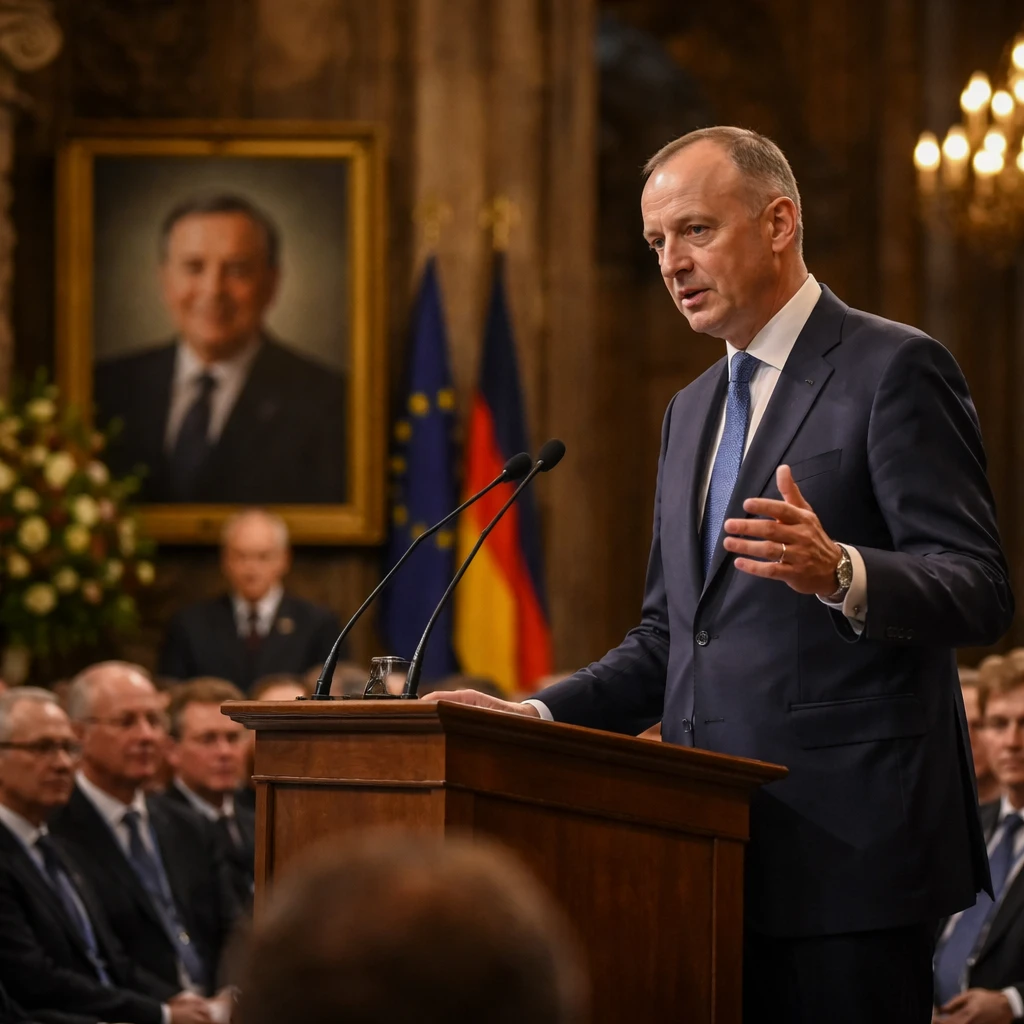
German Chancellor Friedrich Merz on Thursday framed the European Union as confronting its most testing period yet, urging significant economic reform while rejecting calls for increased common borrowing across the bloc.
At a prize-giving ceremony in Aachen for former European Central Bank President Mario Draghi, Merz said the EU has recognized the threats it faces and is beginning to assert itself as a geopolitical actor. He drew a firm line on how far Germany is prepared to go in deepening fiscal ties with other EU members.
"Some suggest now that we could evade this painful task by taking on new debt, European debt, by financing regular expenditures through borrowing," Merz said. "Germany cannot follow this path, including for constitutional reasons."
Merz linked the EU's deteriorating external environment to developments in Washington following Donald Trump’s return to the White House. He said Trump has reduced support for Ukraine, threatened to seize Greenland from Denmark, and launched a war on Iran that has affected European economies.
"We are now experiencing weekly crises," Merz added. "In this situation, Europe must maintain a clear course and a cool head. We must confidently define our own interests. And we must be prepared to take action to protect those interests."
While acknowledging Draghi's contributions to European integration, Merz explicitly rejected the former central banker’s advocacy for joint EU debt issuance. Draghi has argued that issuing common debt could finance investments in the transition to a low-carbon energy system, strengthen defenses, and raise economic competitiveness.
Merz reiterated the need for broad, fundamental change within the EU. "There is no alternative to a fundamental modernization," he said, framing reform as the preferred instrument for responding to the bloc’s strategic and economic challenges rather than pooled borrowing.
Context and implications
Merz's remarks set clear political boundaries around fiscal integration in the EU, emphasizing constitutional constraints that he said prevent Germany from endorsing shared borrowing to cover routine expenditures. He presented modernization and reform as the route for enhancing European resilience and competitiveness, while signalling skepticism toward proposals that would merge greater fiscal responsibility at the EU level.