
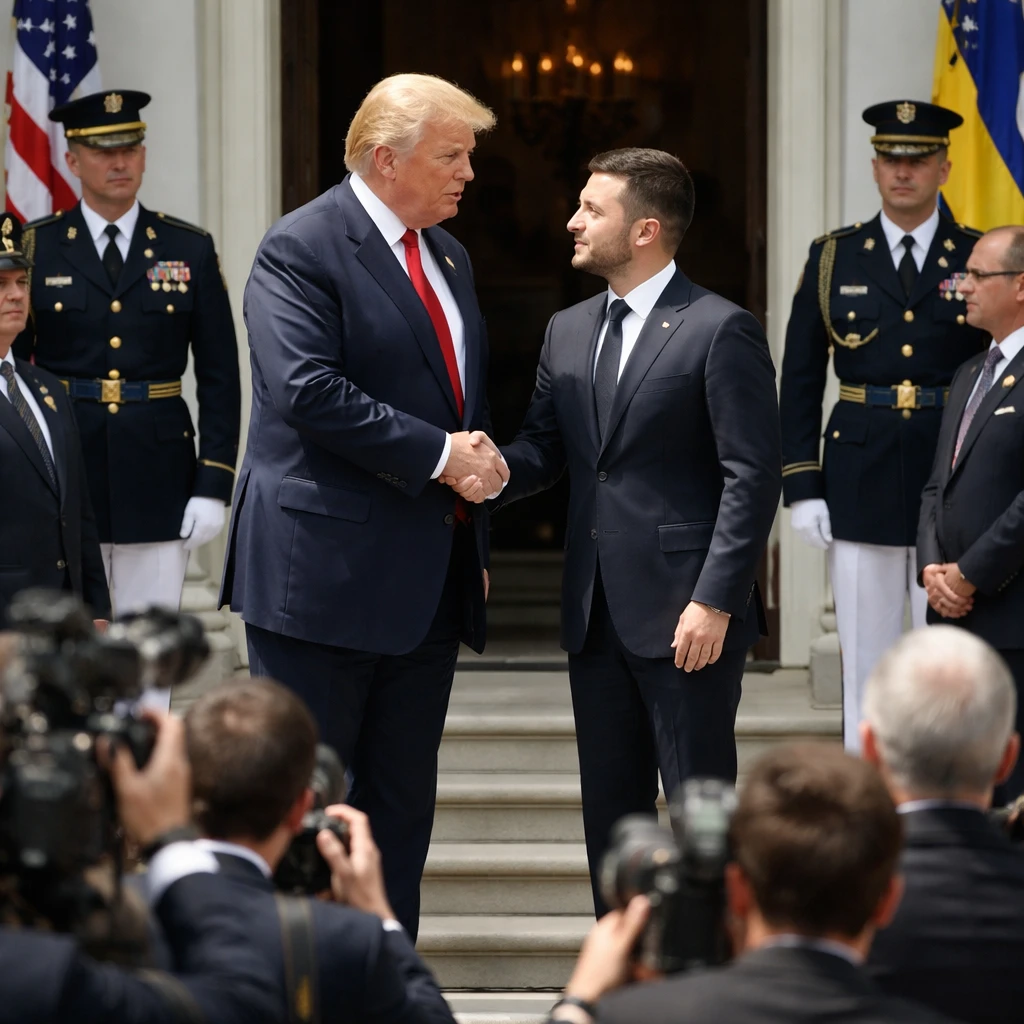
WASHINGTON, July 28 - Ukrainian President Volodymyr Zelenskiy was welcomed to the White House by U.S. President Donald Trump on Tuesday, arriving for a brief private discussion preceding the funeral of Senator Lindsey Graham, a prominent U.S. advocate for supporting Kyiv.
A source familiar with the plans said the encounter between the two leaders was expected to be short and likely conducted without reporters present. Following the White House meeting, Zelenskiy planned to travel to the U.S. Capitol for a separate session with senators.
The visit comes as a pivotal moment for U.S.-Ukraine relations. Although ties have warmed after early tensions in the second term of the U.S. president, Washington has delayed disbursing aid to Ukraine that had been authorized, and the sudden death of Senator Graham removed a visible and vocal proponent for Kyiv within the U.S. Senate.
Zelenskiy arrived in Washington with a focused set of requests. He sought urgently needed air defense capabilities, the closing of a drone deal, and follow-through on a NATO summit pledge from President Trump to permit Ukraine to manufacture Patriot missile interceptors under a U.S. license. Upon arrival, the Ukrainian leader said anti-ballistic defense and strategic cooperation with the United States were the "number-one priority" for his talks.
A White House official said Mr. Trump intends to discuss prospects for a peace process between Russia and Ukraine with Zelenskiy, adding the comment "Now is the time to end the war." These discussions follow recent contacts between Zelenskiy and U.S. envoys Steve Witkoff and Jared Kushner about the possibilities for renewed peace negotiations, with Zelenskiy noting that Ukrainian and U.S. officials could meet in the United States in the coming days.
Complicating the context of the visit is a Pentagon letter to lawmakers indicating that the Trump administration will not finish spending $400 million authorized for aid to Ukraine until fiscal year 2029. That timing is significant as Ukrainian forces face shortages in weapons needed to respond to Russian missile attacks.
Members of both parties in Congress have voiced concern about the Pentagon's approach. Democrats and some Republicans have criticized the department for holding back aid that had bipartisan backing last year, arguing that the delay undermines Kyiv's ability to sustain its defensive operations.
Senator Graham, a South Carolina Republican who died suddenly from a heart ailment on July 11 at age 71, had been among the most visible U.S. supporters of Ukraine. He was regarded as a defense hawk who consistently pushed for an interventionist U.S. role in global security and was a frequent visitor to Ukraine. Graham met with Zelenskiy in Kyiv the day before his death, marking his 10th trip to Ukraine since Russia's 2022 invasion.
At the time of his passing, Graham was active in advancing a bipartisan package of new sanctions on Russia, which the Senate is preparing to vote on. In his final days, he worked to move that sanctions package toward passage in the upper chamber.
Graham had been running for a fifth Senate term after securing the South Carolina Republican primary in June. His sister, Darline Graham, has been appointed to fill the remainder of his current term and has announced plans to run for a full six-year term in November, with President Trump endorsing her candidacy.
The White House meeting offered Zelenskiy a chance to shore up military support at a time when U.S.-Ukraine relations appear more constructive than in the early months of the U.S. president's second term. Yet the administration's current timeline for spending the authorized $400 million and the absence of Graham's influential voice in the Senate both underscore ongoing uncertainties for Kyiv as it seeks sustained material backing.
After his meeting at the White House, Zelenskiy's planned engagement with senators on Capitol Hill reflects the urgency he attached to securing additional defensive capabilities and legislative backing. The outcome of his talks with U.S. lawmakers and the executive branch will shape immediate prospects for air defense resupply, drone procurement, and broader strategic collaboration between the two governments.