
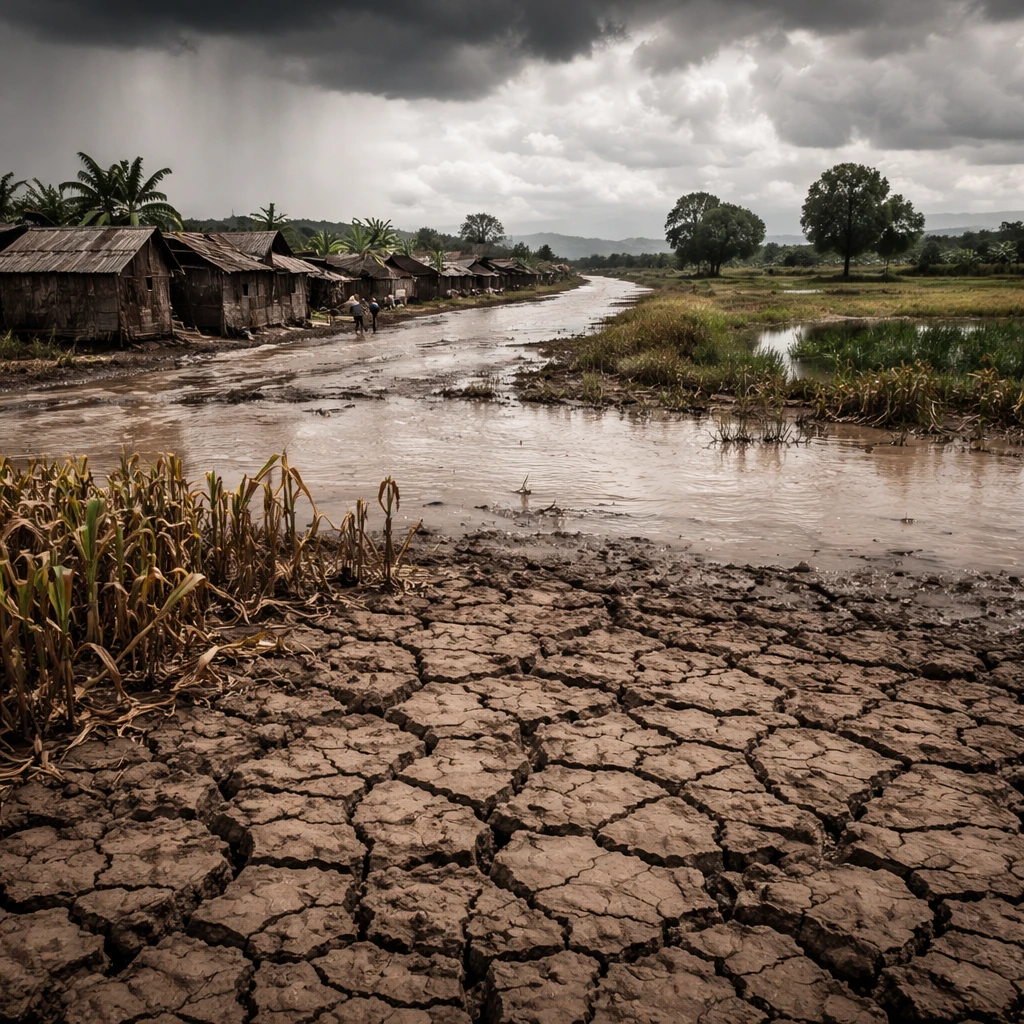
A very strong El Niño event, now judged to have an 81% likelihood, could push nearly 49 million additional people into acute food insecurity across vulnerable regions by the end of next year, the World Food Programme (WFP) said in a report released on Wednesday.
The U.N. agency's analysis projects that rising ocean surface temperatures - at their warmest since at least 1982 and with the potential to be the most intense since 1950 - are likely to disrupt seasonal weather patterns globally. El Niño alters rainfall and drought patterns and is commonly linked to drought in Southern Africa, delayed monsoons in parts of Asia, and uneven or erratic rainfall in other regions.
Jean-Martin Bauer, director of WFP's Food Security and Nutrition Analysis Service, told reporters that previous strong El Niño events have precipitated large-scale hunger. He framed the present forecast as a serious risk to already fragile food systems in many countries.
Working from an assessment covering 45 countries identified as vulnerable to El Niño impacts, WFP estimates the population facing acute food insecurity could grow by almost 49 million people, bringing the total to 274 million. That represents a 22% rise relative to the baseline number already experiencing crisis-level food insecurity or worse, according to the agency's report.
Regional projections in the WFP analysis highlight particularly acute increases in Central America and Southern Africa. Central America is expected to see an 83% increase in the number of people in acute food insecurity, while Southern Africa could experience a near 75% jump. Separately, Southern Africa, South America and the Caribbean could each face more than 12 million additional people sliding into acute food insecurity.
Bauer noted that global food markets entered the El Niño period from a relatively strong position following favorable harvests in 2025. Nonetheless, he warned that ongoing conflict in the Middle East and potential weather-related crop losses could apply further upward pressure on prices. He observed that, historically, El Niño events have not necessarily triggered large global food price spikes but that localized shortages and price increases tend to worsen access for the most vulnerable households.
The report also points to practical challenges in mounting a timely response. Funding cuts from major donors in the United States and Europe during 2025 have constrained data collection and monitoring efforts, creating what Bauer described as a growing drought of food-security data needed to assess the unfolding impacts of El Niño.
WFP’s monitoring activity illustrates the decline: roughly 1.1 million household surveys were conducted in 2024, compared with about 800,000 in 2025, and data collection has fallen further this year because of funding restrictions. "At a time when you have a risk like an El Niño, it is important to have high-frequency data collection," Bauer said, warning that reduced monitoring makes it harder to identify emerging food crises quickly.
The WFP's forecast highlights expected rainfall deficits in parts of East Africa, the Sahel, Central America and the Caribbean, while flagging heightened flood risks in Somalia and neighbouring areas. The agency also projects significant impacts across South and Southeast Asia, where drought risks, uneven monsoon patterns and localized flooding could disrupt agricultural production.
WFP underscored the inherent uncertainty in forecast models and noted that impacts will vary by region. Nonetheless, the agency called for governments and humanitarian actors to prepare now to reduce the human toll of weather-driven food shocks.
Richard Choularton, director of WFP's Climate and Resilience Service, said the agency has scaled up anticipatory action programmes in 18 countries, reaching more than 1.3 million people so far this year with cash transfers and other assistance designed to blunt the immediate effects of extreme weather.
What this means for markets and sectors
- Agriculture: Altered rainfall and drought risks threaten crop yields and livestock production in vulnerable regions.
- Food markets: Regional shortages and localized price hikes could erode access for low-income households, even if global price spikes are not guaranteed.
- Humanitarian aid and donor funding: Reduced surveillance and monitoring capacity, driven by funding cuts, hampers early detection and response to emerging crises.