
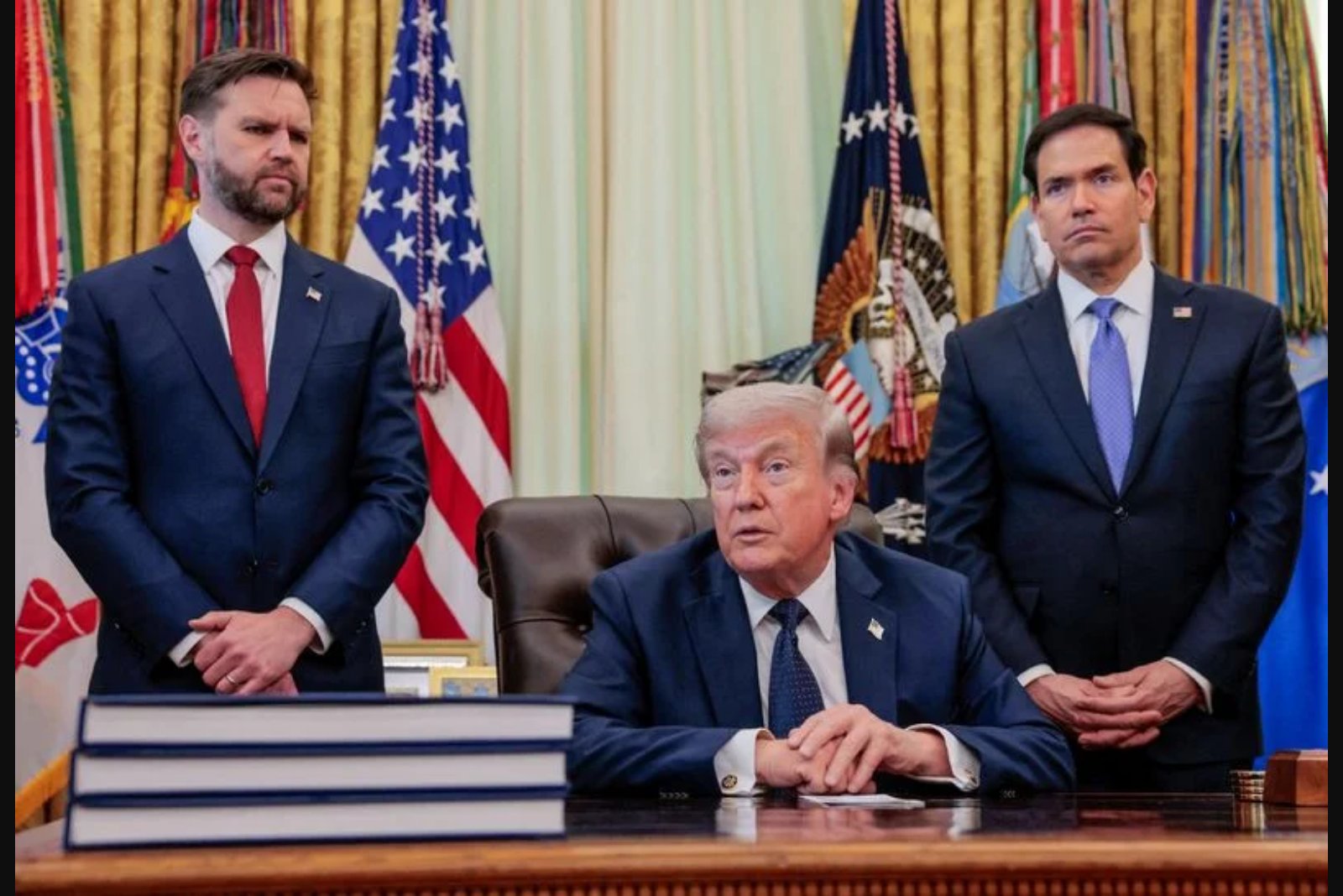
The Trump administration has worked to present a united front around the preliminary U.S.-Iran deal signed on June 17, but recent statements from two of its most visible foreign policy envoys have exposed differences - most notably on the issue of Israel’s military actions in Lebanon.
Vice President JD Vance, speaking at the White House last week, sharply criticized Israeli voices who have attacked the accord and called attention to Israeli bombings in Beirut. He argued those strikes on civilian infrastructure - undertaken to weaken Hezbollah amid the militia's attacks on Israel - risked undermining U.S.-led efforts to secure a truce and a lasting diplomatic outcome.
Secretary of State Marco Rubio, on a separate diplomatic tour of Gulf capitals, conveyed a different assessment. Traveling through the United Arab Emirates, Kuwait and Bahrain to reassure concerned regional partners, Rubio repeatedly described Israel's operations in Lebanon as a justified response to strikes by Hezbollah. When asked about Vance’s public criticism, Rubio declined a direct rebuttal and instead pointed to a recent assault by the Lebanon-based militia on an Israeli checkpoint earlier in the week.
The juxtaposition of Vance’s and Rubio’s public remarks indicates that, even as the White House emphasizes collective purpose, internal differences in perspective are emerging at the leadership level. That divergence poses a communications challenge for an administration whose political base contains sharply varying views on the use of force overseas and on the reach of U.S. engagement.
Beyond their immediate diplomatic duties, the two officials are also viewed as potential presidential contenders for 2028, making their public positions a preview of competing foreign policy outlooks within the Republican Party.
Both Vance and Rubio were sent on high-profile missions abroad this month to shore up support for the interim accord with Tehran. Vance flew to Switzerland for talks with Iranian officials and, speaking to reporters on Sunday, adopted an upbeat tone about the state of negotiations. In recent weeks he has repeatedly suggested that Gulf states could play a role in funding Iran’s post-agreement reconstruction.
Vance has also publicly floated the notion of a more cooperative U.S.-Iran relationship going forward. In an interview released on Thursday, he disclosed that the United States had invited an Iranian intelligence official to act as a deconfliction liaison with the Pentagon in Qatar - an indication of ongoing operational contacts meant to reduce the risk of inadvertent escalation.
Rubio’s itinerary centered on reassuring U.S. partners in the Gulf who fear the interim accord may concede too much to Tehran. During his meetings, Rubio said he would not seek contributions from Gulf allies to fund Iran’s reconstruction during that trip, describing such an ask as "far down the road." He also stressed to regional officials that any agreement must be unimpeachable where American and allied interests are concerned. "While we want a deal, we don’t want a deal at any price," he said on Thursday.
The White House has pushed back forcefully on claims that Rubio and Vance represent conflicting policy camps. White House spokeswoman Anna Kelly said, "There is one camp - President Trump’s camp - and the entire administration is fully behind the President’s efforts to ensure Iran can never possess a nuclear weapon."
State Department spokesman Tommy Pigott dismissed the notion of a foreign policy split between the two officials as a "tired and fake" narrative and added that "the entire administration is 100% in lockstep behind President Trump." Another State Department spokesperson argued the two officials were aligned on Lebanon as well, reiterating the administration’s stated objective of restoring Lebanese government sovereignty across the country.
Despite these official reassurances, analysts and commentators say meaningful differences remain. Michael Rubin, a senior fellow at the American Enterprise Institute, said the two men "at their core... represent different strains." Rubin’s assessment highlights a broader reality: Vance and Rubio come from contrasting foreign policy traditions and constituencies.
Prior to taking office, Vance frequently criticized foreign interventions as costly and wasteful. Rubio, by contrast, established his reputation in the Senate as a hawk, advocating for more confrontational postures toward states such as Iran, Russia and Cuba.
The two officials are products of rival factions within the Republican Party - between those inclined toward interventionist policies and those skeptical of extended overseas commitments. That split is reflected among voters as well. According to a Reuters/Ipsos poll that closed Monday, just 52% of Republicans believe the current conflict has put the United States in a stronger position, a figure that points to a party divided in its assessment of recent military engagement.
Still, both men have backed the administration’s major foreign policy moves to date. They supported the administration’s capture of Venezuelan leader Nicolas Maduro, the attack on Iran in February and the subsequent push to negotiate a diplomatic settlement. In public remarks, each has emphasized that the ultimate measure of Tehran’s reliability will be its actions rather than its words as the negotiation process continues.
Pressed on Thursday about differences with Vance, Rubio reiterated the administration line, saying both men "took their lead from Trump" and that "Everyone here is aligned behind the president."
Whether public variations in emphasis will translate into substantive policy differences as the accord advances remains unclear. For now, Washington is managing a delicate mix of military pressure, diplomatic outreach and alliance reassurance - a balancing act complicated by divergent public statements from two of its senior envoys.
Summary
Vice President JD Vance and Secretary of State Marco Rubio have taken visibly different tones in public comments about Israel’s campaign in Lebanon while both seek to defend and explain a preliminary U.S.-Iran accord. The divergence spotlights broader tensions within the Republican Party and among U.S. allies in the Gulf, even as the White House insists the administration is unified behind President Trump’s approach.
Key points
- Vance publicly criticized Israeli bombings in Beirut as undermining U.S.-led peace efforts, while Rubio defended Israel as responding to Hezbollah attacks - impacts: defense, diplomacy, and regional security sectors.
- Both officials were deployed abroad to defend the interim U.S.-Iran deal; Vance met Iranian officials in Switzerland and mentioned Gulf-state funding for reconstruction, while Rubio reassured Gulf allies and said reconstruction funding requests are "far down the road" - impacts: international finance and reconstruction-related contracting sectors.
- The White House denies any policy split, but analysts see competing foreign-policy strains within the administration, reflecting divisions among Republican voters - impacts: political risk considerations across markets and defense contractors.
Risks and uncertainties
- Public differences in tone among senior officials risk complicating allied reassurance efforts and could affect regional stability - sectors affected: defense and energy markets.
- Uncertainty over who will fund Iran’s reconstruction - and when - creates ambiguity for firms in reconstruction, engineering and finance that might participate in rebuilding efforts - sectors affected: construction, engineering, and international finance.
- Domestic Republican divisions over foreign policy could translate into politicized decision-making, affecting procurement and defense program stability - sectors affected: defense suppliers and contractors.